A French cottage kitchen is rarely about perfection. Its beauty comes from age, usefulness, natural materials and the feeling that the room has evolved slowly over time.
Worn wooden tables, old stone, burnished copper, painted cupboards and shelves filled with everyday pottery all contribute to that unmistakable sense of history. Nothing needs to match exactly. In fact, some of the most memorable French country kitchens are beautiful precisely because they feel slightly imperfect.
Rather than filling a kitchen with decorative pieces designed to look old, the French cottage approach begins with materials and objects that become more beautiful with use. Timber develops a patina. Copper darkens. Linen softens. Painted furniture acquires small marks and worn edges. These layers give the room character that a perfectly coordinated kitchen can struggle to recreate.
And you don’t need an centuries-old house in the French countryside to borrow the idea. A few thoughtful choices in color, furniture, lighting, textiles and materials can bring the same warmth and old-world charm into a much newer kitchen.
8 French Cottage Kitchen Ideas for Old-World Charm
The following ideas explore different ways to create a French cottage kitchen that feels timeless, characterful and genuinely lived in—from rustic materials and heritage colors to antique furniture, copper cookware and beautifully imperfect details.
1. Let Warm, Earthy Color Set the Mood
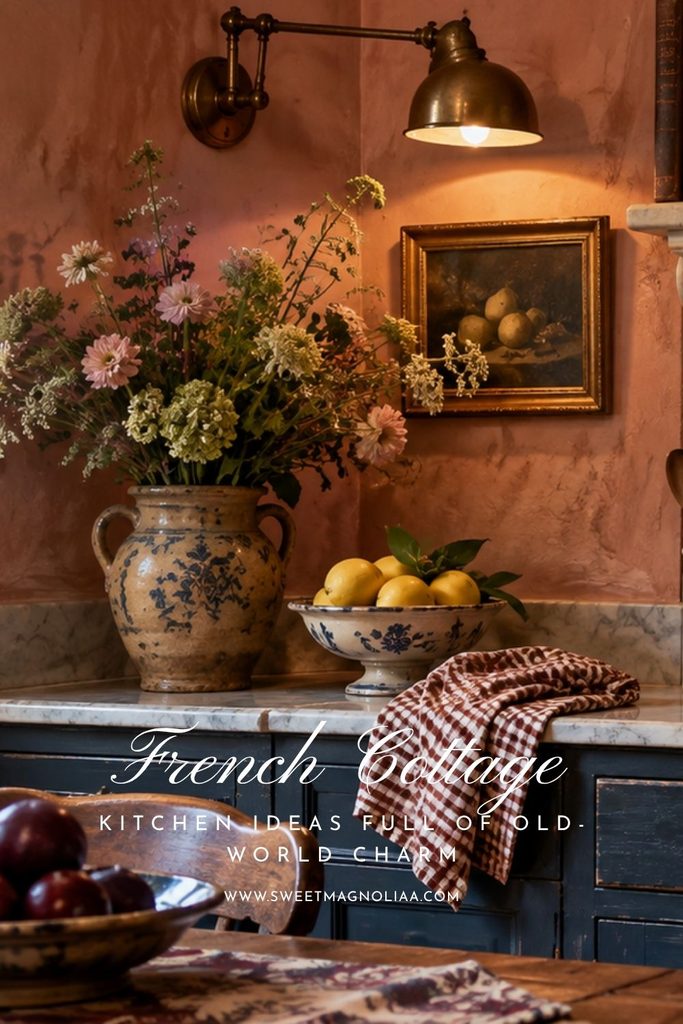
One of the easiest ways to give a French cottage kitchen old-world charm is to move beyond an all-white palette. Warm plaster walls in terracotta, faded rose, ochre or earthy peach immediately make the kitchen feel older, softer and more atmospheric.
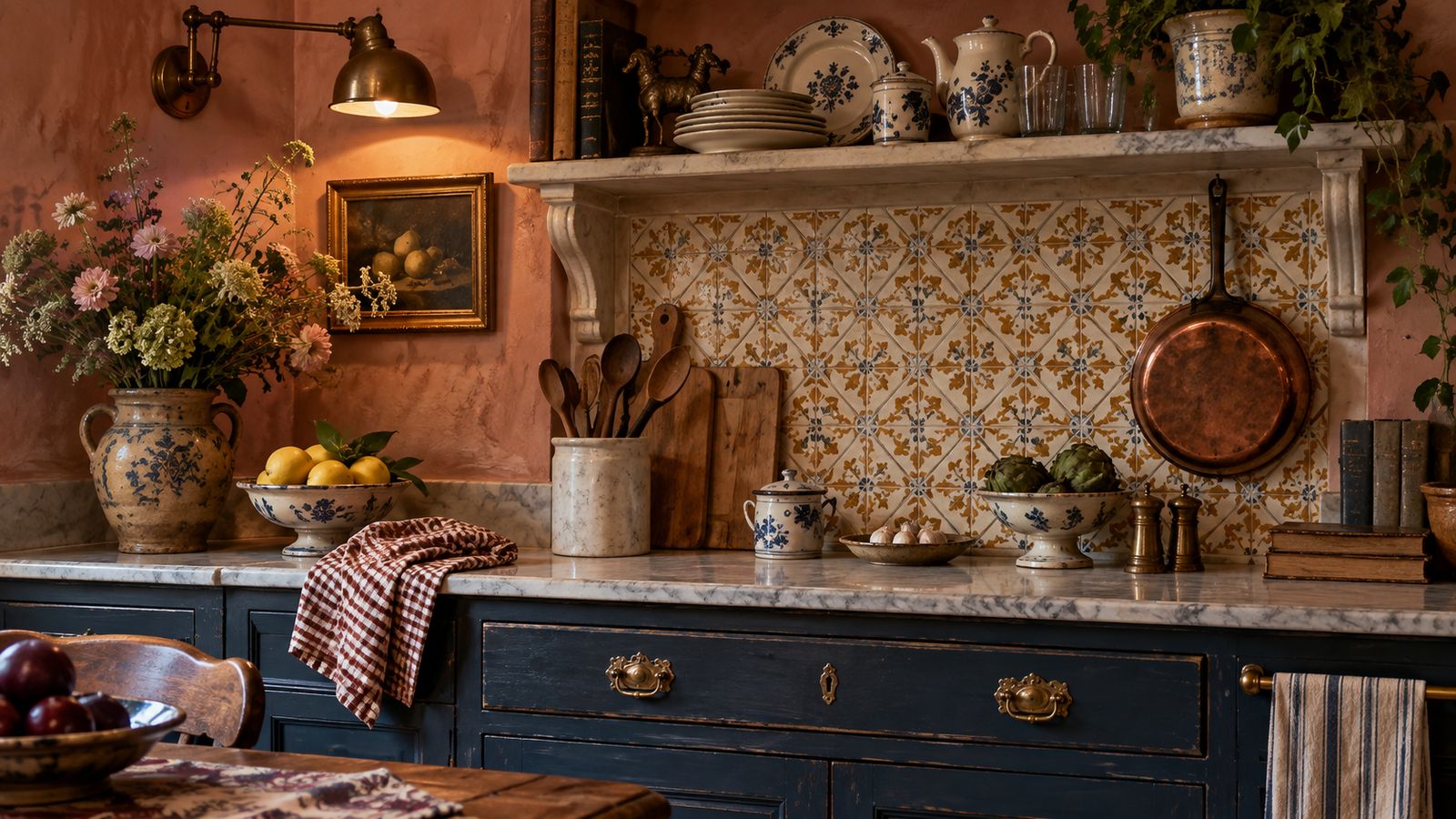
Here, the warm walls create a beautiful backdrop for deep blue cabinetry, aged brass lighting and blue-and-white French pottery. Rather than matching perfectly, the colors feel as though they have been layered into the kitchen gradually over time.
Small details bring the palette to life: fresh flowers arranged loosely in an old ceramic vessel, lemons displayed in a patterned bowl, a vintage still-life painting and a casually draped gingham cloth. These useful, imperfect layers are what give a French country kitchen its relaxed character.
Design takeaway: Choose one warm, heritage-inspired wall color and balance it with darker cabinetry, natural stone or wood. Then introduce pottery, textiles, artwork and everyday kitchen objects in complementary colors instead of trying to coordinate everything.
2. Anchor the Kitchen with Rustic Wood and Old Stone
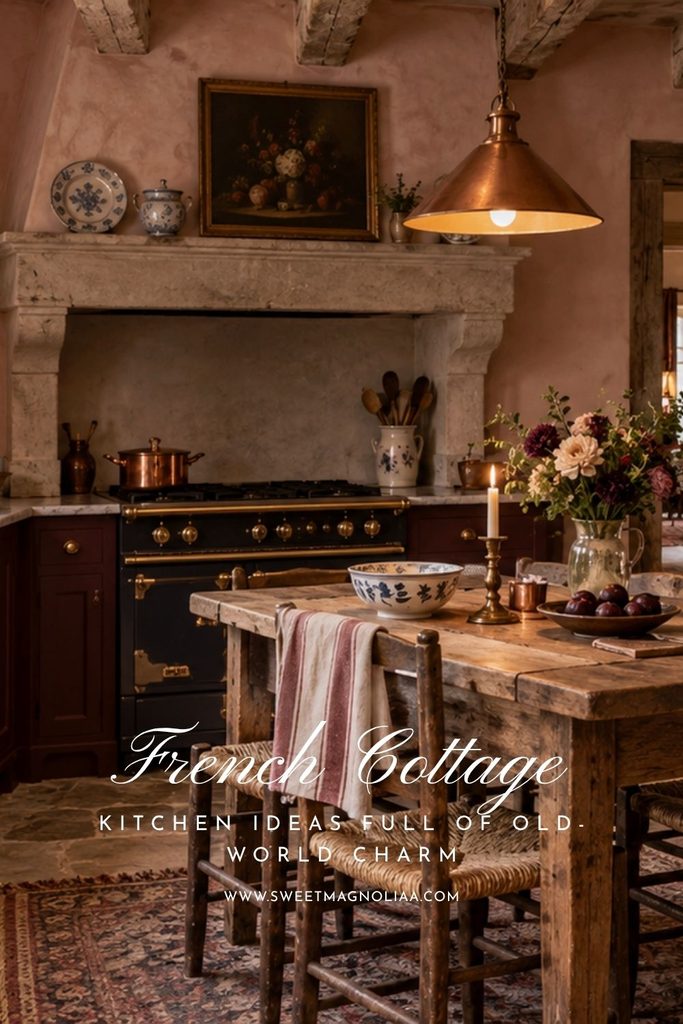
Old-world French kitchens gain much of their character from substantial, timeworn materials. Instead of making fitted cabinetry the visual focus, allow an architectural feature or freestanding piece of furniture to become the anchor of the room.
Here, the oversized stone cooking surround immediately gives the kitchen a sense of permanence and history, while the heavily worn farmhouse table introduces warmth and informality. Exposed ceiling beams, rush-seat chairs and the patterned rug add further layers without making the space feel overly decorated.
The deep burgundy cabinetry is particularly effective against the pale stone and dusty plaster walls. Copper lighting and brass details add warmth, while pottery, flowers and artwork keep the harder rustic materials from feeling austere.
Design takeaway: If your kitchen lacks historic architecture, introduce old-world character through one substantial element—a reclaimed farmhouse table, antique cupboard, aged timber island or natural stone surface—rather than relying on lots of small vintage accessories.
3. Decorate with Everyday Objects That Feel Collected Over Time
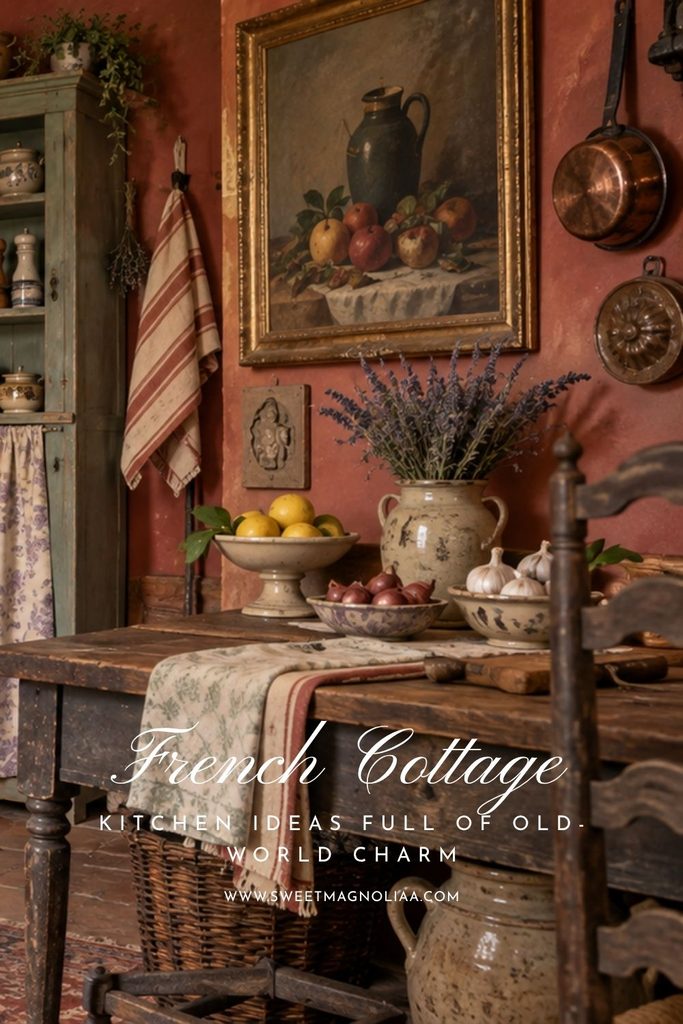
A French cottage kitchen becomes especially charming when practical objects are allowed to become part of the decoration. Instead of hiding everything behind cabinet doors, display pieces that bring age, texture and personality to the room.
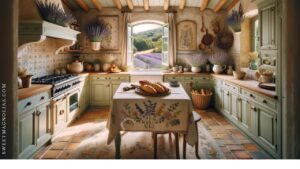
Here, weathered pottery, bowls of lemons and garlic, lavender, striped linen and hanging copper cookware turn an ordinary worktable into a richly layered kitchen scene. The faded green cupboard and warm terracotta walls introduce color, while the large vintage still-life painting gives the space an unexpected sense of history.
Notice that nothing feels overly coordinated. The pottery varies, the textiles mix patterns, and the furniture carries visible signs of age. That slight imperfection is what makes the kitchen feel authentic rather than styled around a theme.
Design takeaway: Decorate with things a kitchen might genuinely accumulate—old pottery, wooden boards, linen towels, baskets, copper cookware, herbs and vintage artwork. Let useful objects provide much of the visual character.
4. Bring in Pattern Through Traditional Tile
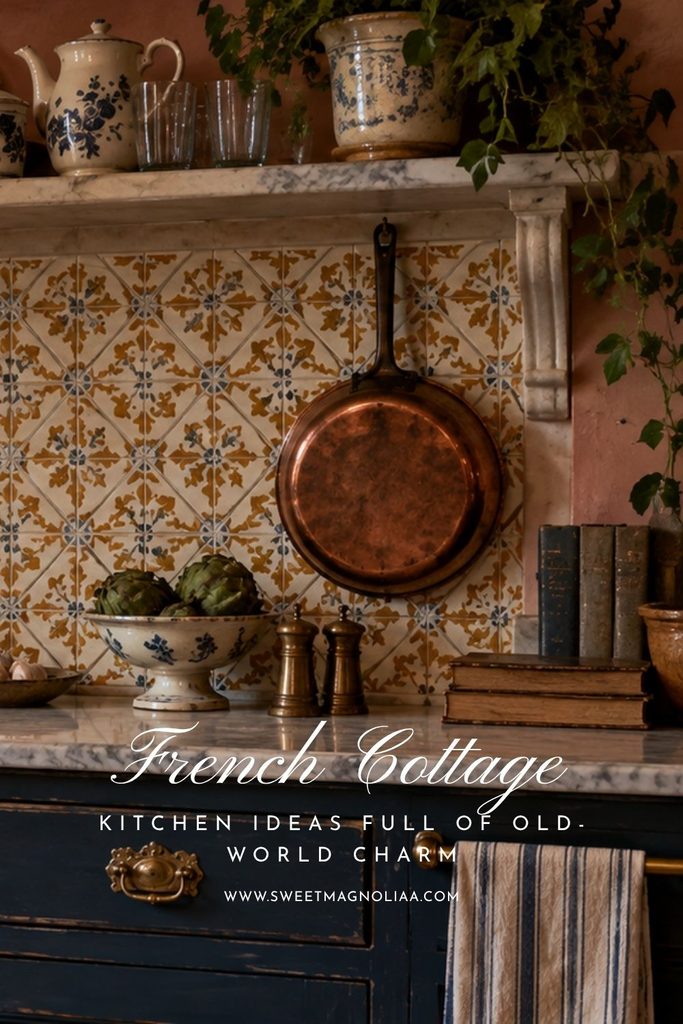
Patterned tile is a beautiful way to introduce old-world character into a French cottage kitchen, especially when the rest of the room is built around simple, natural materials. Rather than choosing something crisp and contemporary, look for tiles with muted colors and traditional motifs that feel as though they could have been part of the kitchen for decades.
Here, the ochre-and-blue patterned backsplash sits beautifully beside aged marble, deep blue cabinetry and burnished copper. Blue-and-white pottery repeats the cooler tones, while brass, old books and artichokes add layers of warmth and texture.
The result is decorative without feeling overly polished—the pattern becomes part of the architecture rather than simply another accessory.
Design takeaway: Use traditional patterned tile in one concentrated area, then repeat two or three of its colors elsewhere through cabinetry, pottery, metals or textiles.
5. Turn Everyday Storage into a Decorative Display
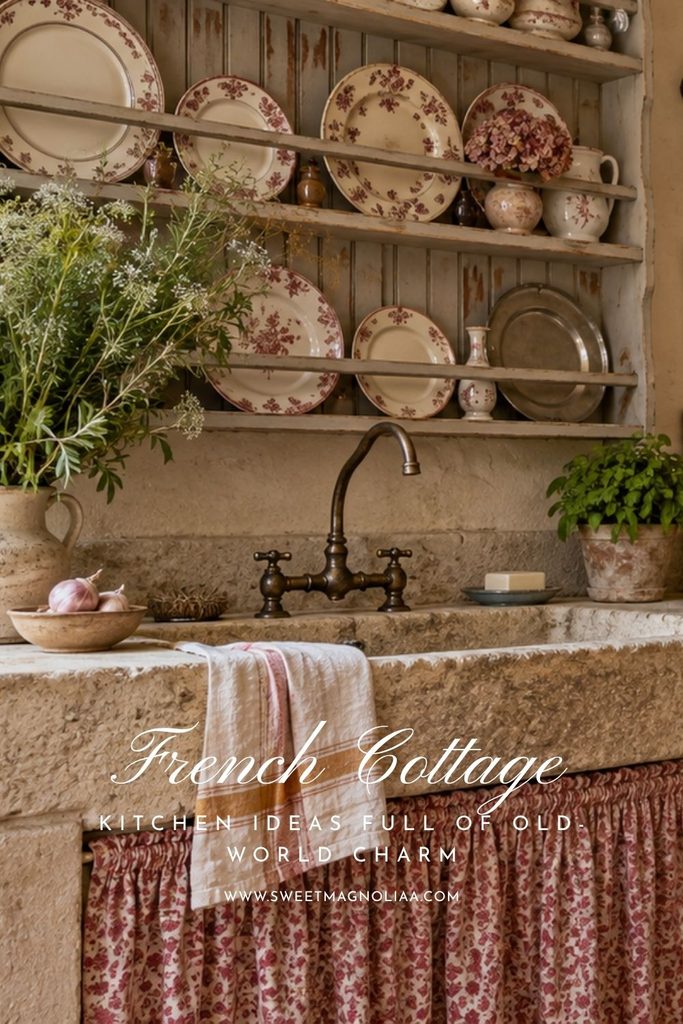
Open shelving and traditional plate racks are perfect for a French cottage kitchen because they allow practical pieces to become part of the room’s character. Instead of hiding every dish away, display the ceramics and serving pieces you genuinely enjoy using.
Here, faded red-and-cream floral plates create a beautiful rhythm against the weathered wooden rack. The aged stone sink, antique brass faucet and softly patterned sink skirt continue the old-world feeling, while herbs and loose greenery keep the arrangement relaxed rather than formal.
The key is restraint. A plate rack doesn’t need to be packed with dozens of objects. Leaving a little breathing room around pottery, pitchers and serving dishes makes each piece feel as though it has been gathered over time.
Design takeaway: Use open shelving or a vintage plate rack to display a small collection of patterned ceramics, then repeat one of those colors in a simple textile below the sink for an effortless sense of continuity.
6. Make Practical Kitchen Tools Part of the Decor
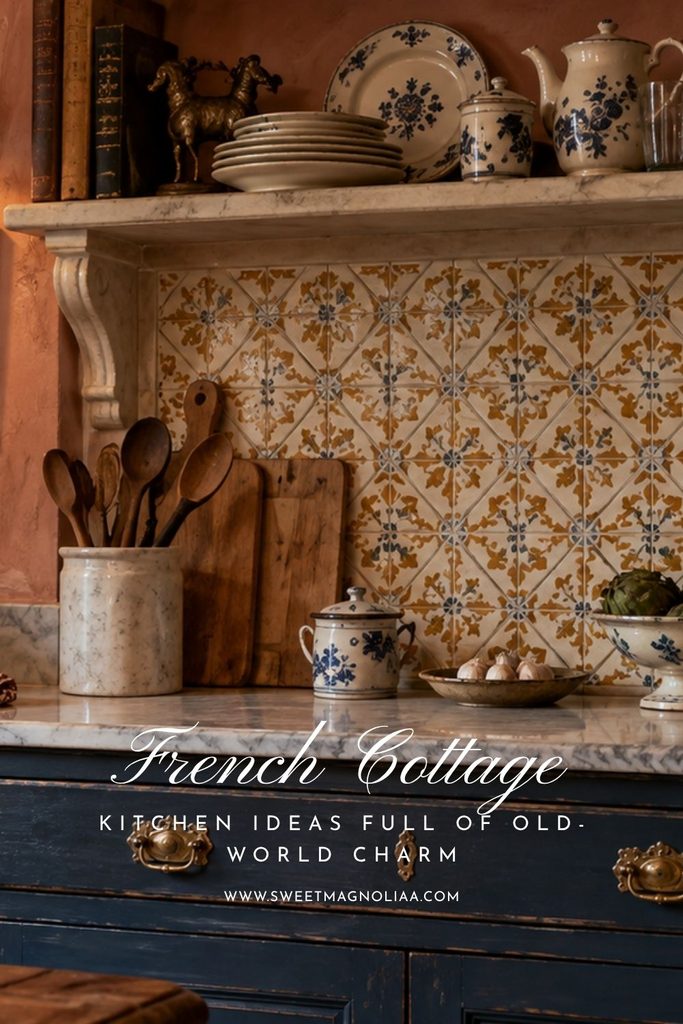
One of the simplest ways to create an old-world French kitchen is to stop treating every practical object as something that needs to be hidden. Wooden spoons, cutting boards, pottery and everyday dishes can add just as much character as purely decorative accessories.
Here, worn wooden boards and utensils bring warmth against the patterned tile, while blue-and-white pottery echoes the deep blue cabinetry below. The marble shelf and countertop add a quieter, more refined surface that balances the rustic textures.
Even the small stack of old books and antique brass object above the shelf contribute to the sense that the kitchen has developed gradually rather than being decorated all at once.
Design takeaway: Keep a few attractive everyday tools visible and group them by material—wood with wood, pottery with ceramics—while allowing differences in age, color and finish to create natural variation.
7. Treat Vintage Art as Part of the Kitchen
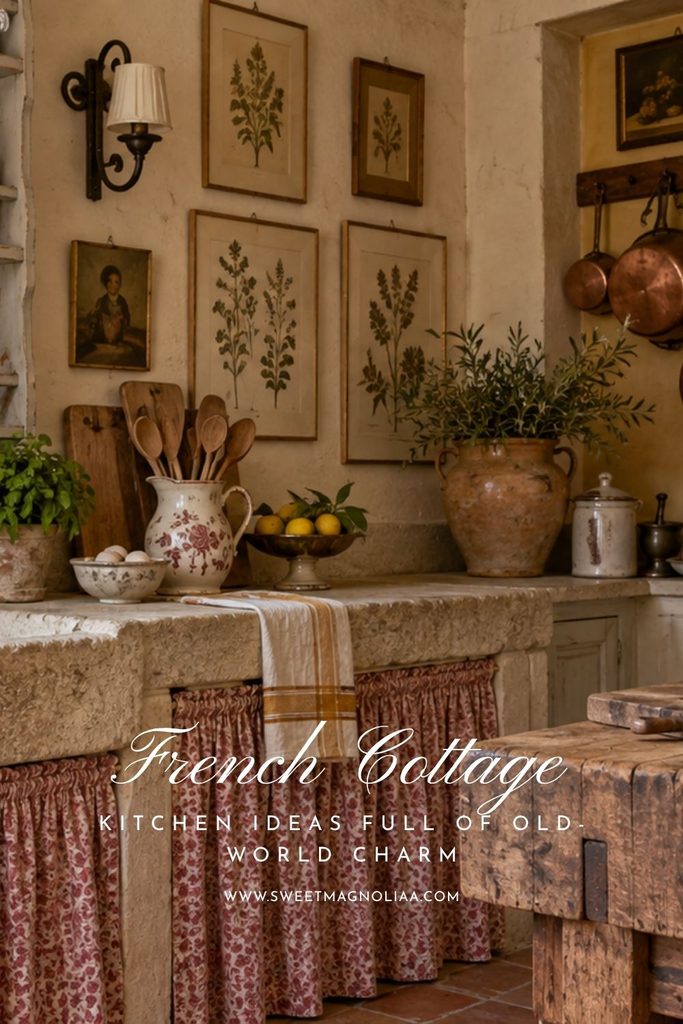
Art doesn’t have to stay in living rooms and bedrooms. In an old-world French cottage kitchen, vintage artwork can make practical spaces feel layered, personal and established over time.
Here, a loose gallery of botanical studies and a small portrait transforms the wall above the stone sink into something much more atmospheric. The frames don’t match perfectly in size or finish, which keeps the arrangement relaxed rather than formal. Copper pans nearby add another warm, aged surface, while pottery, herbs and wooden utensils continue the still-life quality of the scene.
The floral sink skirt is important too. Its faded red pattern softens the heavy stone counter and connects beautifully with the antique artwork, pottery and warm natural materials around it.
Design takeaway: Don’t leave kitchen walls as an afterthought. Mix botanical prints, small landscapes, still lifes or vintage portraits in simple aged frames. Combine them with practical objects such as copper cookware, pottery and textiles so the art feels integrated into everyday kitchen life.
8. Pair Hanging Copper with a Timeworn Butcher Block
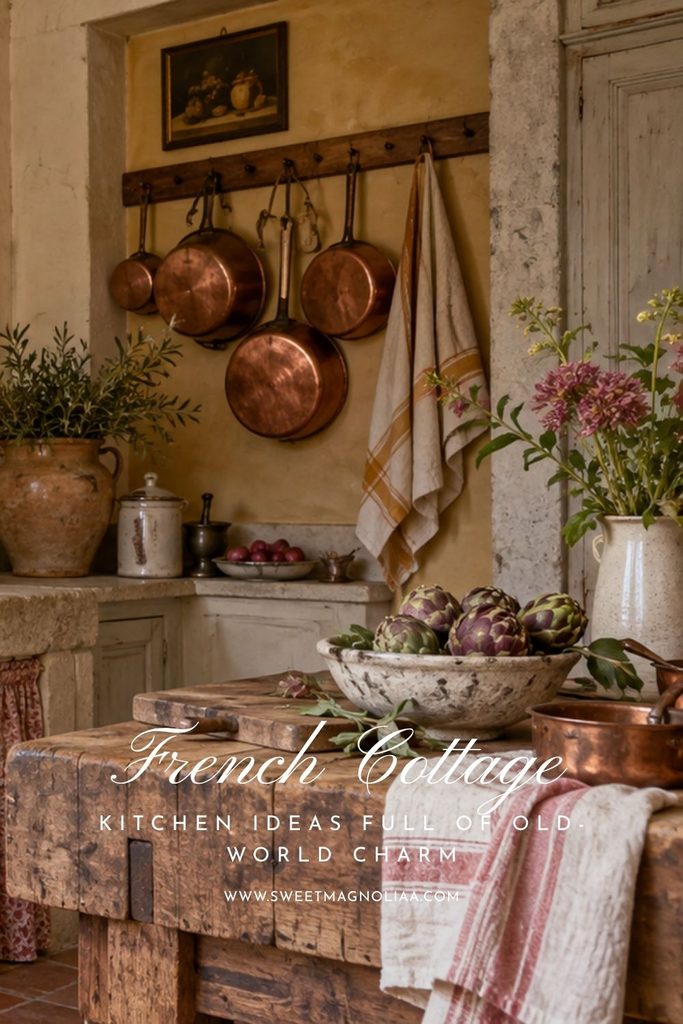
Old French kitchens often find their beauty in working pieces rather than decorative ones. A substantial butcher block or farmhouse worktable can become the heart of the kitchen, especially when its surface carries the marks, cuts and irregularities of years of use.
Here, the thick, heavily worn butcher block brings weight and history to the room. Its rough timber contrasts beautifully with the smooth glow of copper pans hanging from a simple wooden rail. Together, the two materials create that unmistakable old-world combination of wood, metal, age and utility.
Artichokes in an aged ceramic bowl, striped linen, pottery, flowers and a small still-life painting soften the scene without taking away from its working-kitchen character.
Design takeaway: Instead of a conventional fitted island, consider an antique butcher block, old workbench or heavy farmhouse table. Pair it with functional copper cookware and simple linens—the more naturally aged the materials become, the better.
Bringing Old-World French Charm into Your Kitchen
The beauty of a French cottage kitchen is that it doesn’t need to feel perfect or newly decorated. In fact, the worn surfaces, mismatched pieces and small signs of age are often what give the room its greatest charm.
Start with materials that become more beautiful over time—aged wood, natural stone, copper, linen and pottery. Add character through vintage art, patterned tiles, open displays, old butcher blocks and useful objects that are beautiful enough to leave in view.
Most importantly, resist the urge to make everything match. A French kitchen with old-world charm should feel as though it has grown slowly, one useful and beautiful piece at a time.
Whether you introduce a single antique farmhouse table or gradually layer in copper cookware, vintage ceramics, textiles and artwork, the goal is the same: to create a kitchen that feels timeless, welcoming and full of character.
More on Kitchen Decor ideas
Kitchen Pantry Ideas for a Pretty and Organized Home
Kitchen Island Ideas for a Pretty and Practical Kitchen
Kitchen Decor Tips for a Cozy and Beautiful Home
Kitchen Light Fixtures: Pretty Ideas for a Brighter Kitchen
10 Common French Cottage Kitchen Decorating Mistakes to Avoid
1. Making everything match
French cottage style becomes more convincing when furniture, pottery, textiles and finishes feel collected from different periods. Too much coordination can quickly make the kitchen feel staged.
2. Distressing everything
One genuinely aged wooden table has more character than an entire room filled with artificially distressed furniture. Let old pieces provide the patina and allow newer elements to remain quieter.
3. Using too much white
Cream and chalky white certainly belong in French country interiors, but they aren’t the whole palette. Terracotta, faded blue, burgundy, sage, ochre, tobacco brown and warm wood can give the kitchen much greater depth.
4. Forgetting natural materials
Stone, timber, linen, copper, iron and ceramic are fundamental to the look. A room filled primarily with synthetic or highly polished surfaces will struggle to develop the same warmth.
5. Adding too many decorative accessories
Old-world charm doesn’t mean covering every surface. Choose useful objects that are beautiful enough to remain visible—copper pans, pottery, cutting boards, baskets and linen.
6. Making the kitchen too pristine
A French cottage kitchen should still function as a kitchen. A little visual imperfection makes the room feel inhabited rather than styled exclusively for photographs.
7. Ignoring scale
Large farmhouse tables, substantial cupboards and oversized pottery can provide visual weight. If everything is small and decorative, the room can start feeling overly precious.
8. Choosing only “French-themed” décor
You don’t need signs, motifs or objects announcing that the kitchen is French. Concentrate on materials, proportion, color and atmosphere instead.
9. Forgetting textiles
A faded café curtain, striped linen towel, checked fabric or simple sink skirt can soften all the hard surfaces and introduce pattern without overwhelming the room.
10. Trying to create the entire look at once
This style benefits from gradual layering. Start with the major elements and allow smaller pieces—art, pottery, linens and vintage finds—to accumulate naturally.
French Cottage Kitchen FAQs
What colors work best in a French cottage kitchen?
Warm creams, limestone, faded blue, sage and olive green are beautiful foundations. For greater depth, introduce muted burgundy, terracotta, ochre, dusty rose or deep blue through cabinetry, textiles, tiles and accessories.
How can I make a modern kitchen look more French country?
You don’t necessarily need to replace the kitchen. Introduce an antique or vintage table, aged brass hardware, linen textiles, pottery, artwork, wooden cutting boards and copper cookware. Even changing lighting and adding a freestanding furniture piece can soften a modern fitted kitchen.
Does a French cottage kitchen have to be white?
No. French country kitchens can be wonderfully colorful. Faded and earthy colors often make them feel older and more atmospheric than an entirely white scheme.
What type of wood works with French cottage style?
Oak and other woods with visible grain and natural variation work particularly well. The exact species matters less than avoiding a surface that looks excessively glossy or uniform.
Can you mix painted and natural wood furniture?
Yes. In fact, combining painted cabinetry with natural wood is one of the easiest ways to prevent the kitchen from feeling overly coordinated.
Is copper necessary for a French country kitchen?
No, but aged copper works beautifully because it introduces warmth and develops patina over time. A few useful copper pieces can be more effective than a large decorative collection.
What patterns work in a French cottage kitchen?
Florals, gingham, checks, stripes, toile and traditional tile patterns can all work. Keep some surfaces quiet so the patterns have room to breathe.
How do you make French country style look timeless rather than themed?
Start with architecture, materials and furniture rather than decorative motifs. Natural stone, aged timber, linen, antique furniture, traditional lighting and useful pottery will usually age better than obviously themed accessories.
Creating a French Cottage Kitchen That Feels Like It Has Always Been There
The most convincing French cottage kitchens don’t reveal every design decision immediately.
There might be an old table carrying the marks of years of use, a cupboard painted in an unexpected color, copper pans darkened with age or a collection of pottery that doesn’t quite match. Together, those small inconsistencies give the room its personality.
So rather than asking how to make everything coordinate, think about how the kitchen can become richer through layers.
Choose materials that age well. Allow old and new pieces to coexist. Introduce color without making every shade match. Keep useful objects visible when they’re beautiful enough to deserve it.
The goal isn’t to create a perfect imitation of an old French kitchen.
It’s to create a kitchen with enough texture, history and imperfection to develop a story of its own.