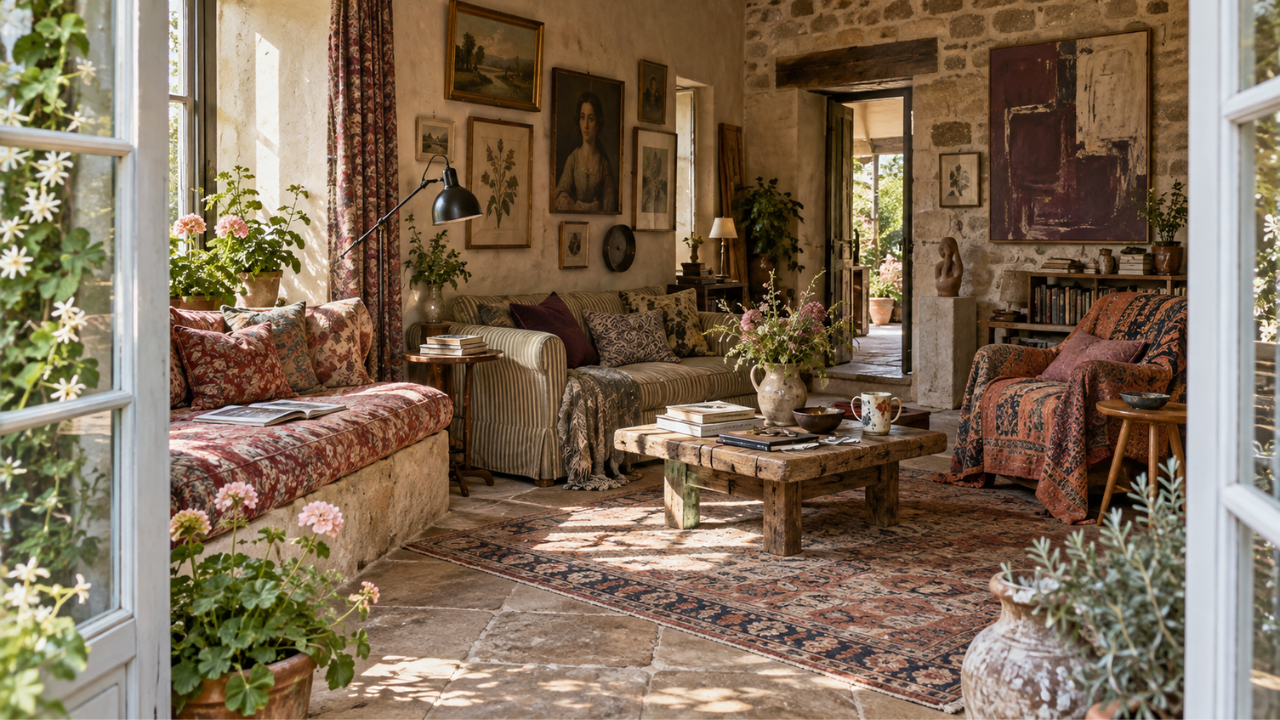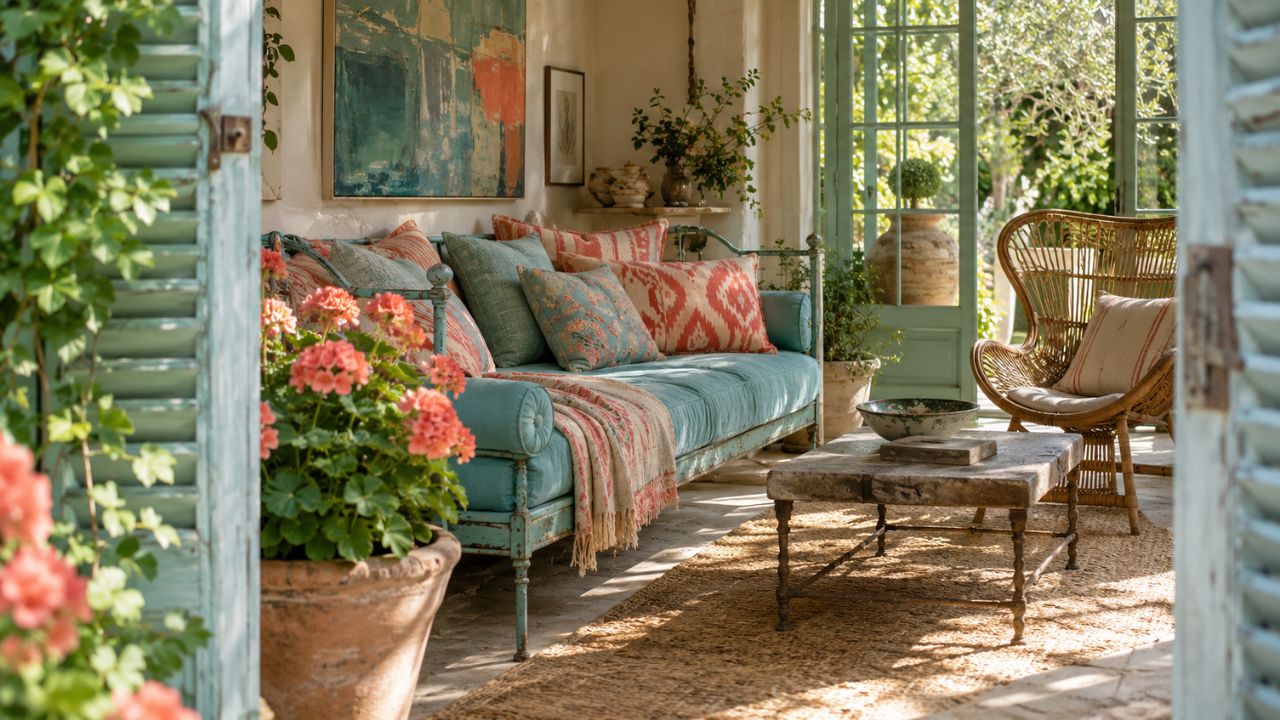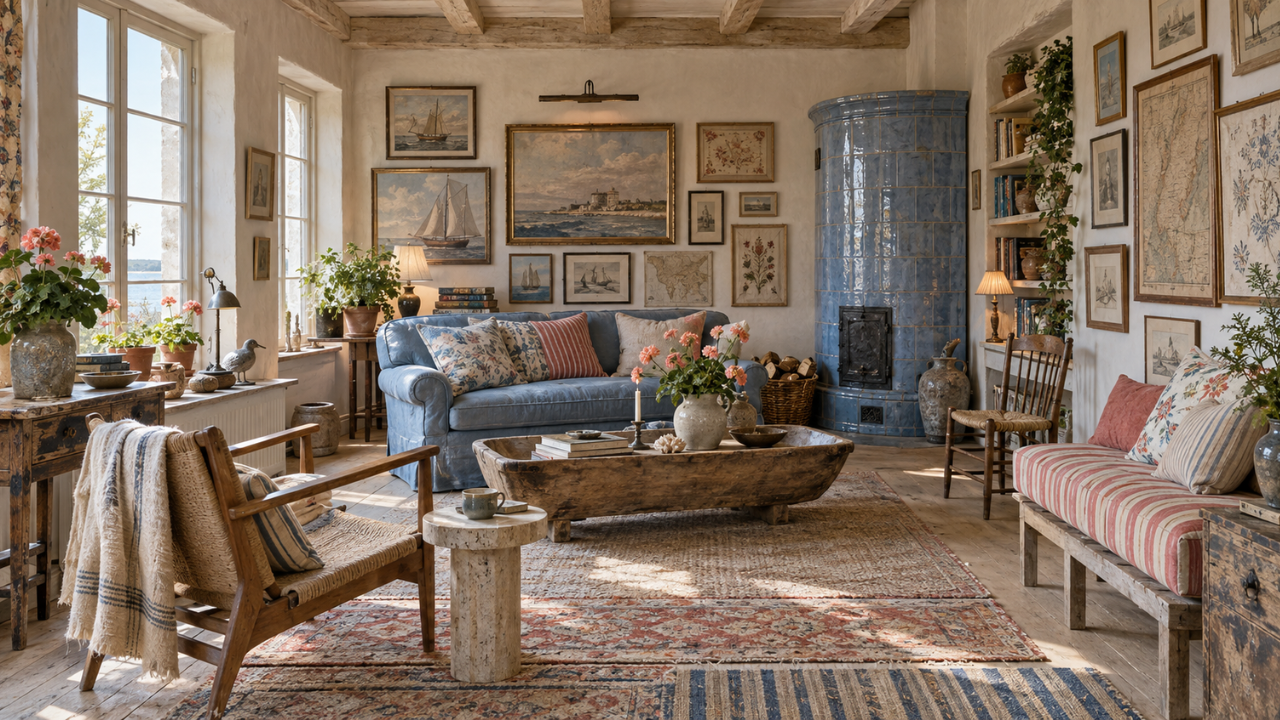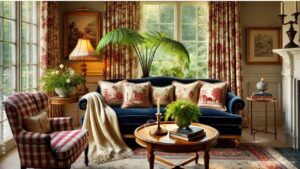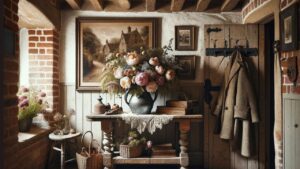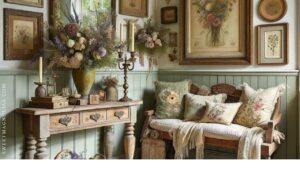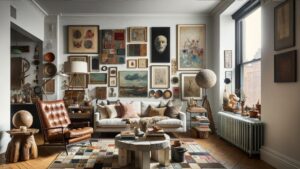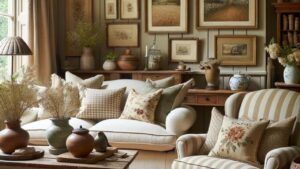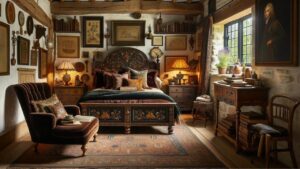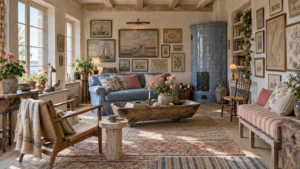
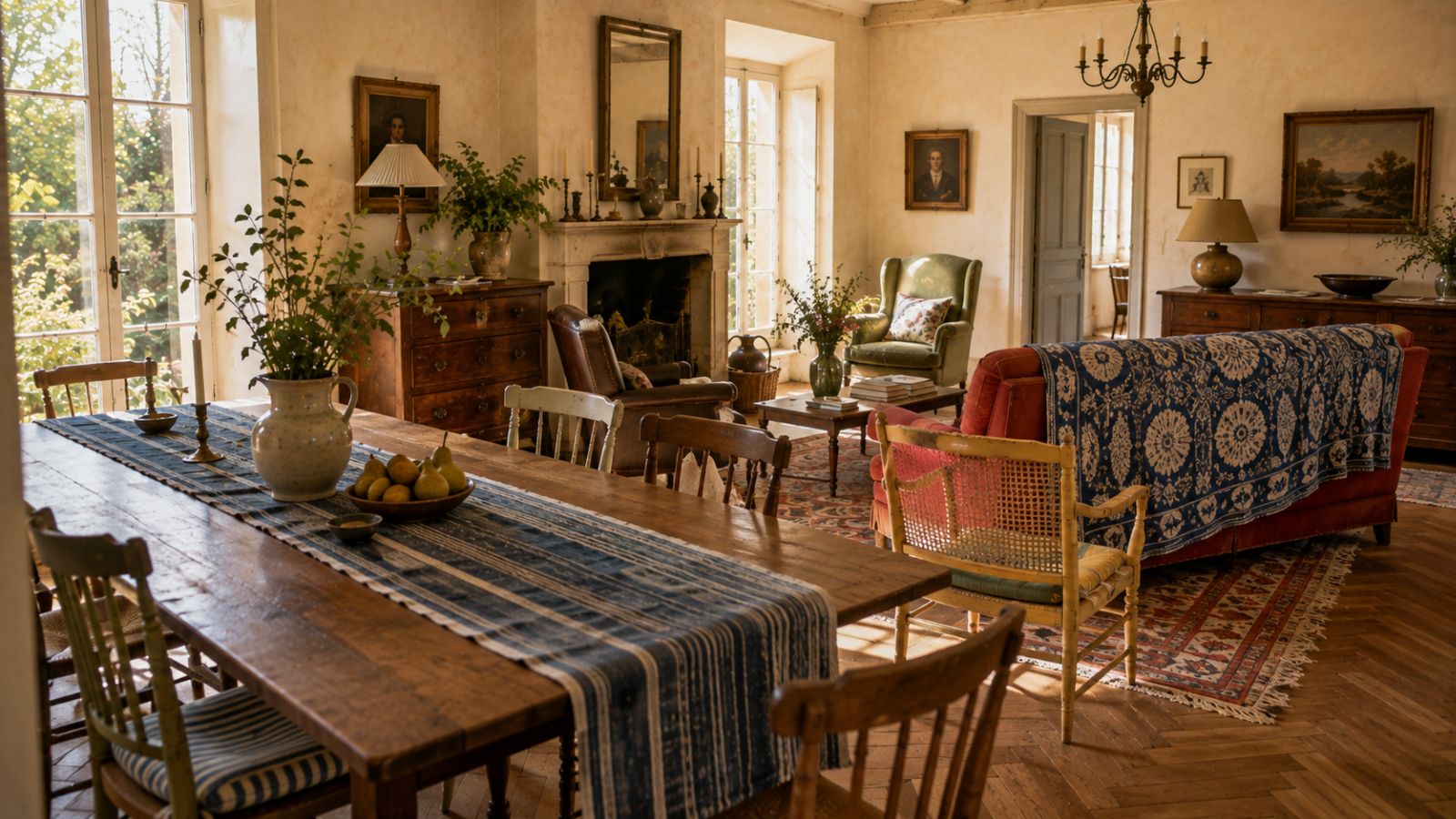
French country interiors have a way of feeling beautiful without appearing overly arranged. Rooms are layered gradually with old wood, faded fabrics, comfortable furniture, collected artwork, and pieces that seem to have found their place over time.
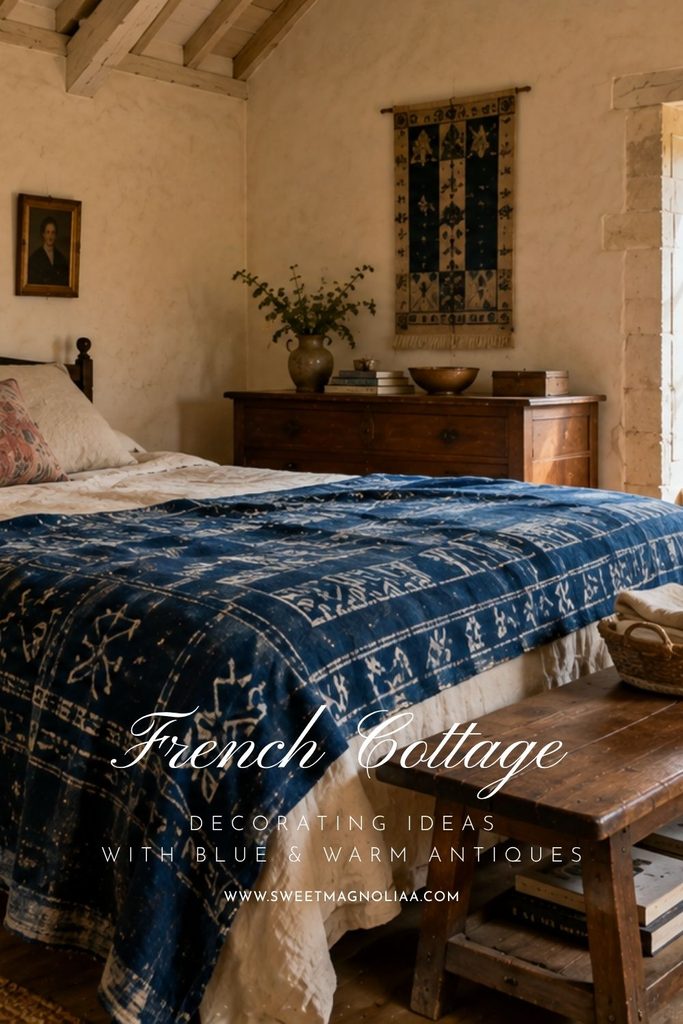
One of the loveliest ways to create this feeling is through French blue textiles paired with warm antiques. Indigo throws, blue-and-white patterned upholstery, vintage rugs, weathered wood, worn leather, and faded red or ochre accents create rooms that feel colorful yet wonderfully settled.
The key is not to make every element match. Instead, allow color, texture, and age to repeat quietly throughout the room.
Here are seven French country decorating ideas inspired by this relaxed, collected approach.
1. Anchor the Room With Faded French Blue
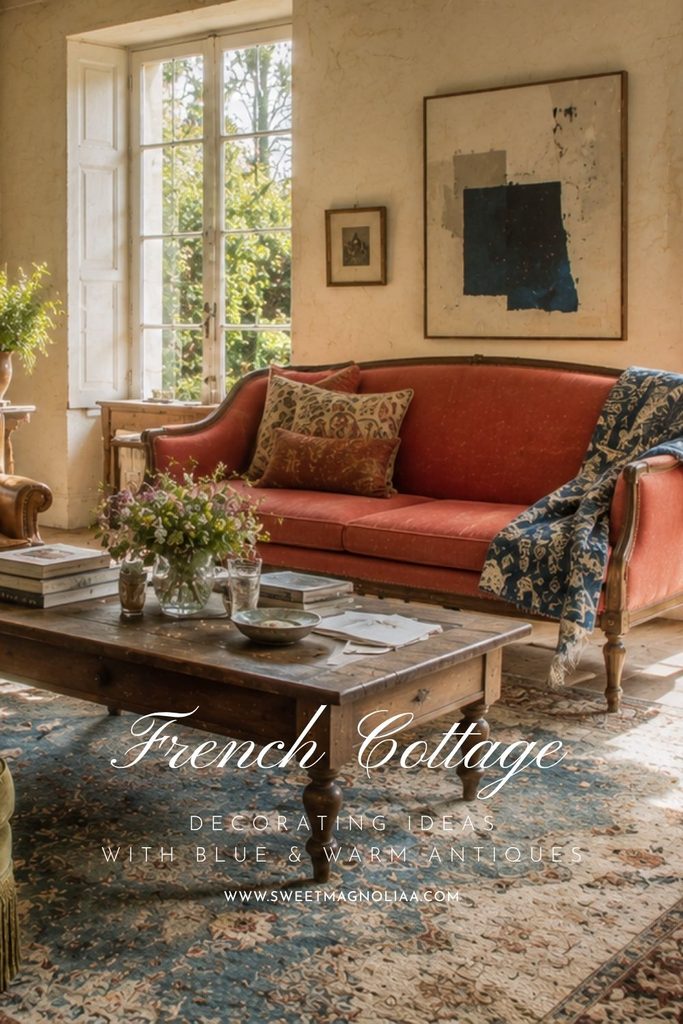
Blue is one of the easiest colors to build a French country room around, particularly when it appears in textiles rather than large expanses of paint.
A faded blue rug, indigo throw, patterned cushion, or upholstered chair can introduce enough color to establish the palette without overwhelming the room.
Pair these blues with warmer shades such as coral, rust, faded red, ochre, and aged brown. The contrast keeps blue from feeling cool or formal.
A coral sofa, for example, becomes especially beautiful when grounded by an old blue rug and an indigo textile draped casually across the back. Rather than competing, the colors make one another feel richer.
The goal isn’t perfect coordination. French country rooms often look most convincing when the colors feel as though they were collected over many years.
2. Mix Mismatched Antique Seating
A French country room doesn’t need a matching furniture suite.
In fact, mixing different styles of seating can immediately give a room more character.
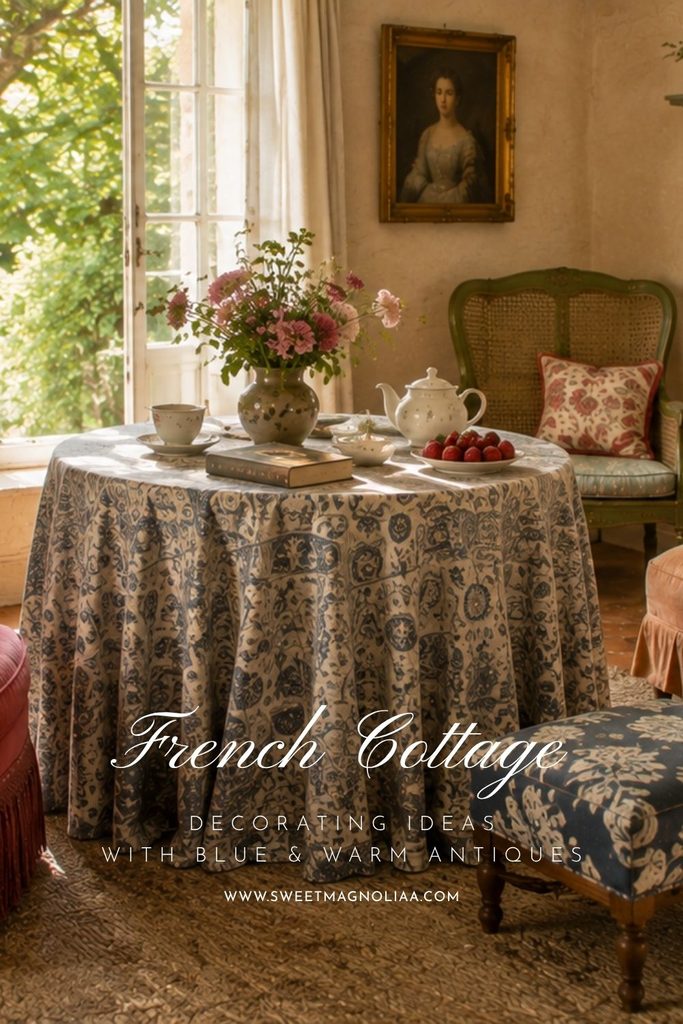
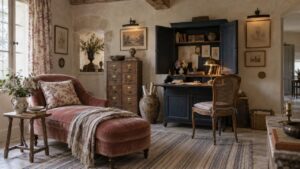
Place a worn leather armchair beside a velvet chair. Add a painted cane chair near a traditional upholstered sofa. A simple rush-seat chair can sit comfortably beside something far more elegant.
What connects these pieces is not their style but their age, patina, color, and sense of comfort.
Look for warm cognac leather, faded olive velvet, dusty coral upholstery, painted wood, cane, linen, and small-scale patterned fabrics.
Keeping the surrounding palette relatively consistent allows very different furniture pieces to coexist beautifully.
3. Bring Blue-and-White Pattern Onto Dining Chairs
Blue and white is almost synonymous with French country decorating, but it doesn’t have to appear only through pottery and tableware.
Upholstered dining chairs are a wonderful place to introduce pattern.
Try faded florals, damask-inspired motifs, toile-like prints, or small botanical patterns in soft blue and cream. Around a substantial antique wood table, patterned chairs introduce softness and prevent all that wood from feeling visually heavy.
You don’t need every chair to match, either.
A few upholstered chairs can be mixed with painted chairs, rush seating, or simple wooden dining chairs. This slightly irregular arrangement gives the dining room the informal character associated with an old country house.
4. Layer Indigo Textiles With Warm Wood
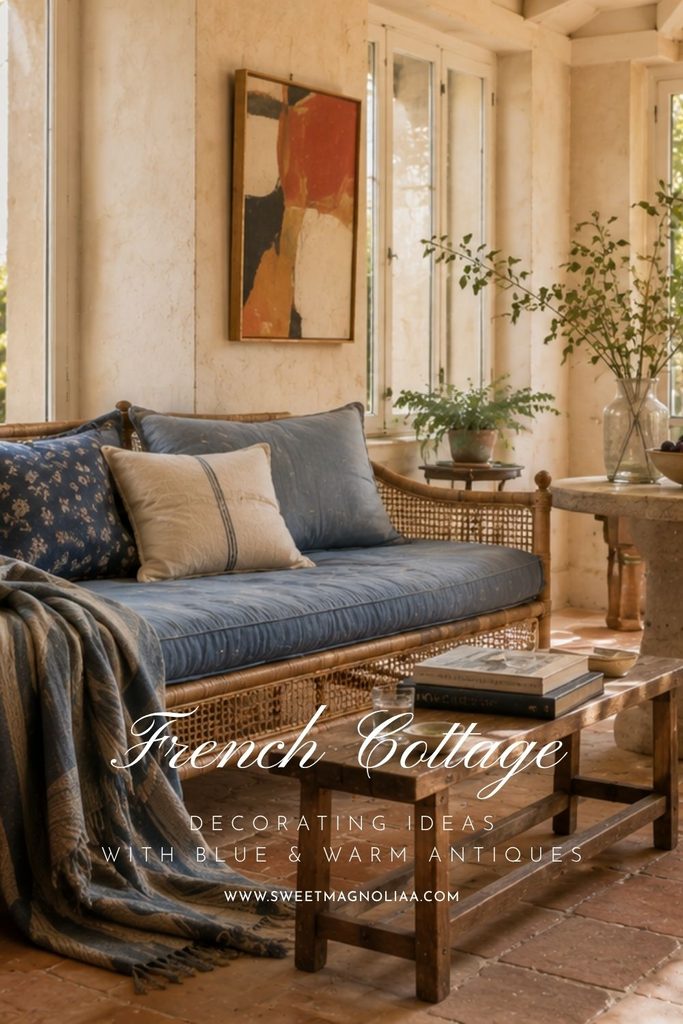
Deep indigo can look particularly beautiful against old wood.
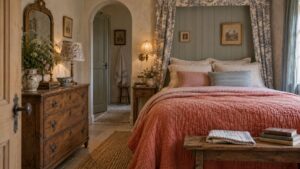
In a bedroom, an indigo quilt or patterned textile instantly adds depth to simple cream or white bedding. Against antique bedside tables, wooden benches, old chests, and worn floorboards, the blue feels grounded rather than crisp.
This combination works because of the contrast in temperature.
Indigo brings cool depth.
Wood brings warmth.
Cream creates breathing room.
A little ochre, muted green, or faded red can then be added through a chair, cushion, small table, or piece of art.
You don’t need many elements. One expressive textile can often carry the entire room.
5. Use Vintage Rugs to Connect Multiple Colors
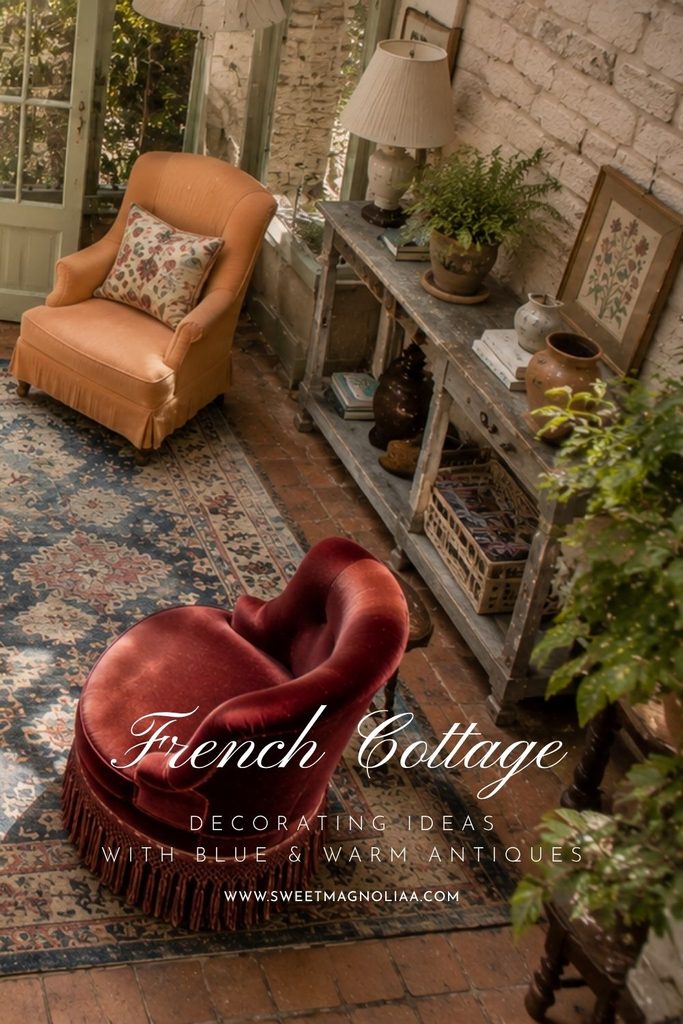
Vintage-style rugs are especially useful in collected French interiors because they allow several seemingly unrelated colors to exist in the same room.
A rug containing blue, faded red, cream, rust, and touches of ochre can visually connect a blue sofa, coral chair, antique wooden table, and patterned cushions.
Instead of choosing the rug at the end as an accessory, think of it as part of the room’s color foundation.
And don’t worry if its colors aren’t exact matches.
Slight variations are part of the charm. A faded navy rug can sit beneath dusty blue upholstery; muted brick red can accompany coral or burgundy; warm beige can bridge plaster walls and antique wood.
The result feels layered rather than coordinated.
6. Repeat Blue Quietly Across Connected Rooms
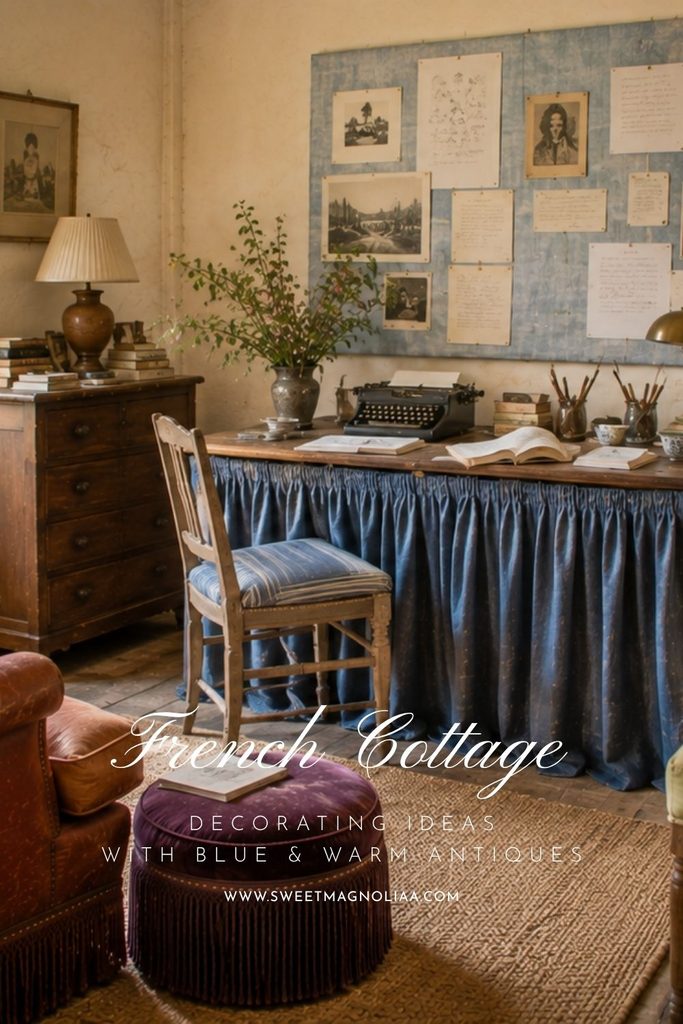
A strong color palette doesn’t require using the same blue everywhere.
Instead, allow blue to travel through a home in different forms.
A dining room might have a faded indigo table runner and patterned chairs. The adjoining living room could repeat the color through a throw draped over the sofa. A bedroom might carry it forward through a quilt, while another sitting area uses blue cushions or a vintage rug.
This repetition creates continuity without making the house feel themed.
The same principle works within a single open room. Blue might appear once in upholstery, again in a textile, and once more in a rug.
Each repetition is small, but together they create a visual rhythm.
7. Keep the Architecture Pale So Collected Pieces Can Shine
When a room contains antique furniture, colorful textiles, vintage rugs, paintings, pottery, and patterned upholstery, the architecture doesn’t necessarily need additional decoration.
Soft plaster walls, warm cream paint, pale stone, natural wood floors, and simple white-painted windows provide a beautiful background for collected pieces.
The restraint is important.
A quiet architectural envelope allows an indigo textile to feel richer, an antique chest to become more noticeable, and a faded coral chair to provide exactly the right amount of color.
Natural light adds another layer, particularly when it catches the uneven surfaces of old wood, linen, plaster, leather, and velvet.
Rather than making the room look unfinished, the pale background gives everything else space to breathe.
Creating a Collected French Country Palette
You don’t need to recreate an entire French country room at once.
Start with a few colors and materials that naturally complement one another:
French blue or indigo + warm cream + antique wood + faded red or coral + touches of ochre or muted green.
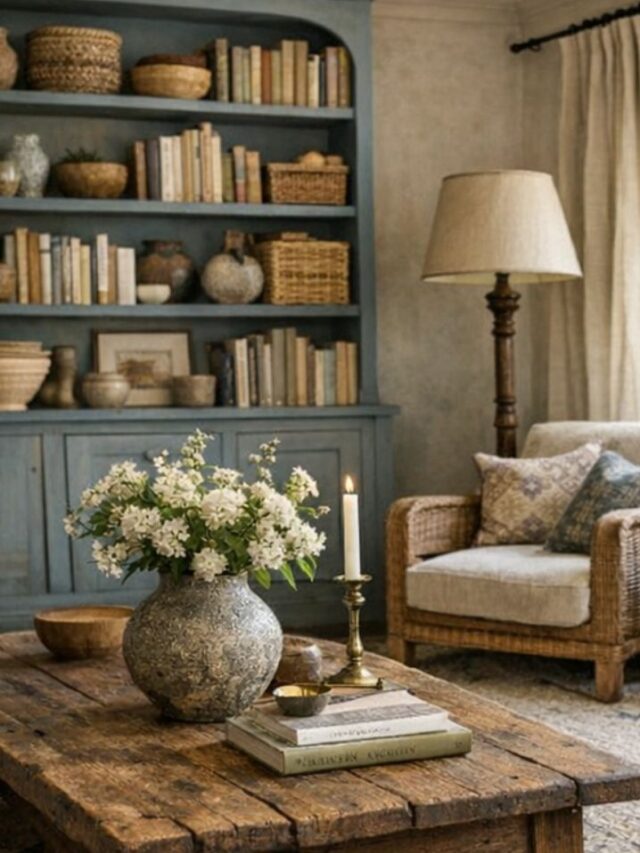
Then build slowly through textiles, rugs, old furniture, pottery, artwork, books, baskets, and pieces with visible age.
The most inviting French country interiors rarely feel as though everything arrived on the same day. Their beauty comes from the conversation between pieces—the faded textile beside polished wood, the elegant chair beside the rustic table, and the deep blue pattern appearing unexpectedly across a warm, sunlit room.
That slightly imperfect mixture is precisely what makes a French country home feel warm, personal, and collected rather than decorated.
More on Cottage Style Homes
French Cottage Home Office Ideas: 12 Ways to Create a Charming Workspace
Wall Decor Ideas Inspired by Cottage Style Homes: 15 Charming Ways to Decorate
Maximalism in Cottage Style Homes: 15 Beautiful Ideas
7 French Cottage Color Palette Ideas Beyond Sage Green
The Best Colors to Pair with Sage Green in French Cottage Interiors
English Cottage Style in a Romantic London Townhouse
10 Common French Country Decorating Mistakes
1. Using Too Much Blue
Blue works beautifully in French decor, but using it on every surface can make the room feel overly themed. Balance blue with warm cream, aged wood, stone, linen, and natural textures.
2. Choosing Blues That Feel Too Bright
French country interiors tend to suit softened blues such as indigo, dusty blue, muted navy, and blue-grey. Very bright blues can lose the aged, relaxed character that makes French decor so inviting.
3. Buying Matching Furniture Sets
Avoid making every chair, table, and cabinet match. French decor feels more authentic when antique wood, painted furniture, cane, leather, and upholstered pieces are collected gradually.
4. Making Everything Look Distressed
Not every piece needs chipped paint or an aged finish. Too many deliberately distressed surfaces can make a room feel artificial rather than naturally collected.
5. Forgetting Warm Wood
Blue and cream can become visually cool without something warmer to ground them. Antique oak, walnut, pine, and other aged woods bring warmth and depth to French country decor.
6. Matching Every Shade of Blue
Your rug, upholstery, curtains, and cushions don’t need to be exactly the same blue. Mixing indigo, faded blue, powder blue, and muted navy gives the room more character.
7. Using Too Many Patterns at Once
Toile, florals, stripes, and traditional motifs are wonderful elements of French decor, but they need quieter surfaces around them. Balance pattern with plain linen, plaster, wood, and stone.
8. Ignoring the Rug
A vintage-style rug can bring the entire color palette together. Look for rugs that combine blue with faded red, cream, rust, ochre, or brown.
9. Over-Styling Antique Pieces
Antiques already bring history and personality into a room. Give beautiful pieces enough space to be noticed instead of surrounding every antique with additional decorative objects.
10. Trying to Finish the Room All at Once
One of the charms of French country decor is the impression that a home has evolved over time. Leave room for future artwork, textiles, furniture, books, and vintage discoveries.
Closing Thoughts
French country decorating becomes especially beautiful when blue is treated as part of a larger, collected palette rather than a strict decorating theme. Faded indigo, patterned textiles and vintage blue accents feel warmer when they sit beside aged wood, worn leather, antique furniture, soft cream walls and touches of rust, coral or ochre.
The rooms don’t need to match perfectly. In fact, much of their charm comes from allowing different periods, finishes and patterns to live together.
Start with one piece you love—perhaps an old wooden table, a blue textile, a vintage rug or an antique chair—and build around it gradually. Over time, those individual finds begin to create the relaxed, layered character that makes French country interiors feel so inviting.
10 FAQs about French Country Decorating
1. What colors work best with French country blue?
Warm ivory, cream, natural linen, faded red, coral, ochre, muted green, and warm brown all work beautifully with French country blues. These warmer shades keep a blue color palette from feeling too cool.
2. What shade of blue works best for French country decor?
Look for softened, historical-looking blues such as faded indigo, dusty blue, muted navy, powder blue, and blue-grey. The right blue color should feel slightly faded rather than bright or highly saturated.
3. How do you make blue French country decor feel warm?
Pair blue color with aged wood, warm cream, antique leather, brass, natural linen, and accents of rust, coral, or ochre. These warmer materials soften the cooler quality of blue.
4. Can you mix different shades of blue in one room?
Yes. Mixing several shades of blue color often creates a more natural, collected appearance than repeating one exact shade throughout the room. Indigo, dusty blue, and muted navy can easily coexist.
5. Do French country furniture pieces need to match?
No. Mismatched furniture is part of the appeal. Antique wood tables, painted chairs, cane seating, upholstered pieces, and worn leather can all coexist beautifully.
6. What patterns work with French country decorating?
Toile, faded florals, ticking stripes, checks, botanical motifs, and traditional woven patterns all work well. Blue patterns are particularly beautiful when balanced with plain linen, plaster, wood, and stone.
7. How can I add French country style without replacing my furniture?
Start with textiles and smaller collected pieces. A vintage-style rug, cushions in a faded blue color, linen, pottery, old artwork, baskets, or a single antique side table can begin changing the character of the room.
8. Can French country decor be colorful?
Absolutely. French country doesn’t have to mean beige and cream. Blue color, muted reds, greens, ochres, corals, and other faded shades can create a wonderfully layered interior.
9. How do I mix antiques with newer furniture?
Focus on relationships rather than age. Similar colors, materials, proportions, or textures can help an antique table sit comfortably beside a newer sofa or chair.
10. How do I keep a collected French country room from looking cluttered?
Allow quieter areas between visually rich elements. Use pale walls and simple architectural backgrounds, repeat a few key colors—including blue color where appropriate—and give important antiques and textiles enough space to be noticed.