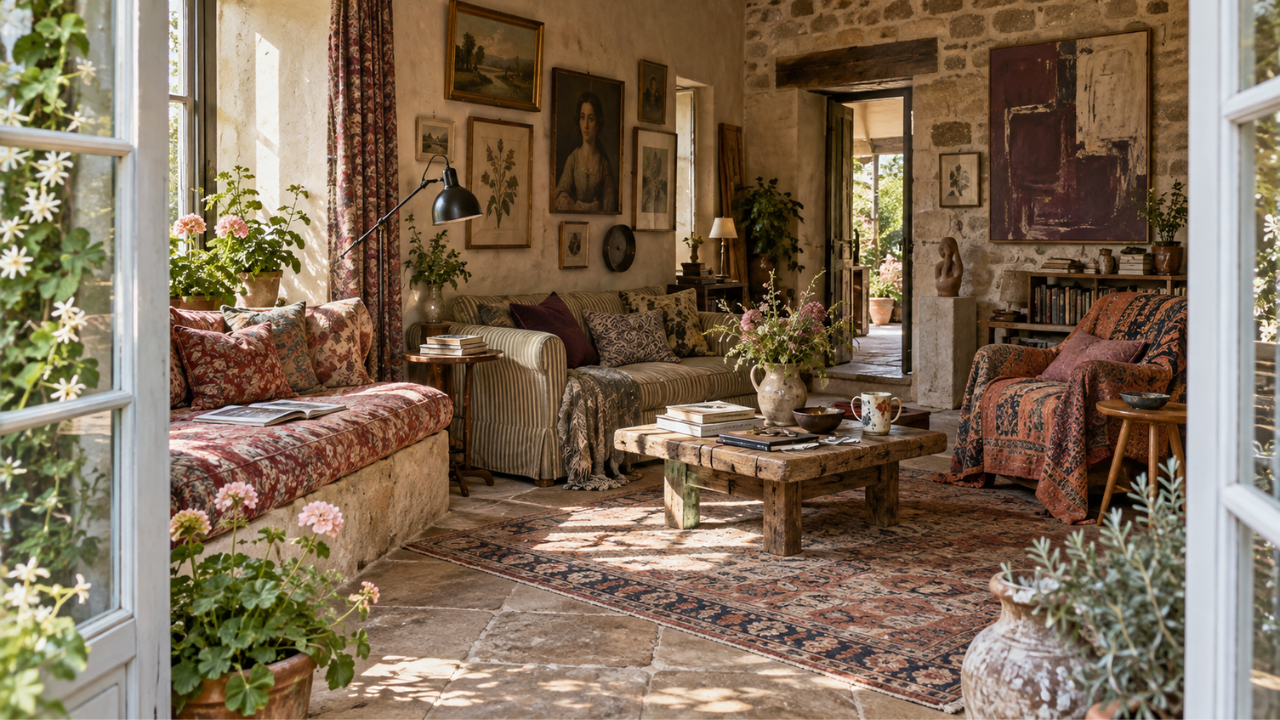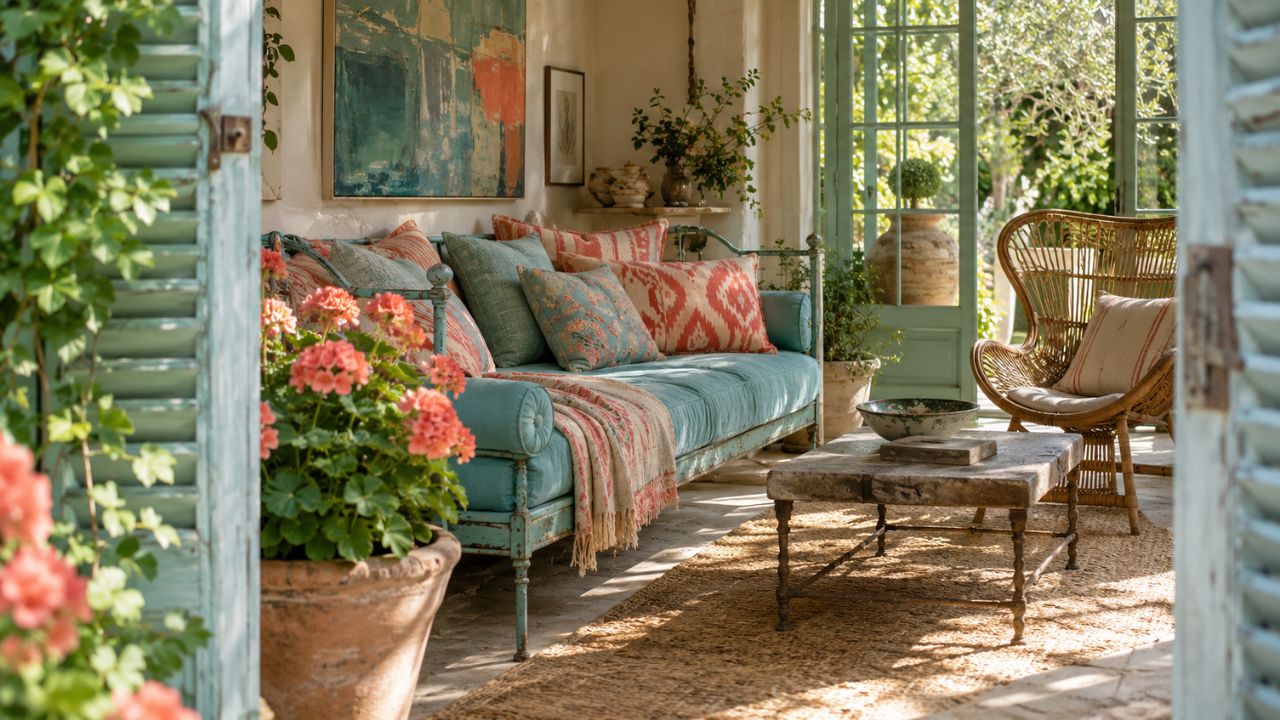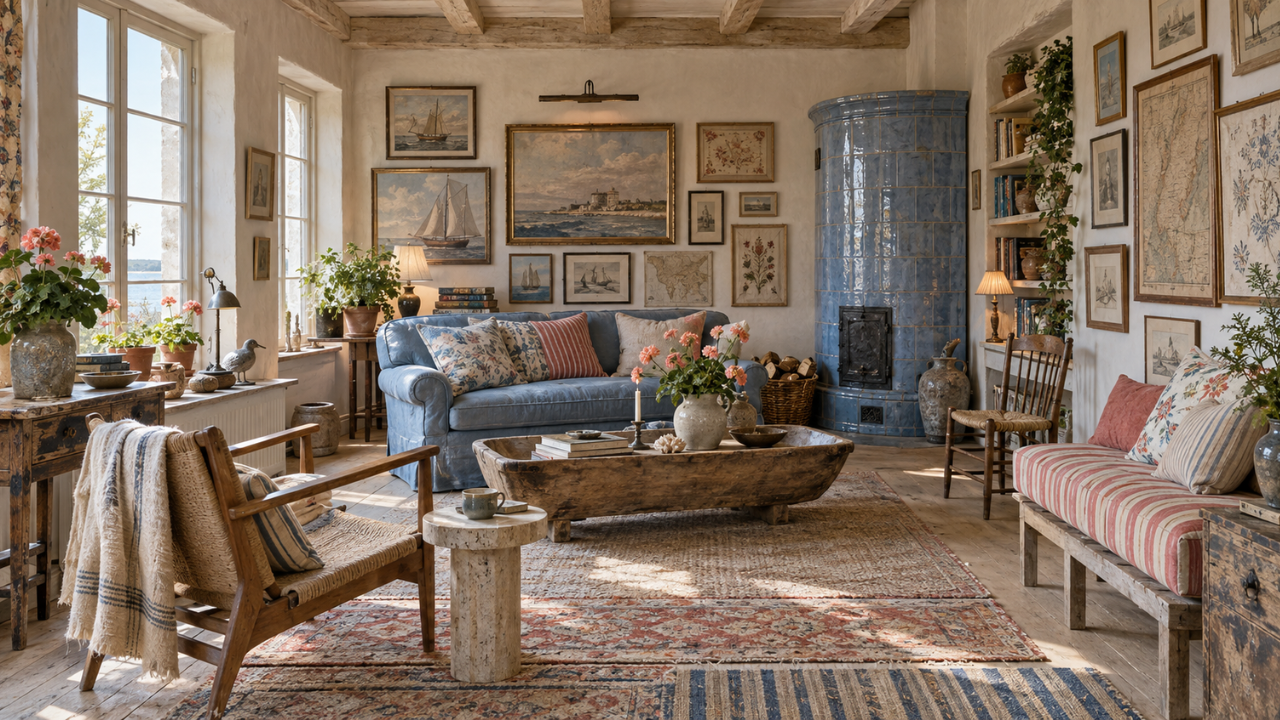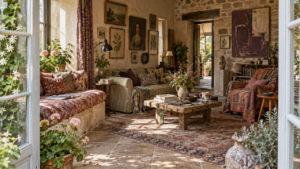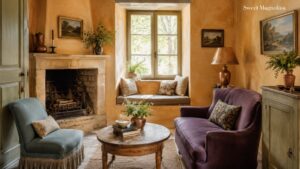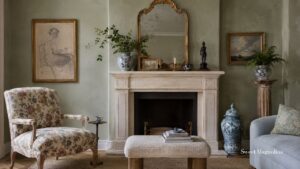
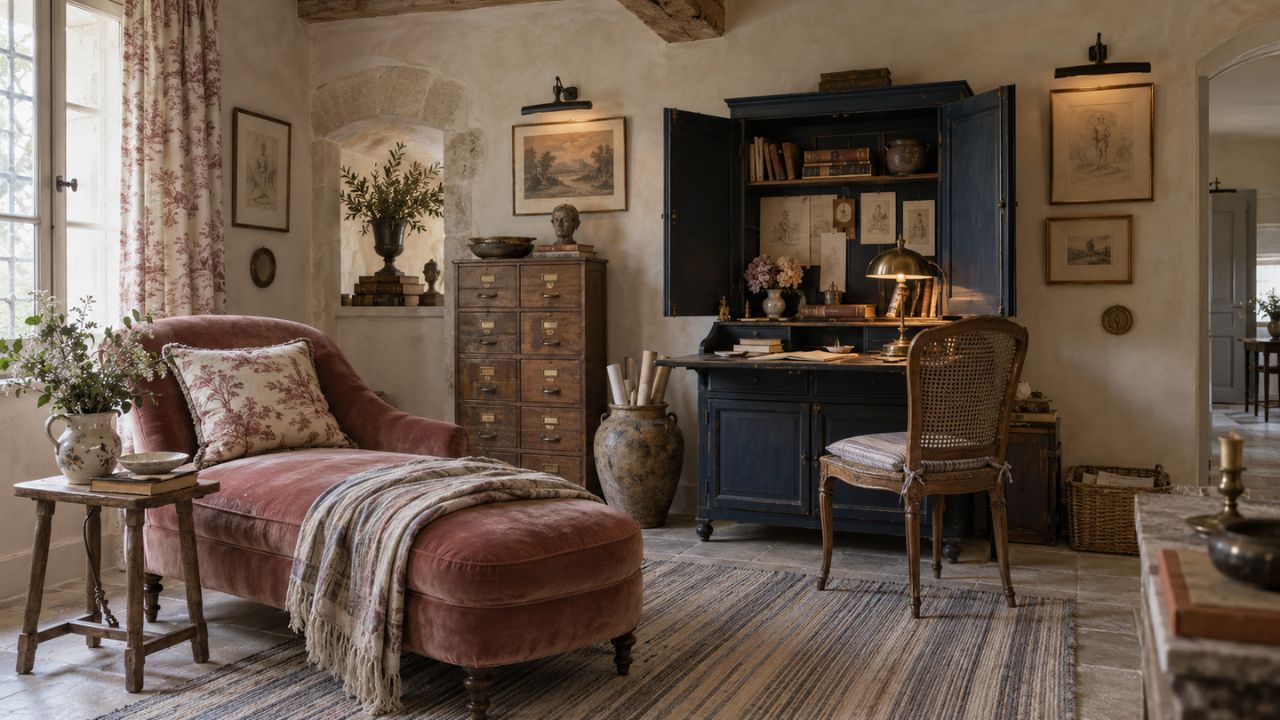
There is something especially inviting about a home office that doesn’t immediately announce itself as an office.
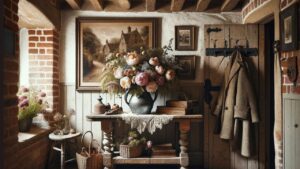
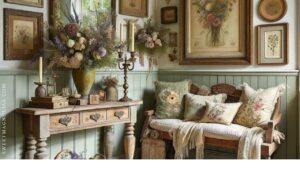
Instead of sleek office furniture, matching storage, and a desk arranged purely around productivity, imagine an old wooden writing table tucked beneath a collection of paintings. Books spill across painted shelves. A brass lamp casts a pool of warm light over an open notebook. Flowers sit in an old ceramic pitcher, and somewhere nearby is a comfortable chair that makes you want to stay awhile.
That is the charm of a French cottage home office.
It feels less like a workspace that has been decorated and more like a beautiful room in which someone happens to work.
If you love interiors that feel collected, relaxed, and full of history, here are 12 French cottage home office ideas for creating a workspace with warmth, character, and a wonderfully lived-in quality.
1. Begin With an Old Writing Desk
The desk naturally becomes the anchor of a home office, but it doesn’t need to look like conventional office furniture.
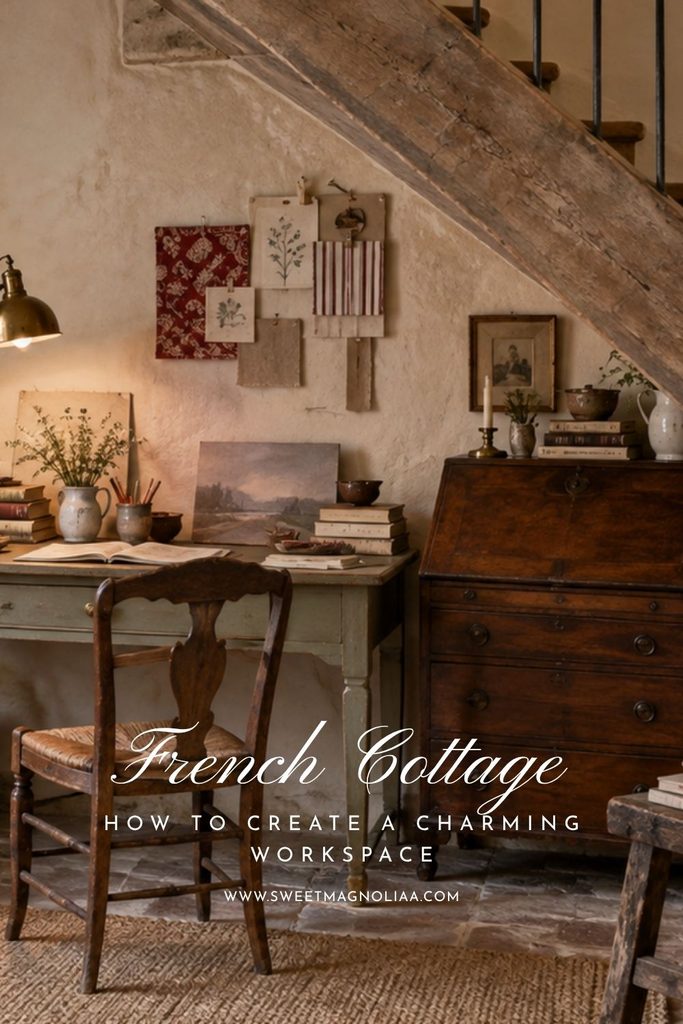
An antique writing desk, old farmhouse table, secretary desk, or weathered wooden table immediately gives the room character.
Look for pieces with evidence of age rather than perfect finishes: softened edges, old brass hardware, faded paint, scratches, and variations in the wood.
These imperfections prevent a workspace from feeling overly polished. They suggest that the furniture has already lived another life—and can continue evolving with yours.
2. Let the Workspace Belong to the Room
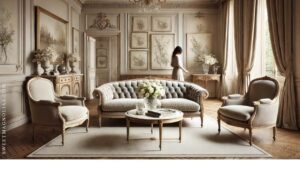
One of the loveliest qualities of French cottage interiors is that rooms don’t always seem rigidly divided according to function.
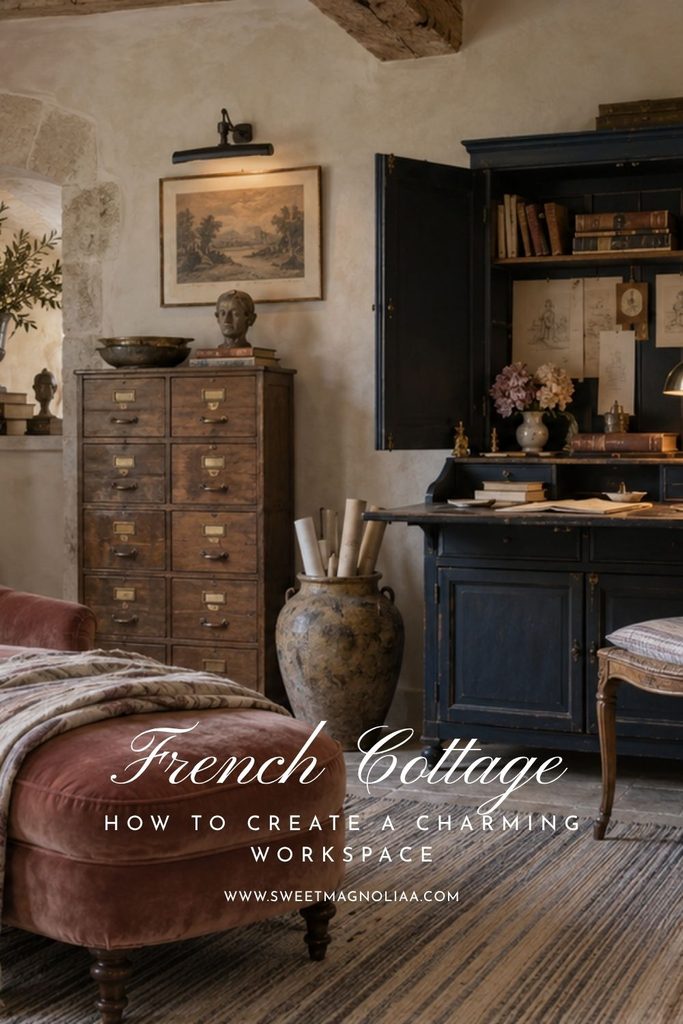
A desk might sit beside a fireplace. A writing table can share a room with a chaise longue. Bookshelves might surround a comfortable reading nook as easily as a work area.
Instead of trying to create an isolated “office zone,” consider how your workspace can become part of the room you already have.
A corner of a bedroom, library, sitting room, or even the space beneath a staircase can become a charming place to work.
The goal isn’t to make the entire room feel like an office.
It’s to allow the office to feel at home in the room.
3. Turn a Secretary Desk Into a Small Home Office
For a small home office, few pieces are as useful—or as beautiful—as an old secretary desk.
The writing surface provides enough room for a laptop or notebook, while drawers and shelves keep everyday necessities nearby.
When work is finished, papers can disappear behind doors or into drawers.
This is particularly useful when your workspace sits in a living room or bedroom because the office can visually retreat at the end of the day.
Style the surrounding shelves with books, small framed sketches, ceramics, flowers, or collected objects so the piece feels like part desk, part cabinet of curiosities.
4. Surround Yourself With Books
Books immediately soften a workspace.
Rather than treating shelves purely as storage, allow them to become part of the atmosphere of the room.
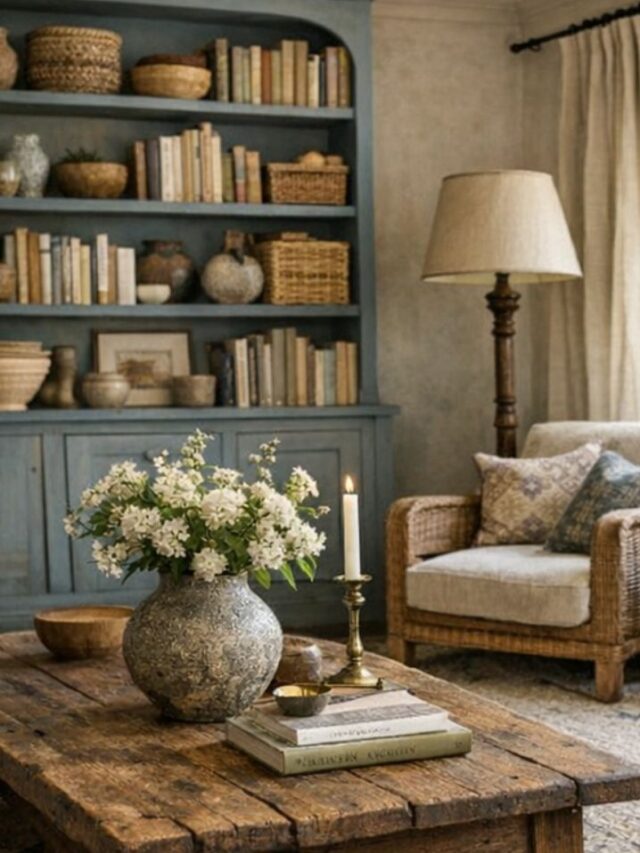
Fill built-in bookcases with a mixture of old books, newer favourites, framed botanical prints, pottery, small sculptures, and objects gathered over time.
And don’t worry about making every shelf perfectly symmetrical.
Some books can stand upright. Others can lie horizontally. A little painting might lean against the back of a shelf. An old bowl can sit on top of a stack of books.
That slight irregularity is part of what makes a collected room feel natural.
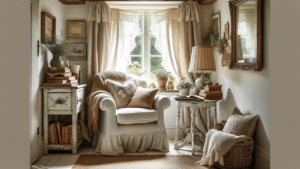
5. Add a Comfortable Reading Chair
Not every moment of work needs to happen at a desk.
A generous armchair or chaise creates another place to read, think, sketch, make notes, or simply move away from the computer for a while.
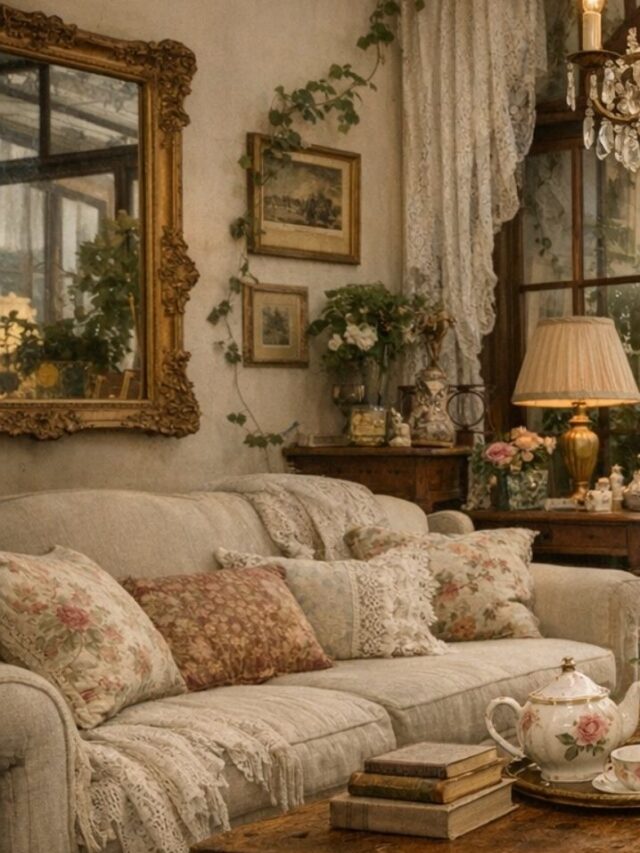
Velvet, linen, faded florals, checks, and traditional upholstery all work beautifully within this style.
Deep burgundy, dusty rose, olive green, faded blue, and warm neutral upholstery can also introduce colour without making the room feel overly decorated.
Place a small table nearby for books, tea, or flowers, and suddenly the office becomes somewhere you might actually enjoy spending an afternoon.
6. Use Painted Furniture for Softer Colour
French cottage rooms often gain their colour from furniture rather than dramatic wall treatments.
Muted sage, dusty blue, soft grey-green, faded burgundy, and chalky cream work particularly well for desks, bookcases, cabinets, and storage pieces.
The important word here is muted.
These colours should feel softened by time rather than freshly applied and perfect.
Pair painted furniture with natural wood rather than matching everything. A blue-grey bookcase beside an old oak desk, for example, creates far more depth than an entire room of identical furniture.
7. Bring Pattern Into the Workspace
A functional room doesn’t need to be visually plain.
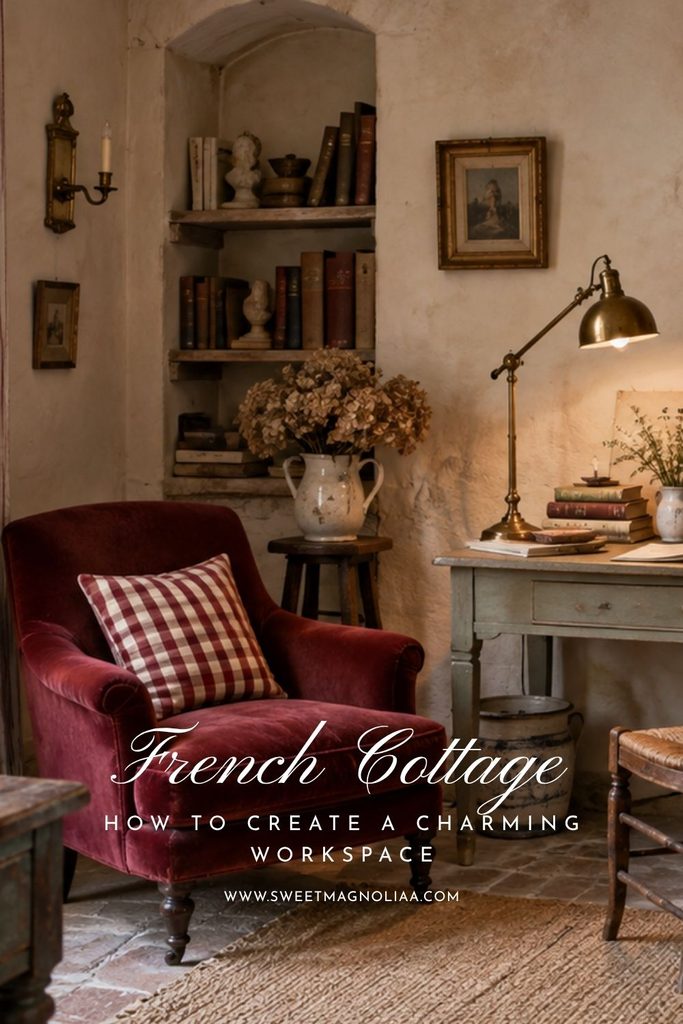
Toile, gingham, faded stripes, small-scale florals, and traditional woven fabrics can bring softness to a home office without overwhelming it.
Try them on a reading chair, curtain, cushion, lampshade, upholstered desk chair, or small pinboard.
You don’t need every pattern to match.
Instead, repeat one or two colours between them. A faded red toile can sit comfortably beside a small burgundy check when both share the same warm, aged quality.
The result feels collected rather than coordinated.
8. Choose Warm, Layered Lighting
Good lighting is essential in any home office, but practical lighting can still be beautiful.
A brass desk lamp or adjustable library lamp provides focused illumination for working, while a shaded table lamp introduces a softer pool of light elsewhere in the room.
If possible, use several smaller sources of light rather than relying entirely on one bright overhead fixture.
Pleated shades, aged brass, antique-style lamps, and warm bulbs help create the gentle evening atmosphere that suits French cottage interiors particularly well.
Your workspace should still function after sunset without suddenly feeling like a corporate office.
9. Decorate With Art That Has Nothing to Do With Work
Office walls don’t need motivational quotes.
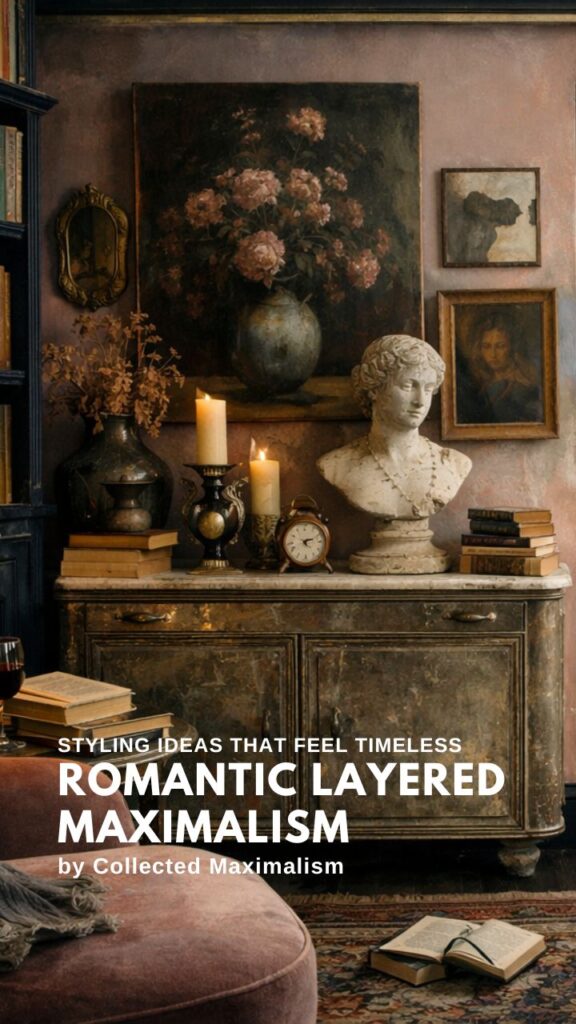
Hang the things you would choose for any other room in your home: landscapes, botanical studies, portraits, sketches, old maps, architectural drawings, or small pieces you’ve collected simply because you love them.
Mix different frame sizes and finishes rather than creating a perfectly matching set.
An ornate gold frame can sit beside dark wood, aged brass, or something much simpler.
A workspace becomes far more personal when the wall reflects your interests rather than its function.
10. Make Storage Part of the Decoration
Practical storage is still important, especially when you’re trying to create a room that feels calm rather than cluttered.
But conventional office storage isn’t the only solution.
Old apothecary drawers can hold small supplies. Baskets can disappear beneath a desk. A vintage cabinet can store paperwork. Boxes covered in patterned fabric or paper can hide less attractive necessities on open shelving.
Even an antique chest of drawers can become remarkably useful office storage.
The principle is simple: hide what needs hiding and allow the beautiful things to remain visible.
11. Add the Ordinary Things That Make a Room Feel Alive
Sometimes it isn’t the furniture that creates atmosphere. It’s everything around it.
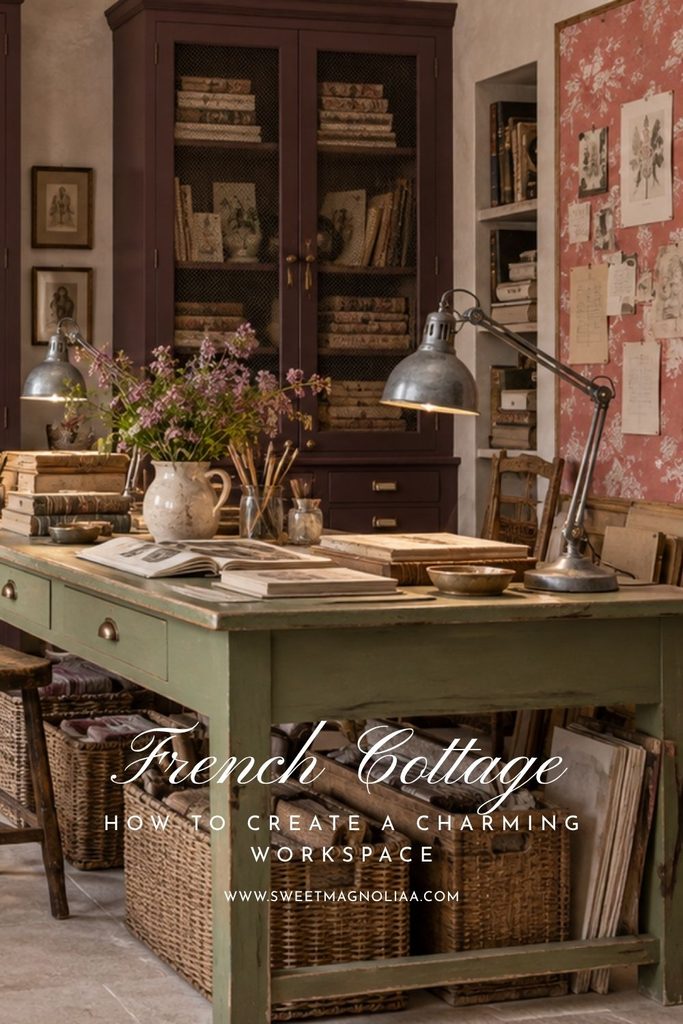
A ceramic pitcher filled with branches.
A stack of books you are actually reading.
A bowl collected while travelling.
Fresh flowers from the garden.
Pencils gathered in an old pot.
A candle beside the desk.
An unfinished notebook left open.
These small details make a workspace feel inhabited rather than styled for a photograph.
And that distinction matters.
A French cottage-inspired office shouldn’t feel as though everything has been positioned and then left untouched. It should feel like someone has just stepped away from the desk and will return in a few minutes.
12. Allow Your Home Office to Evolve
Perhaps the most important part of creating this kind of workspace is resisting the urge to finish everything at once.
French cottage style works beautifully when a room appears to have developed slowly.
Begin with the things you genuinely need: a desk, a good chair, useful lighting, and somewhere to keep your work.
Then live with the room.
You may eventually find an old painting for the wall. A vintage cabinet might appear months later. Books accumulate. A chair gets reupholstered. You discover a lamp at an antique market that suddenly makes the entire corner feel right.
The room becomes more personal because you haven’t tried to manufacture its history overnight.
More on Cottage Style Homes
Wall Decor Ideas Inspired by Cottage Style Homes: 15 Charming Ways to Decorate
Maximalism in Cottage Style Homes: 15 Beautiful Ideas
7 French Cottage Color Palette Ideas Beyond Sage Green
The Best Colors to Pair with Sage Green in French Cottage Interiors
English Cottage Style in a Romantic London Townhouse
10 Common French Cottage Home Office Mistakes to Avoid
A French cottage home office should feel collected, comfortable, and quietly functional. The easiest way to lose that feeling is to concentrate so heavily on creating the look that the room either becomes overly themed or stops working as an actual workspace.
1. Buying Everything New at Once
A room filled with newly purchased pieces designed to look old can quickly feel staged. French cottage interiors are more convincing when old and new pieces are allowed to mingle.
Start with what you already own and gradually add vintage furniture, artwork, books, ceramics, or textiles as you find pieces you genuinely love.
2. Making the Room Too Perfect
Perfect symmetry, matching furniture, and carefully coordinated accessories can remove the relaxed character that makes French cottage style so appealing.
Allow different woods, frame finishes, furniture periods, and slightly irregular arrangements to coexist.
3. Choosing a Desk for Looks Alone
A beautiful antique writing desk may photograph wonderfully but still be uncomfortable for several hours of work.
Before choosing one, check the height, depth, legroom, and available work surface. Beauty matters, but the desk still needs to support the way you actually work.
4. Turning the Office Into a French-Themed Room
You don’t need Eiffel Towers, French signs, or obviously themed accessories to create French cottage character.
Concentrate instead on materials and atmosphere: aged wood, painted furniture, linen, toile, old books, ceramics, botanical art, warm metals, and softly worn finishes.
5. Using Too Many Distressed Finishes
Not everything needs peeling paint or heavy distressing.
A few beautifully aged pieces are usually more effective when surrounded by quieter furniture and natural materials. Patina should feel authentic rather than applied everywhere for effect.
6. Forgetting Practical Storage
Books, chargers, notebooks, paperwork, and office supplies can quickly overwhelm a romantic workspace.
Use attractive storage that belongs naturally in the room, such as old drawers, baskets, cabinets, boxes, secretary desks, or built-in shelves.
7. Relying on One Overhead Light
One bright ceiling light can flatten all the warmth you’ve created.
Layer natural daylight with a desk lamp, reading lamp, shaded table lamp, or wall light. Several gentle pools of illumination create a much softer atmosphere while still providing enough light to work.
8. Overcrowding the Desk
Books, flowers, candles, ceramics, framed photographs, and beautiful stationery are tempting, but your desk still needs an open working area.
Decorate around your workspace rather than covering every available inch of it.
9. Making Everything Match
Matching the desk, chair, cabinet, shelves, and accessories can make a French cottage office feel more like a furniture showroom.
Try an old wooden desk with a painted cabinet, a cane chair, brass lighting, and a different wood tone elsewhere. The relationship between pieces matters more than perfect coordination.
10. Forgetting That the Room Should Feel Personal
Perhaps the biggest mistake is copying the style without adding anything that belongs specifically to you.
Display books you actually read, art that means something to you, objects collected while travelling, family pieces, photographs, flowers from your garden, or things connected to your creative life.
The most convincing French cottage home office should ultimately feel like your room, not a reproduction of somebody else’s.
Creating a Home Office That Feels Like Home
A beautiful home office doesn’t need to become a separate aesthetic world from the rest of your house.
In fact, the most appealing French cottage workspaces often barely resemble offices at all.
They contain the same things we love elsewhere in a home: comfortable furniture, old wood, books, art, flowers, textiles, beautiful lighting, useful objects, and pieces carrying traces of another time.
Function still matters. Your chair needs to be comfortable. Your desk needs enough space. Storage needs to work. Lighting needs to allow you to see what you’re doing.
But once those practical foundations are there, you can allow the room to become something more personal.
Because perhaps the loveliest workspace isn’t the one that makes us feel most productive.
It’s the one that makes us want to spend time there.
10 FAQs About French Cottage Home Offices
1. What is a French cottage home office?
A French cottage home office combines a practical workspace with the relaxed, collected character of French cottage interiors. Think aged wood, painted furniture, traditional textiles, old books, artwork, ceramics, and warm lighting.
2. What colors work best in a French cottage home office?
Warm creams, dusty blues, muted sage, faded burgundy, soft rose, taupe, and natural wood tones work beautifully.
3. What type of desk suits a French cottage home office?
Antique writing desks, secretary desks, farmhouse tables, old library tables, and simple wooden desks are all excellent choices.
4. Can I create a French cottage office in a small space?
Yes. A compact writing table or secretary desk can turn a bedroom corner, alcove, sitting room, or other small area into a charming workspace.
5. How can I make a modern desk look French cottage?
Pair it with vintage or antique-inspired elements such as a brass lamp, old artwork, ceramics, linen, baskets, books, and a traditional rug.
6. What fabrics work well in a French cottage home office?
Linen, toile, ticking stripes, gingham, faded florals, and traditional woven fabrics all work beautifully.
7. How do I create the look without making the office cluttered?
Keep the main desk relatively clear and concentrate decorative layering on walls, bookshelves, cabinets, and a reading corner.
8. Does all the furniture need to be antique?
No. Mixing antique, vintage, and contemporary pieces usually creates a more natural and collected interior.
9. What wall decor works in a French cottage office?
Vintage landscapes, botanical prints, portraits, sketches, old maps, and small collected artworks are especially well suited to the style.
10. How can I make a French cottage home office feel cozy?
Layer warm lighting, natural materials, comfortable seating, books, textiles, artwork, flowers, and a few personal objects to make the workspace feel inviting and lived in.