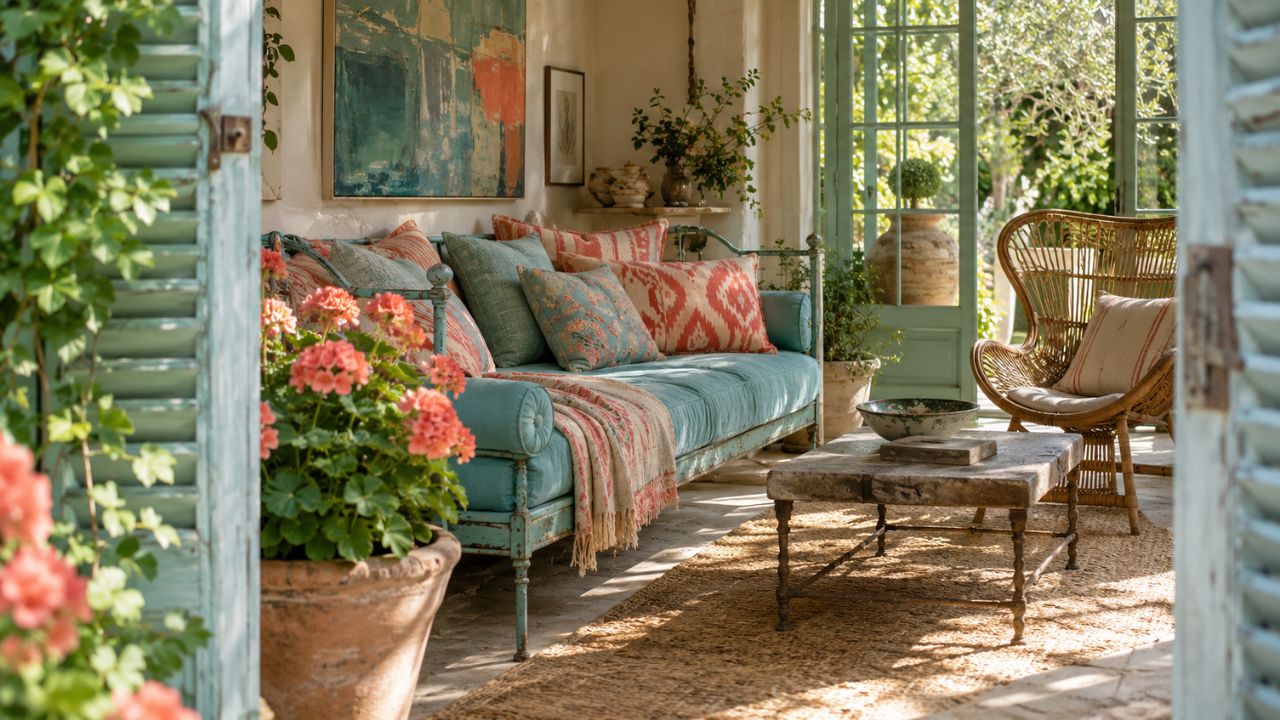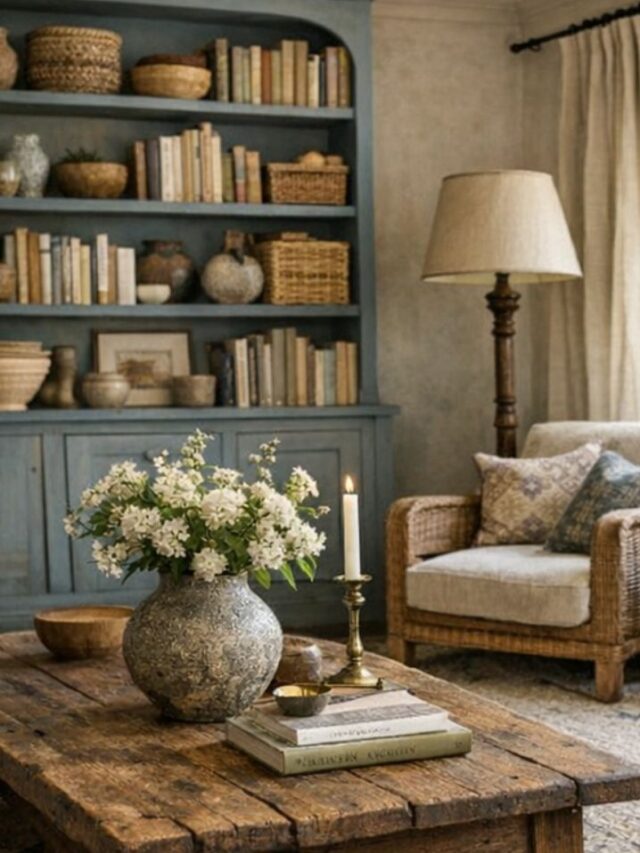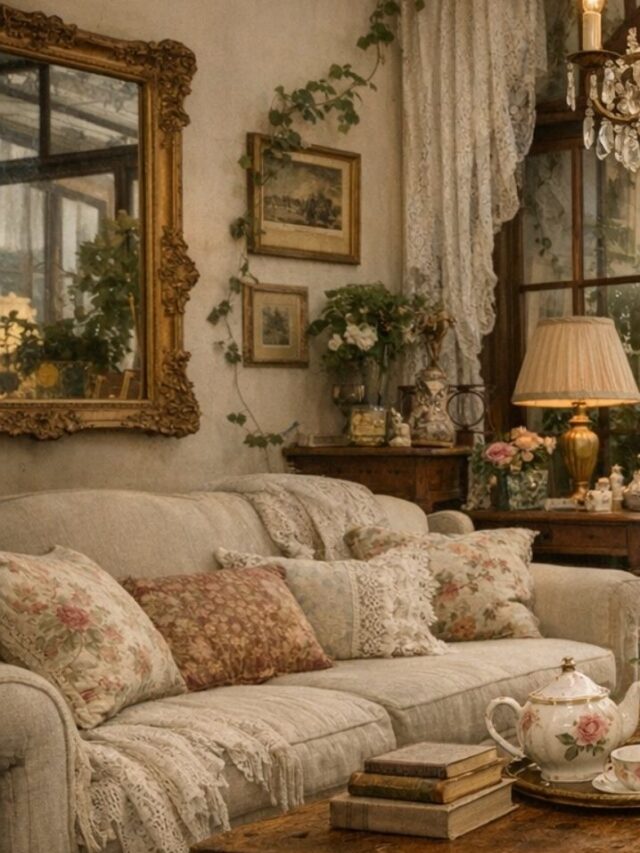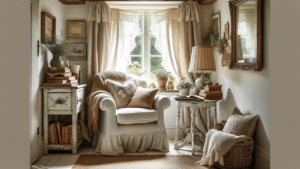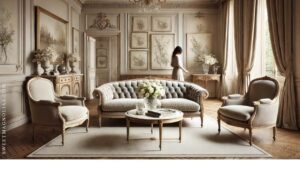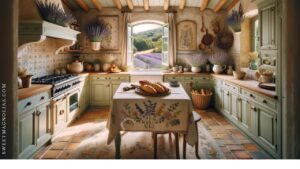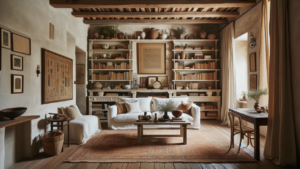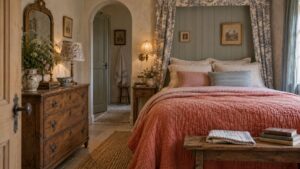
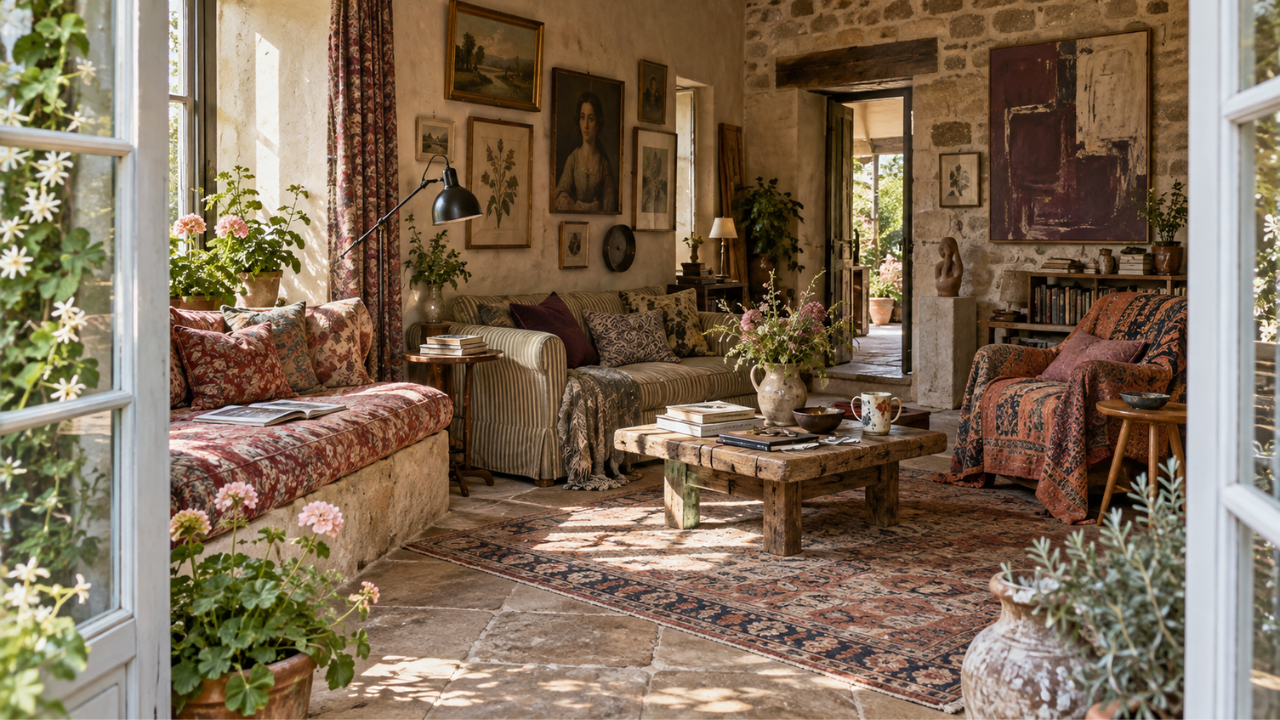
There is something about a cottage-style home that naturally invites layering.
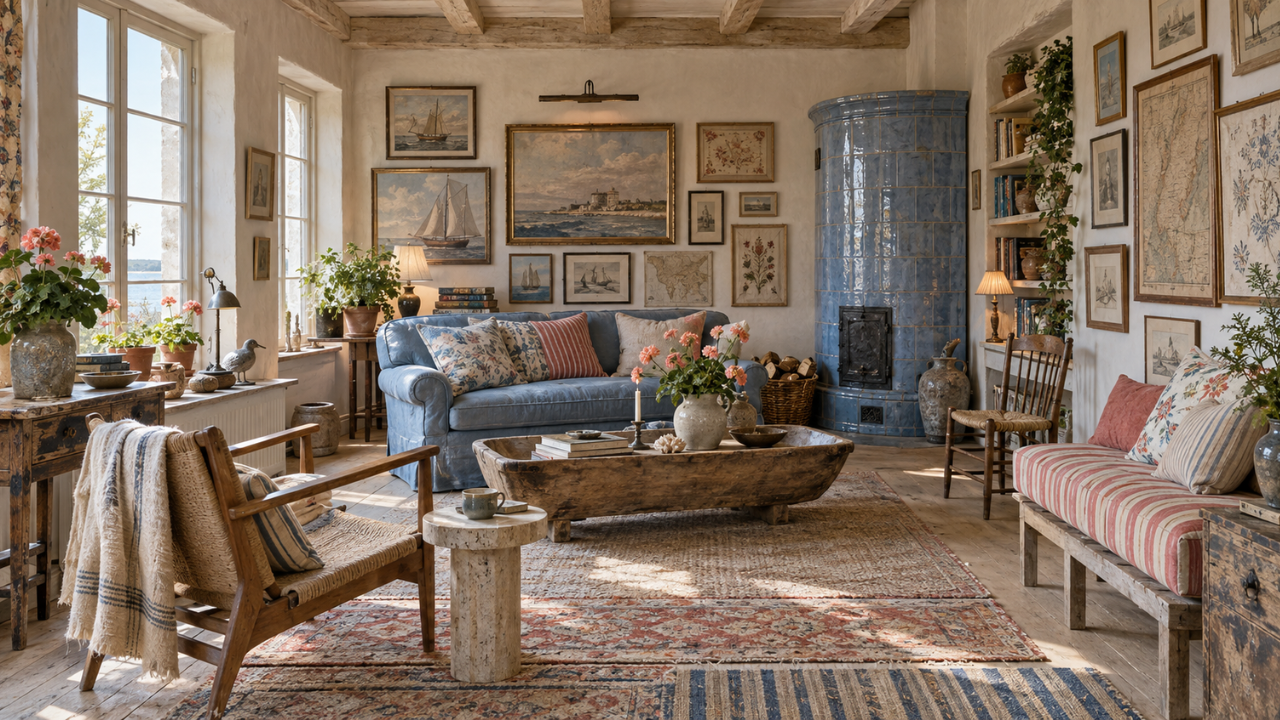
A floral chair beside an old wooden table. Botanical prints gathered across a wall. Books stacked wherever there is room. Patterned curtains, painted furniture, baskets, pottery, lamps and objects collected slowly over the years.
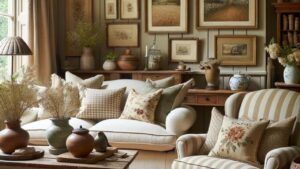
Add a little maximalism, and cottage style becomes even more interesting.
Maximalism in cottage style homes isn’t necessarily about filling every available surface or using every color at once. At its most beautiful, it is about creating a home with layers—mixing pattern, color, old furniture, art and meaningful objects until the room feels as though it has evolved naturally over time.
The result can be wonderfully cozy rather than overwhelming.
Here are 15 beautiful ways to bring maximalism into a cottage-style home while keeping the rooms warm, inviting and genuinely livable.
1. Begin With a Warm Cottage Color Palette
Cottage maximalism doesn’t have to begin with bright color.
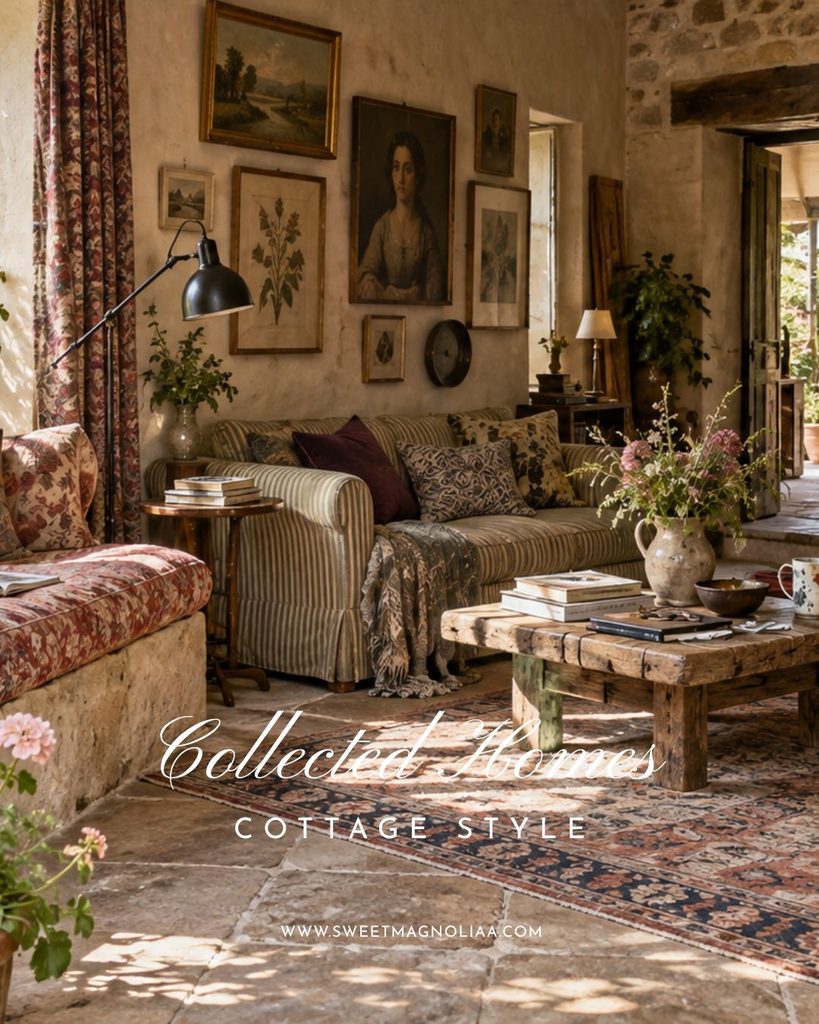
In fact, some of the most layered cottage interiors start with surprisingly gentle shades: warm cream, faded green, dusty rose, soft blue, buttery yellow and earthy brown.
The difference is in how those colors are layered.
Instead of choosing one dominant shade and carefully matching everything to it, allow several related colors to move through the room.
Try:
- olive green + faded rose + cream
- butter yellow + soft blue + warm wood
- dusty pink + burgundy + moss
- terracotta + oatmeal + botanical green
- muted blue + chocolate brown + antique cream
A softer palette gives you freedom to introduce more pattern and objects without making the room feel visually exhausting.
2. Mix Floral Patterns Without Making Everything Match
Florals and cottage interiors have always belonged together.
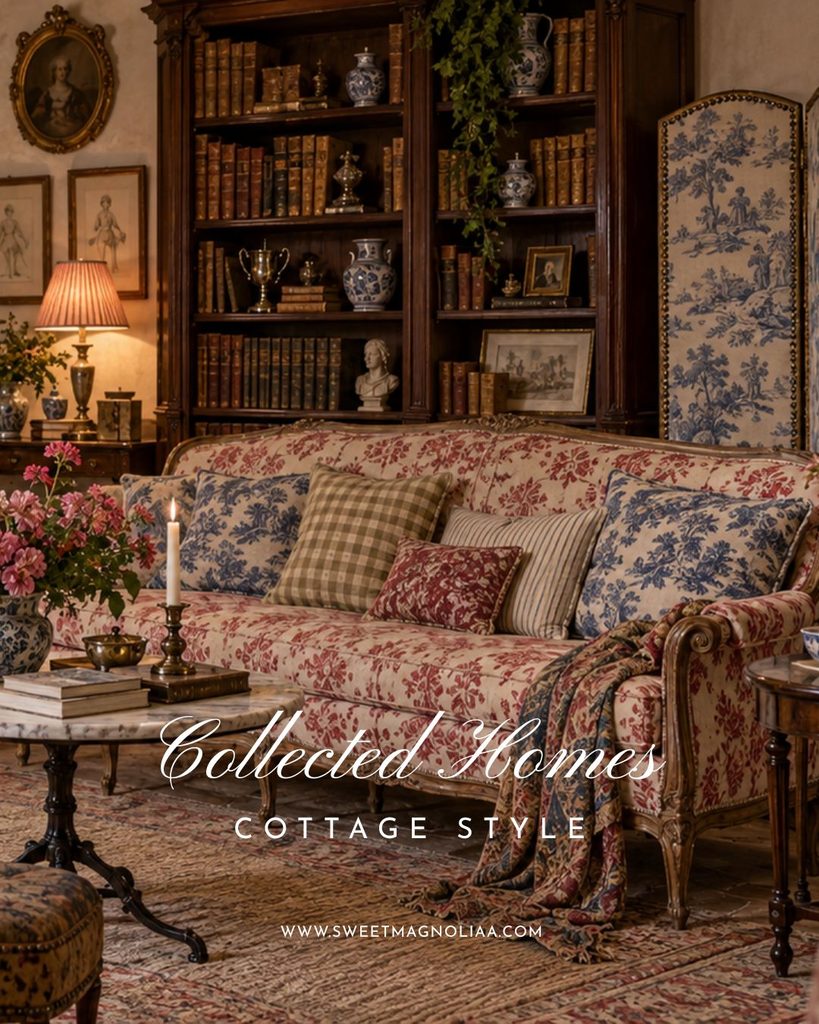
For a more maximalist approach, don’t stop with one floral cushion.
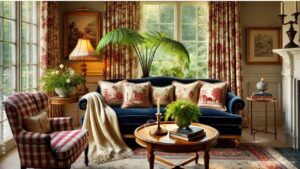
You might combine floral curtains with a smaller botanical print on an armchair, then introduce another pattern through cushions, lampshades or a tablecloth.
The secret is not perfect matching.
Instead, look for a common thread between patterns—a repeated green, a similar faded background or colors that sit comfortably beside one another.
Different scales help too. A large expressive floral can live beautifully beside a tiny ditsy print when there is enough variation between them.
The room begins to feel collected rather than coordinated.
3. Let Vintage Furniture Do the Heavy Lifting
Few things create cottage character as quickly as old furniture.
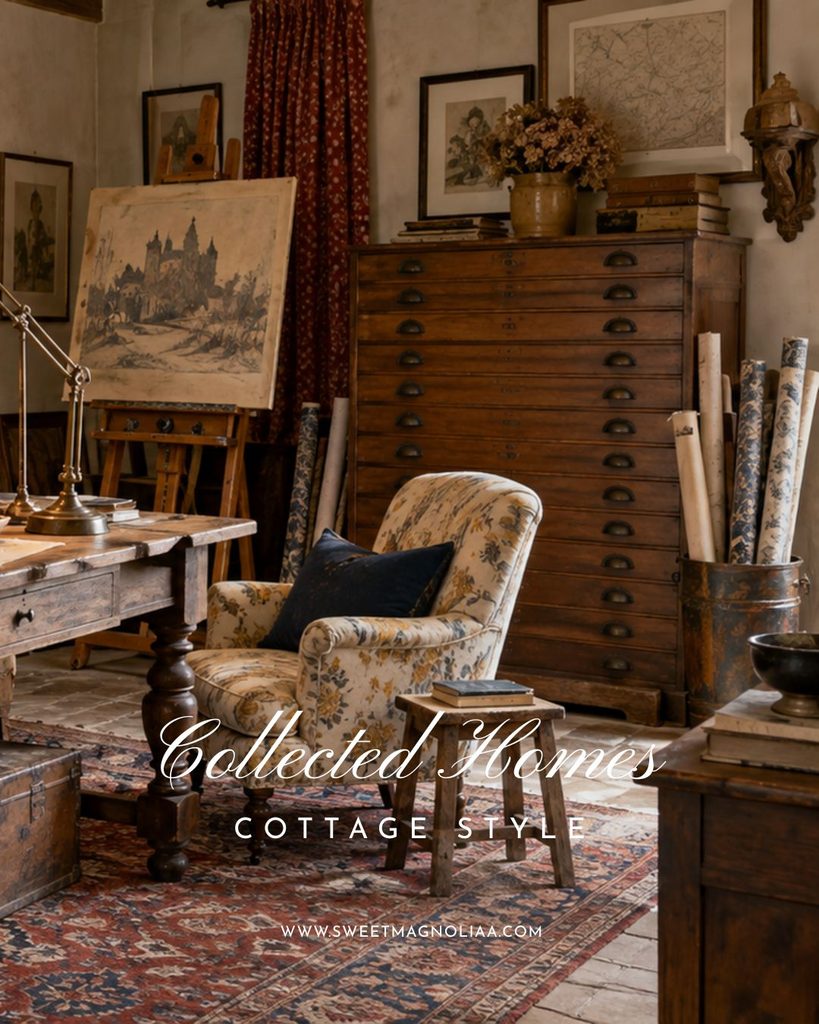
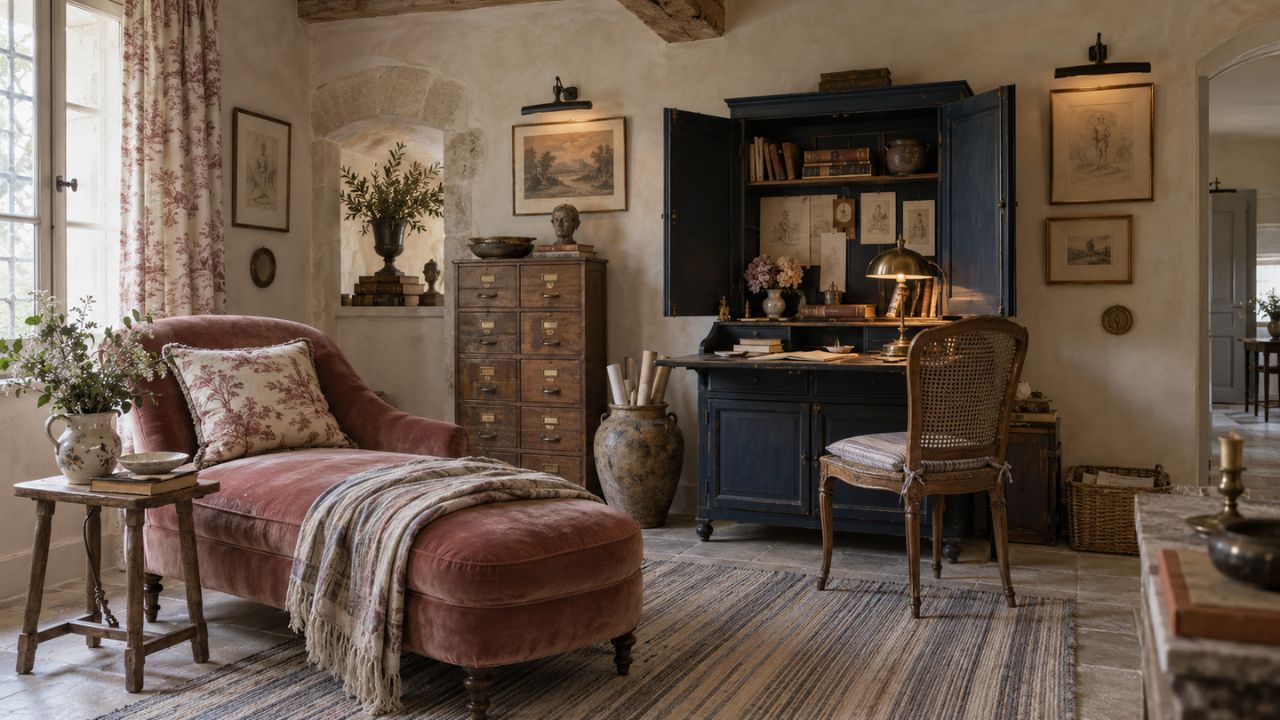
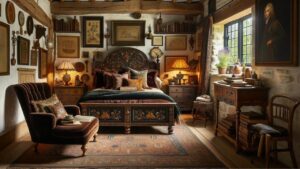
A painted armoire, worn farmhouse table, antique chest of drawers or mismatched bedside table immediately introduces age and individuality.
And don’t worry if the wood tones aren’t identical.
A cottage-style home can comfortably hold painted furniture, dark wood, pale pine and pieces showing years of wear.
Those differences are often what make the room interesting.
Instead of buying an entire matching furniture collection, build the room slowly around pieces you genuinely like.
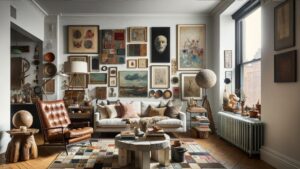
4. Create a Collected Gallery Wall
Cottage walls are wonderful places for collections.
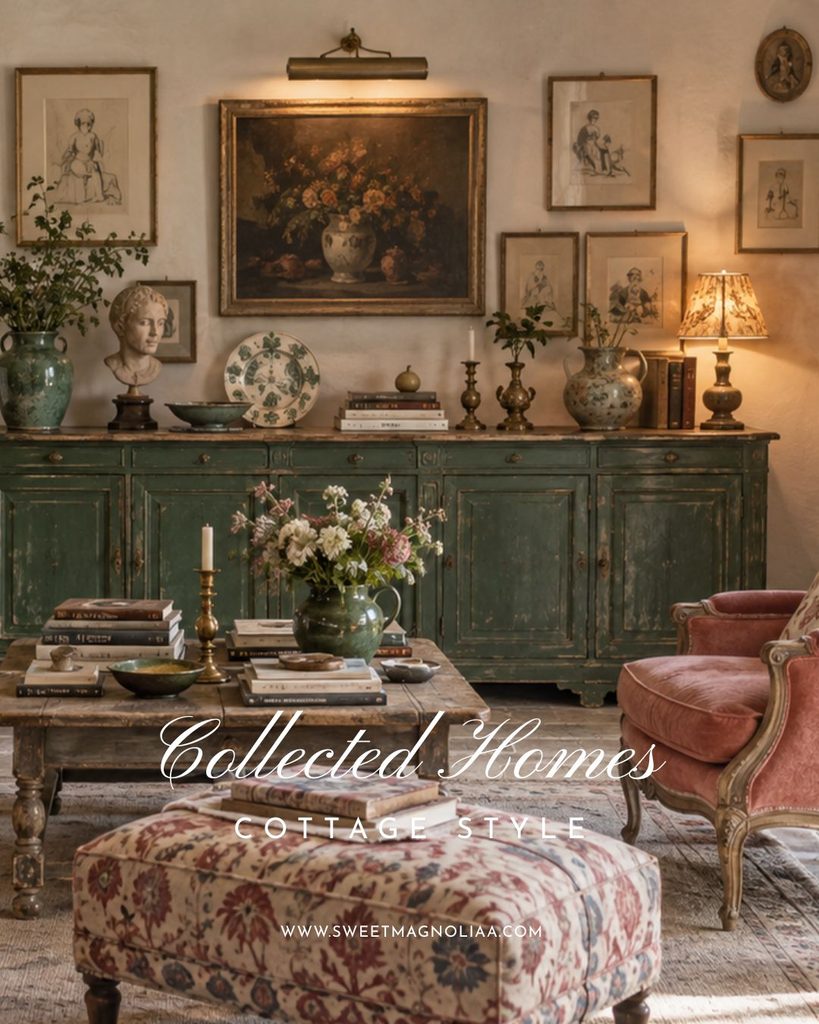
Rather than hanging one large piece of artwork above a sofa or console, gather several smaller pieces together.
Mix:
- landscapes
- botanical prints
- family photographs
- vintage portraits
- small mirrors
- embroidered artwork
- sketches
- old postcards or illustrations
Frames don’t need to match either.
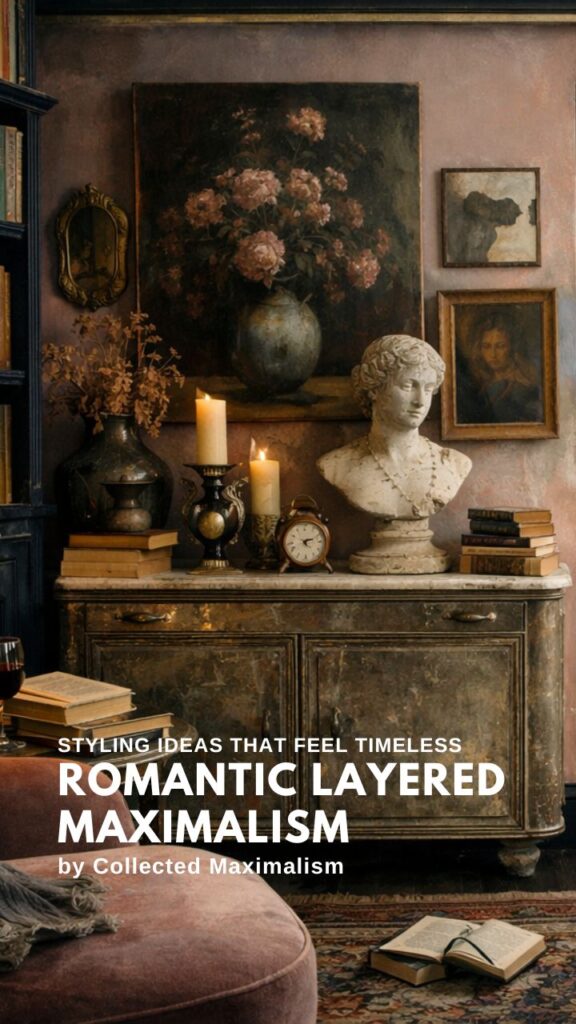
Wood, painted frames, antique gold and simple dark frames can coexist beautifully when the artwork itself feels connected to the room.
Start with a few pieces and leave space for the collection to grow.
A gallery wall often looks more convincing when it feels accumulated rather than completed in one afternoon.
5. Use Books as Part of the Decorating
Books are almost impossible to separate from a beautifully layered cottage home.
Fill shelves, certainly—but don’t stop there.
A small stack can sit on a side table beneath a lamp. Cookbooks can gather on a kitchen shelf. Art books can live on the coffee table. A few well-loved novels might find their way onto a bedside chair.
Books introduce color, texture and evidence of everyday life.
They also help maximalist rooms feel personal rather than merely decorated.
6. Make Room for Beautifully Imperfect Pieces
Cottage maximalism becomes especially charming when everything isn’t pristine.
Look for furniture with rubbed paint, old pottery with irregular glazes, slightly faded fabrics, handmade ceramics and wooden pieces marked by age.
A scratched table can still be beautiful.
So can an old cupboard whose paint has worn away around the handles.
These imperfections soften a room and prevent layers of pattern and decoration from feeling too polished.
The goal isn’t to make the home look old.
It is simply to allow objects with history to remain visibly themselves.
7. Layer Textiles Generously
Textiles are one of the easiest ways to make cottage-style homes feel abundant and comfortable.
Layer a patterned rug over old floorboards. Add a throw to the sofa. Place cushions in several complementary prints on an armchair. Use curtains that fall generously rather than barely covering the window.
Bedrooms offer even more opportunities.
Quilts, linen sheets, patterned cushions, upholstered headboards and bed valances can all live together.
The trick is to vary both pattern and texture.
Cotton beside linen. Velvet beside worn wood. Embroidery beside simple checks.
The room should feel tactile before it feels perfect.
8. Bring Pattern Into Unexpected Places
Pattern doesn’t have to stay on cushions and curtains.
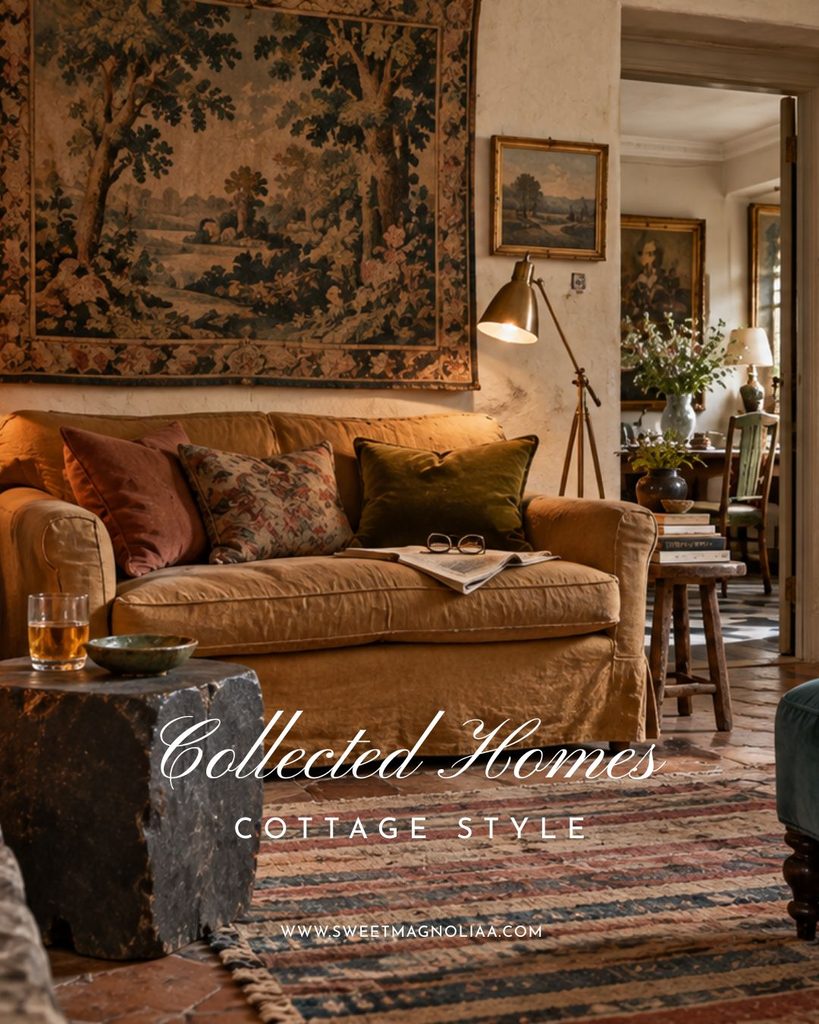
A maximalist cottage might have wallpaper inside a cupboard, a patterned skirt beneath a sink, a floral lampshade or a tiny print covering the walls of a pantry.
Even a small upholstered stool can introduce another layer.
These unexpected moments are often what make a cottage interior memorable.
You don’t need all of them in the same room.
One slightly surprising use of pattern can create more personality than covering every surface.
9. Mix Checks, Stripes and Florals
Florals may be the romantic heart of cottage style, but checks and stripes give them structure.
A floral sofa can sit beside a checked footstool.
Striped curtains can frame a room filled with botanical prints.
A gingham tablecloth can work beautifully beneath bowls of flowers and mismatched ceramics.
Because these patterns have different personalities, combining them keeps a room from becoming too sweet or predictable.
Try allowing one pattern to dominate and use the others in smaller amounts.
The result feels layered without becoming chaotic.
10. Turn Everyday Objects Into Displays
Not every collection needs to be precious.
In a cottage home, ordinary objects can become part of the decoration.
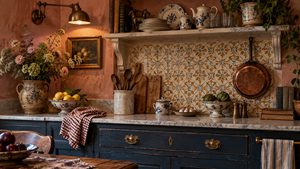
Hang copper pans in the kitchen. Gather wooden chopping boards against the backsplash. Display ceramic jugs on open shelving. Leave baskets visible rather than hiding them away.
A row of well-used bowls can be just as attractive as a decorative collection.
This is particularly useful in smaller cottage-style homes because practical objects can provide both function and visual richness.
11. Give the Dining Table a Life of Its Own
The cottage dining table doesn’t need to wait for a dinner party to look inviting.
Let it remain part of everyday life.
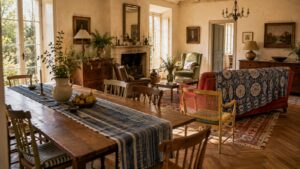
A jug of garden flowers, bowl of lemons, stack of books, candlesticks or handmade ceramic bowl can make the table feel gently occupied.
Surround it with collected chairs rather than a perfectly matching set.
Add a patterned tablecloth occasionally, or place a bench along one side.
The dining table can become one of the most characterful places in the home because it naturally gathers both objects and people.
12. Use Wallpaper as a Layer, Not the Whole Story
Wallpaper and cottage style are natural companions.
But in a maximalist cottage interior, wallpaper doesn’t have to be the single statement in an otherwise restrained room.
Treat it as another layer.
A botanical wallpaper might sit behind antique furniture, patterned upholstery, paintings and a decorative lamp.
A small floral could provide a soft backdrop for shelves filled with books and ceramics.
The key is choosing wallpaper that works with the room rather than demanding that everything else become quiet around it.
This is where cottage maximalism begins to feel especially confident.
13. Fill Corners With Small Moments
Not every corner needs to be empty.
A tiny table beneath a painting, an old chair beside a stack of books, a plant on a stool or a lamp tucked beside an armchair can transform an overlooked space.
These little arrangements help cottage homes feel intimate.
They also create the sense that the house has developed gradually—that furniture and objects have found their places through living rather than through a single decorating plan.
Just remember that every corner doesn’t need something.
A little breathing room makes the collected areas feel even richer.
14. Let Nature Become Part of the Maximalism
Flowers and greenery are among the easiest ways to add abundance without adding permanent clutter.
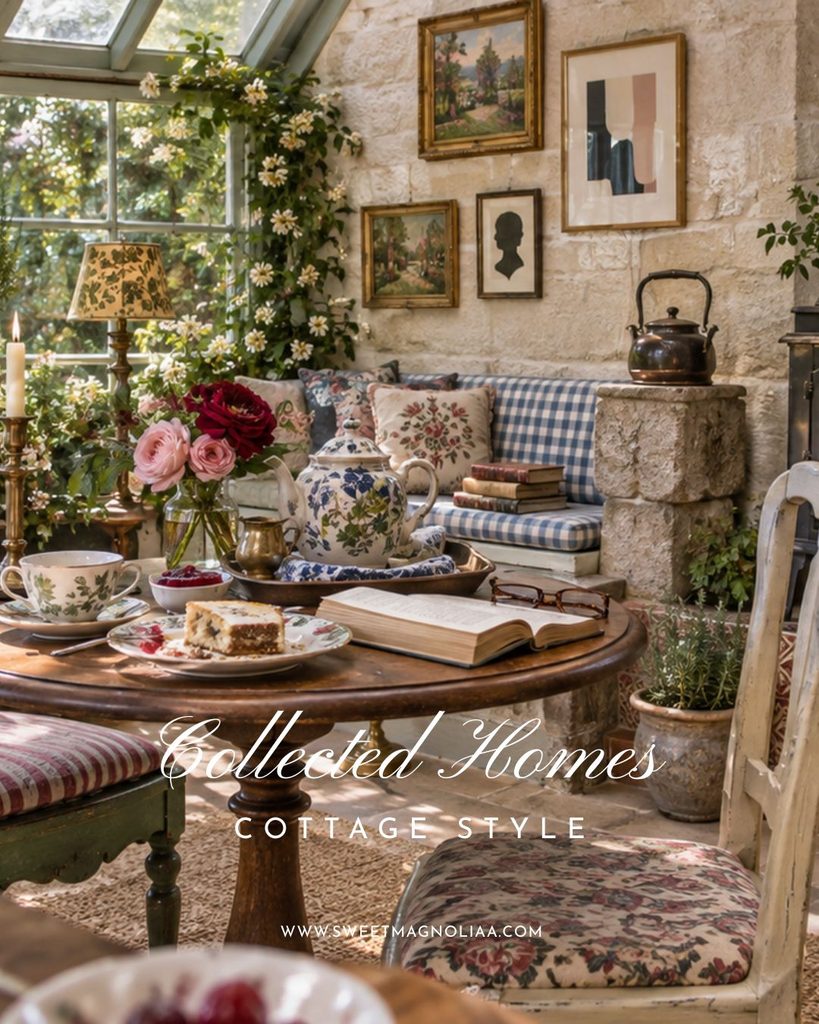
And they don’t need to be elaborate arrangements.
Garden roses in an old jug, branches gathered into a large vase, herbs growing on a kitchen windowsill or a handful of wildflowers on the dining table can completely change the atmosphere of a room.
Natural materials help too.
Wicker baskets, wood, stone, linen and terracotta provide quieter layers between stronger patterns.
They give the eye somewhere to rest while keeping the room warm and tactile.
15. Collect What You Love Instead of Decorating to a Formula
This may be the most important part of maximalism in cottage style homes.
Don’t try to finish the room too quickly.
The most convincing cottage interiors rarely look as though every object was purchased at the same time.
They contain things discovered on travels, inherited from family, found at markets, moved from another room or simply kept because someone loved them.
Allow your collections to grow.
Let different periods mingle.
Keep the slightly strange painting if it makes you happy. Put the old chair beside the new sofa. Display the handmade bowl even if its color doesn’t perfectly match anything else.
A cottage-style home becomes memorable when it begins to reveal the personality of the person living there.
Bonus: Mix Cottage Character With Modern Elements
A cottage maximalist home doesn’t need to look as though everything in it belongs to another century.
In fact, a few modern elements can make all those florals, antiques and collected pieces feel even more interesting.
Try hanging a large piece of abstract art above an antique chest, placing a clean-lined contemporary sofa beside a vintage armchair, or introducing an industrial-style bookshelf with warm wood shelves and a slim black metal frame.
Modern lighting, sculptural side tables, simple black-framed pieces and contemporary ceramics can work beautifully too.
The contrast is what makes it interesting.
An old floral painting can hang beside an abstract canvas. A traditional cottage table can sit beneath a contemporary pendant. A weathered wooden cabinet can share a room with a modern upholstered chair.
You don’t need to choose between old and new.
Cottage maximalism feels freshest when the history of the home is allowed to meet the way we live now.
MORE ON COTTAGE STYLE HOMES
7 French Cottage Color Palette Ideas Beyond Sage Green
Why Sage Green Never Goes Out of Style in Interior Design
The Best Colors to Pair with Sage Green in French Cottage Interiors
English Cottage Style in a Romantic London Townhouse
How to Keep Cottage Maximalism From Feeling Cluttered
Maximalism doesn’t require filling every inch of a room.
In fact, the most beautiful layered interiors usually have some restraint hidden underneath all that abundance.
Give larger pieces room to breathe. Repeat a few colors throughout the space. Group smaller objects into collections rather than scattering them everywhere. Mix busy patterns with quieter areas of wood, plaster, linen or painted walls.
Most importantly, edit according to how the room feels, not according to a decorating rule.
If something begins to feel visually noisy, remove one or two elements and look again.
The goal is richness—not congestion.
A Cottage Maximalist Color Palette to Try
For a romantic, collected cottage interior, try:
Moss green + faded rose + warm cream + burgundy + dark wood
Use cream across larger surfaces, allow green and faded rose to move through fabrics and painted furniture, bring burgundy in through smaller patterns and artwork, and let aged or darker woods ground everything.
The palette is colorful without feeling overly bright and works particularly well with florals, antique furniture and natural materials.
Final Thoughts
Perhaps cottage style and maximalism work so beautifully together because neither needs perfection.
Both make room for the old chair, the faded textile, the stack of books, the flowers from the garden and the piece of furniture that doesn’t quite match anything else.
The most beautiful maximalism in cottage style homes isn’t about having more for the sake of more.
It is about allowing a home to become richer through living.
Start with what you already love. Add slowly. Notice the colors, patterns and objects you return to again and again.
Eventually, those repetitions begin to form their own visual language.
And that is often when a cottage stops looking simply decorated—and starts feeling unmistakably like home.