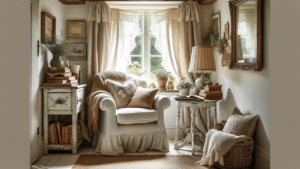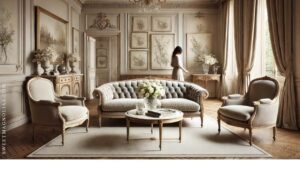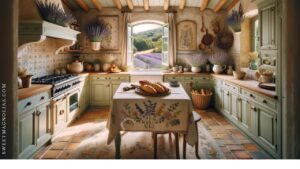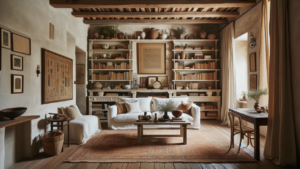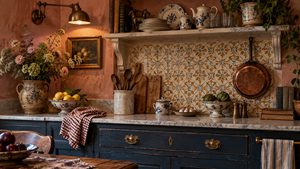
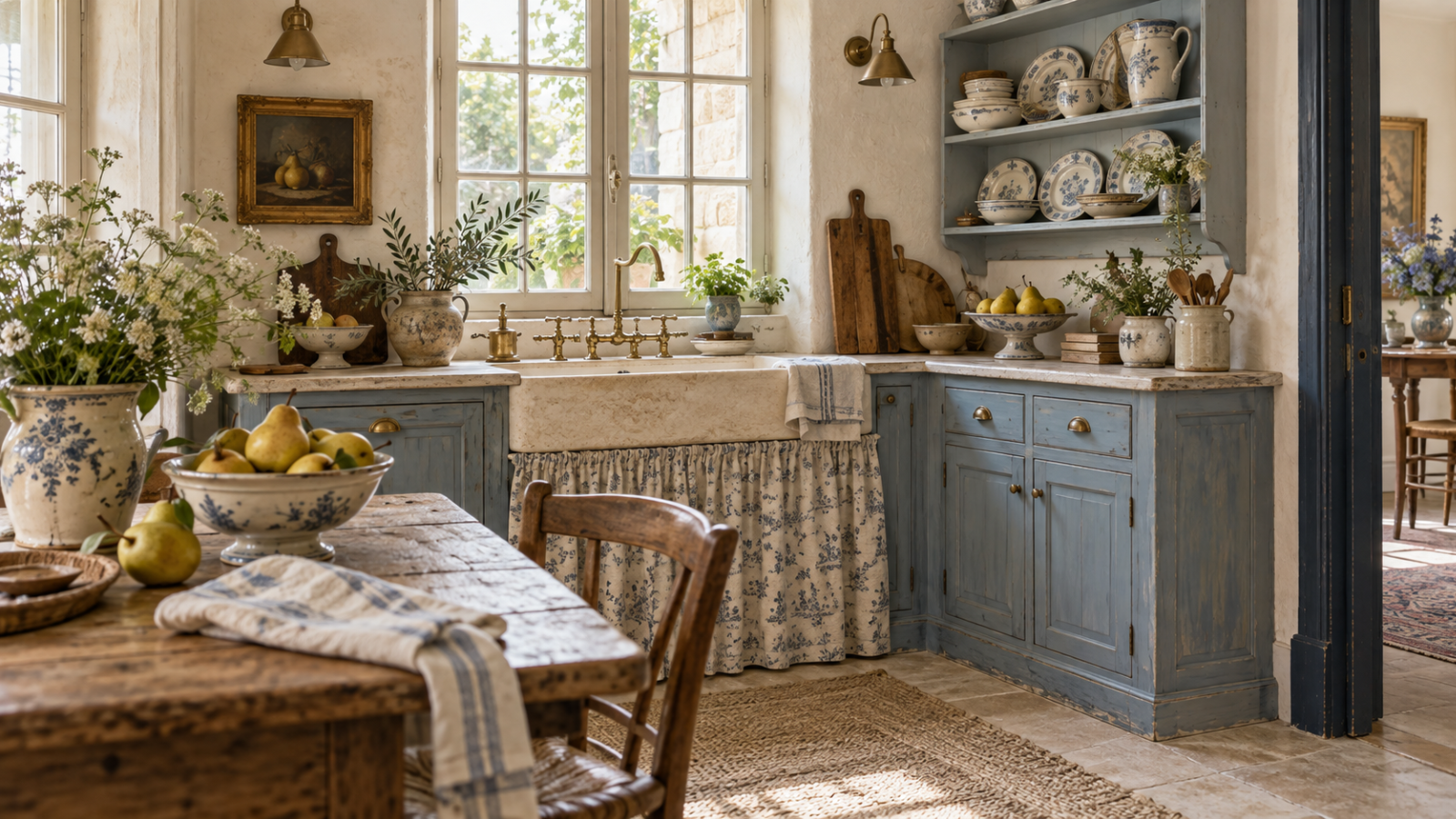
The beauty of blue and white is not simply in the colors themselves, but in the way they live alongside old wood, worn ceramics, natural linen and the quiet rituals of everyday life.
There is a particular kind of beauty found in an old French country kitchen.
It is rarely the result of one remarkable object. More often, it emerges from the relationship between ordinary things: a blue-patterned plate resting against a cream wall, an old wooden table beneath a linen cloth, a ceramic pitcher filled with flowers, or a painted cupboard whose color has softened over time.
Nothing needs to be especially precious.
And yet, together, these details create an atmosphere that feels unmistakably considered.
Blue and white is one of the most recognizable palettes associated with French country decorating. But the difference between a kitchen that merely uses blue and white and one that feels genuinely collected lies in how those colors are interpreted.
The most interesting kitchens are not built around perfectly matched accessories. They develop through variations in color, the contrast of materials, the repetition of familiar patterns and the presence of objects that belong to everyday life.
A blue and white French country kitchen, at its most beautiful, is not really about decorating with two colors.
It is about creating a room in which color, age, texture and usefulness feel naturally connected.
1. Blue and White Needs Warmth to Feel French Country
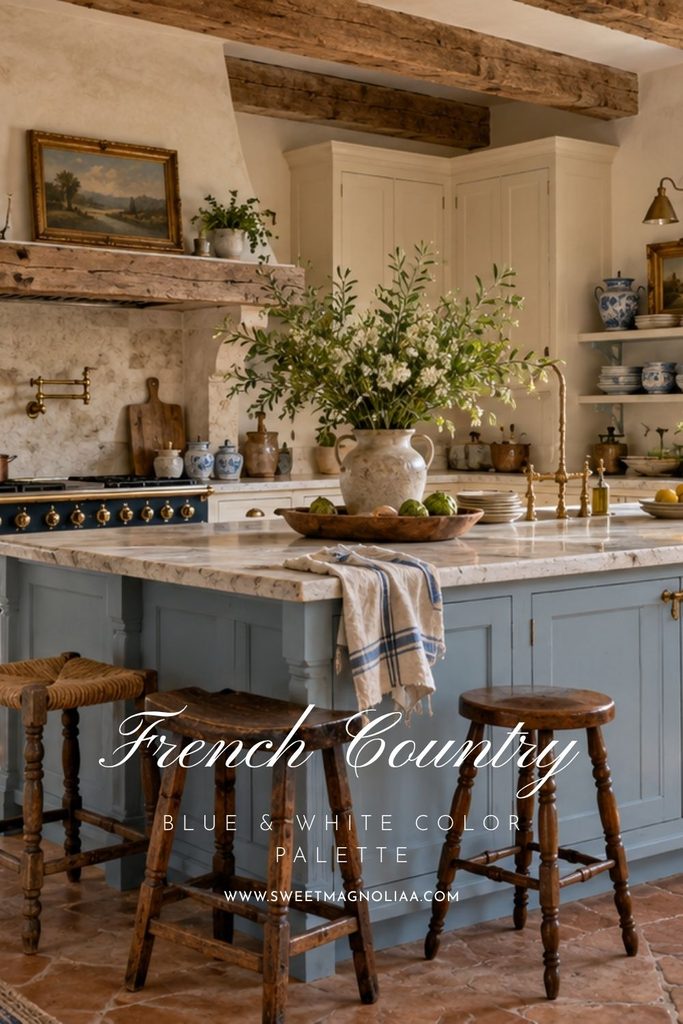
Blue and white can create very different atmospheres depending on what surrounds them.
Placed against brilliant white, polished chrome and glossy surfaces, blue can feel crisp, graphic and almost coastal.
Introduce warm plaster, old wood, natural linen and aged brass, and the same blue begins to feel softer and more rooted in the character of a country home.
This is why the background matters so much.
French country kitchens often feel more comfortable with warm ivory, chalk white, cream and pale stone than with stark white.
These shades allow blue to remain fresh without making the room feel cold.
A creamy painted cupboard can soften a collection of dark blue ceramics. A limestone surface can make a porcelain-blue pattern feel less formal. Natural wood can introduce just enough visual weight to balance delicate textiles.
The palette becomes more interesting because the colors are no longer working alone.
They are responding to the materials around them.
And that relationship is often what makes the difference between a kitchen that looks decorated and one that feels lived in.
2. The Beauty of Blue Is in Its Variations
One of the most appealing qualities of a collected French country kitchen is that the blues rarely need to match.
A ceramic plate may carry a clear cobalt-blue pattern.
A painted cupboard might be a much softer French blue.
A linen curtain may contain a faded grey-blue stripe.
An old pitcher may have a slightly uneven glaze, allowing different shades to appear across its surface.
Together, these variations create depth.
When every blue is identical, the room can begin to feel coordinated. When the shades are related but not exact, the eye moves more naturally between them.
The important distinction is between repetition and duplication.
Repetition creates a visual relationship.
Duplication can make the relationship feel overly controlled.
A beautiful French country kitchen often uses blue as a recurring thread rather than a fixed instruction.
The shade changes as it moves from pottery to fabric, from painted wood to artwork, from decorative objects to useful ones.
That movement gives the room its character.
3. Ceramics Give the Palette Its Everyday Language
There is something particularly appropriate about blue-and-white ceramics in a kitchen.
Unlike decorative objects chosen only for display, pottery naturally belongs to the rituals of preparing, serving and sharing food.
A patterned bowl can hold fruit.
A pitcher can carry flowers.
A stack of plates can remain visible on an open shelf.
A collection of cups can become part of the room’s color story without ceasing to be useful.
This is where French country decorating becomes especially appealing.
Beauty is not always separated from function.
An ordinary object can contribute to the atmosphere of a room simply because it is well made, thoughtfully chosen or pleasing to look at.
Blue-and-white ceramics also introduce pattern on a smaller scale.
A collection might include florals, landscapes, borders, vines and simple painted details.
The pieces need not come from the same collection or even share the same shade of blue.
Their connection comes from a common visual language.
Against cream cabinetry or old wooden shelves, these differences can feel especially beautiful.
The collection becomes a quiet record of individual choices rather than one coordinated purchase.
4. Old Wood Changes the Entire Character of Blue and White
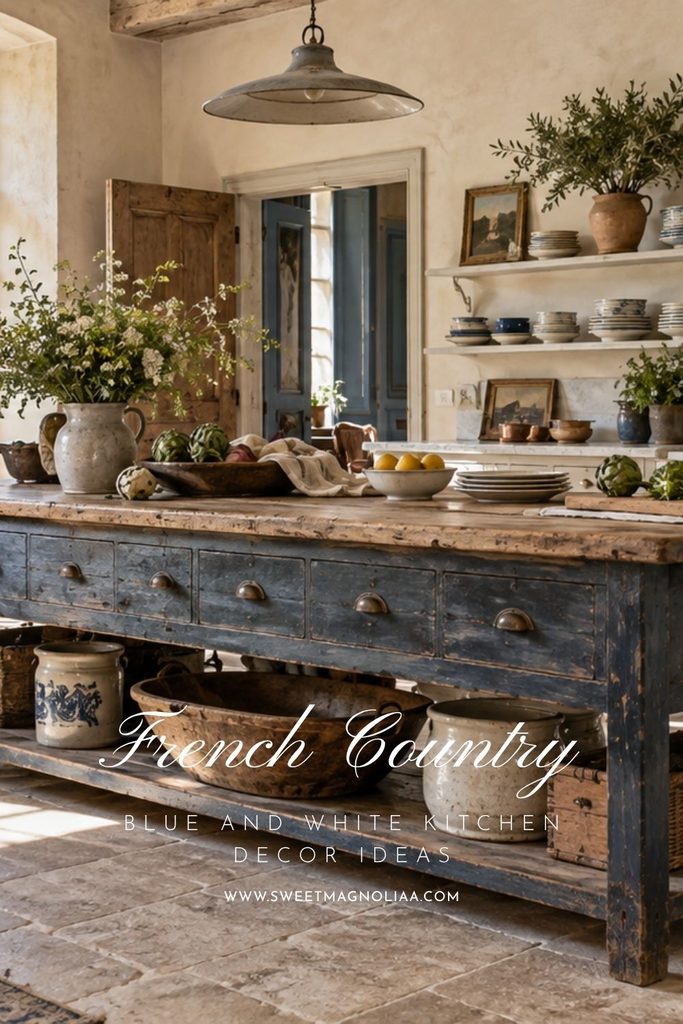
Perhaps one of the most important relationships in a blue and white French country kitchen is the contrast between cool color and warm wood.
Without wood, blue and white can become delicate.
With wood, the palette gains depth.
A farmhouse table with a worn surface brings something that painted cabinetry and patterned ceramics cannot provide on their own.
It introduces time.
Visible grain, softened edges, small marks and variations in finish create a sense of familiarity.
The same effect can come from a kitchen dresser, an antique stool, a wooden plate rack or a collection of old cutting boards.
These elements do not need to be particularly elaborate.
In fact, simple wooden pieces often provide the strongest contrast to decorative blue-and-white patterns.
There is a lovely balance between the refinement of patterned ceramics and the honesty of a well-used wooden table.
One is delicate.
The other is substantial.
Together, they create a kitchen that feels both beautiful and approachable.
5. Pattern Should Feel Discovered Rather Than Repeated
French country interiors are closely associated with pattern, but a beautiful kitchen does not need every surface to become decorative.
The more interesting approach is to allow different patterns to appear in different forms.
A blue toile curtain might introduce a delicate pastoral scene.
A narrow ticking stripe could appear on a seat cushion.
A small check might soften a breakfast corner.
Blue-and-white ceramics may bring florals and decorative borders into the room.
These patterns can coexist because they share enough color to feel related.
But their differences are just as important.
Toile is expressive and detailed.
Stripes are orderly.
Checks are informal.
Floral ceramics introduce another scale entirely.
The contrast between these patterns creates movement.
Plain linen, cream-painted wood and natural stone provide the pauses that make the composition comfortable.
A room does not become more interesting simply because it contains more pattern.
It becomes more interesting when pattern and quietness are allowed to balance one another.
6. Painted Furniture Introduces a Softer Kind of Color
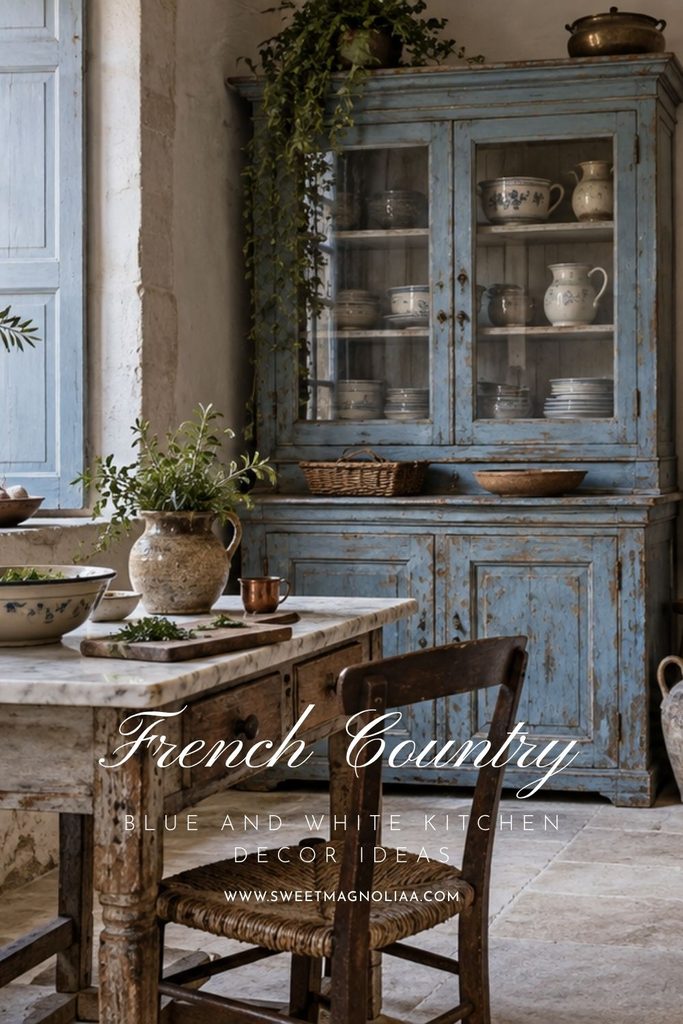
Not every blue and white French country kitchen needs blue cabinetry.
Sometimes a single painted piece is more expressive.
A faded blue dresser against a warm white wall can become the emotional center of a room.
A small painted stool may introduce just enough color beside a wooden table.
An old pantry cupboard can create a beautiful contrast with cream cabinetry and natural stone.
What makes these pieces especially appealing is the relationship between color and surface.
Blue on a smooth modern cabinet can feel quite different from blue on painted wood with visible texture.
A chalky finish softens the color.
Gentle wear reveals something of the material beneath.
The result feels less like a newly introduced accent and more like a piece that has gradually become part of the kitchen.
The color is important, but the finish gives it personality.
7. Linen Makes Decorative Kitchens Feel Comfortable
There is a reason natural linen works so beautifully alongside blue-and-white patterns.
Its texture is quiet.
Its color is warm.
And its slightly relaxed appearance prevents a room from feeling overly arranged.
In a French country kitchen, linen might appear as a café curtain, tablecloth, tea towel, seat cushion or simple window covering.
These pieces introduce softness into a room otherwise filled with harder materials.
Wood, stone, ceramic and metal all have strong physical qualities.
Linen changes the atmosphere by adding movement and ease.
It is also a useful visual resting place.
A patterned plate feels more distinctive against a plain linen cloth.
A toile curtain becomes more beautiful when the surrounding surfaces remain simple.
A collection of ceramics can appear richer beside the natural beige of flax.
Linen allows decorative details to remain expressive without making the entire kitchen feel busy.
8. A French Country Kitchen Should Leave Room for Everyday Life
One of the easiest ways to make a kitchen feel artificial is to decorate every surface as though it were a display.
French country charm is often found in the opposite approach.
A bowl of lemons on the table.
A ceramic pitcher beside the sink.
A basket holding folded linen.
A few cookbooks within reach.
Fresh herbs near a window.
These objects belong to the life of the kitchen.
Their beauty comes partly from their usefulness.
This is also why a collected kitchen does not need to look identical from one day to the next.
Flowers change.
Fruit is eaten and replaced.
A favorite bowl moves from the shelf to the table.
A linen cloth is folded, used and washed.
The room remains visually connected because its underlying palette and materials are consistent, even while the smaller details change.
That flexibility makes a kitchen feel more natural.
It allows the room to remain a place for living rather than simply a composition to admire.
9. The Most Beautiful Kitchens Are Not Perfectly Coordinated
There is a subtle difference between a room that feels harmonious and one that feels matched.
Harmony allows variation.
Matching tries to eliminate it.
In a collected blue and white kitchen, a darker blue plate can sit comfortably beside a faded blue curtain.
An old wooden dresser can coexist with newer cream cabinetry.
A traditional floral pattern may appear beside a simple stripe.
A small brass lamp might introduce warmth without requiring every metal finish in the room to be identical.
These relationships create a sense of ease.
The kitchen feels connected because the colors, textures and materials speak to one another.
But it does not feel as though every object was selected to complete a predetermined set.
This is perhaps the most enduring quality of collected decorating.
The room has coherence without losing individuality.
10. Let the Kitchen Become More Beautiful Over Time
A French country kitchen does not need to be completed in one decorating project.
It can begin with a few blue-and-white plates.
Then perhaps a linen curtain.
An old wooden table.
A painted cupboard.
A ceramic pitcher discovered while travelling.
A framed botanical print.
Over time, these pieces begin to form relationships.
The blue of a plate finds an echo in a textile.
The warmth of an old table makes the cream cabinetry feel softer.
A small brass detail connects with the honey-colored wood.
What began as individual choices slowly becomes a recognizable atmosphere.
This is a different way of thinking about decorating.
Rather than asking how to complete a room, we begin noticing what makes it feel more like home.
The result is not necessarily perfect.
But it is personal.
And that is often far more beautiful.
More on Cottage Style Homes
French Cottage Home Office Ideas: 12 Ways to Create a Charming Workspace
Wall Decor Ideas Inspired by Cottage Style Homes: 15 Charming Ways to Decorate
Maximalism in Cottage Style Homes: 15 Beautiful Ideas
7 French Cottage Color Palette Ideas Beyond Sage Green
The Best Colors to Pair with Sage Green in French Cottage Interiors
English Cottage Style in a Romantic London Townhouse
The Lasting Appeal of Blue and White French Country Kitchens
Blue and white has remained appealing across many decorating styles because it offers a rare combination of freshness and familiarity.
In a French country kitchen, those qualities become especially beautiful when softened by age, texture and natural materials.
The palette does not need to be strict.
The ceramics do not need to match.
The furniture does not need to come from one period.
And the kitchen does not need to be entirely transformed before it begins to feel different.
Sometimes the most meaningful change is simply recognizing the relationship between things already present.
A blue plate beside a warm cream wall.
A linen curtain above an old wooden table.
A painted cupboard filled with everyday ceramics.
These are small details, but together they create something enduring.
A kitchen that feels collected rather than coordinated.
Beautiful without becoming formal.
Romantic without becoming precious.
And timeless because it has been allowed to develop its own character.