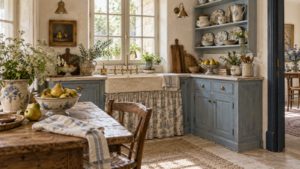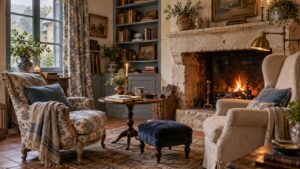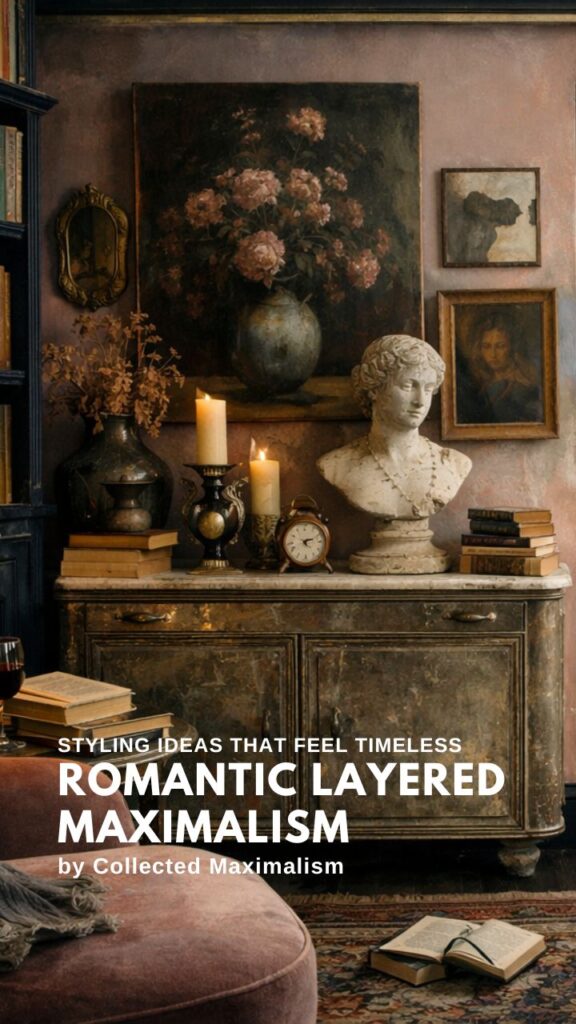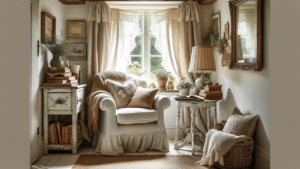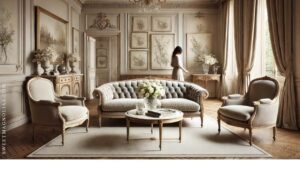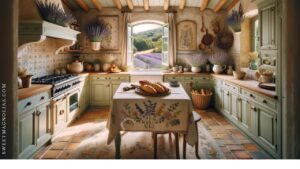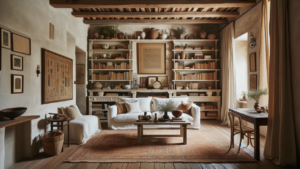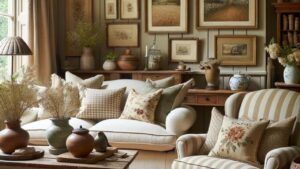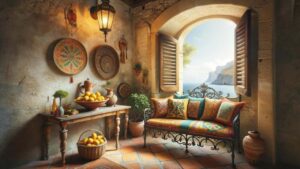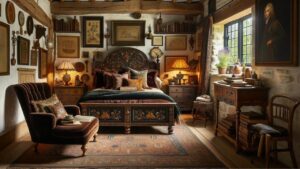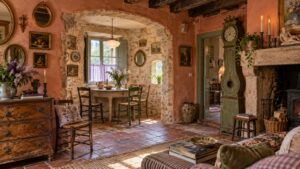
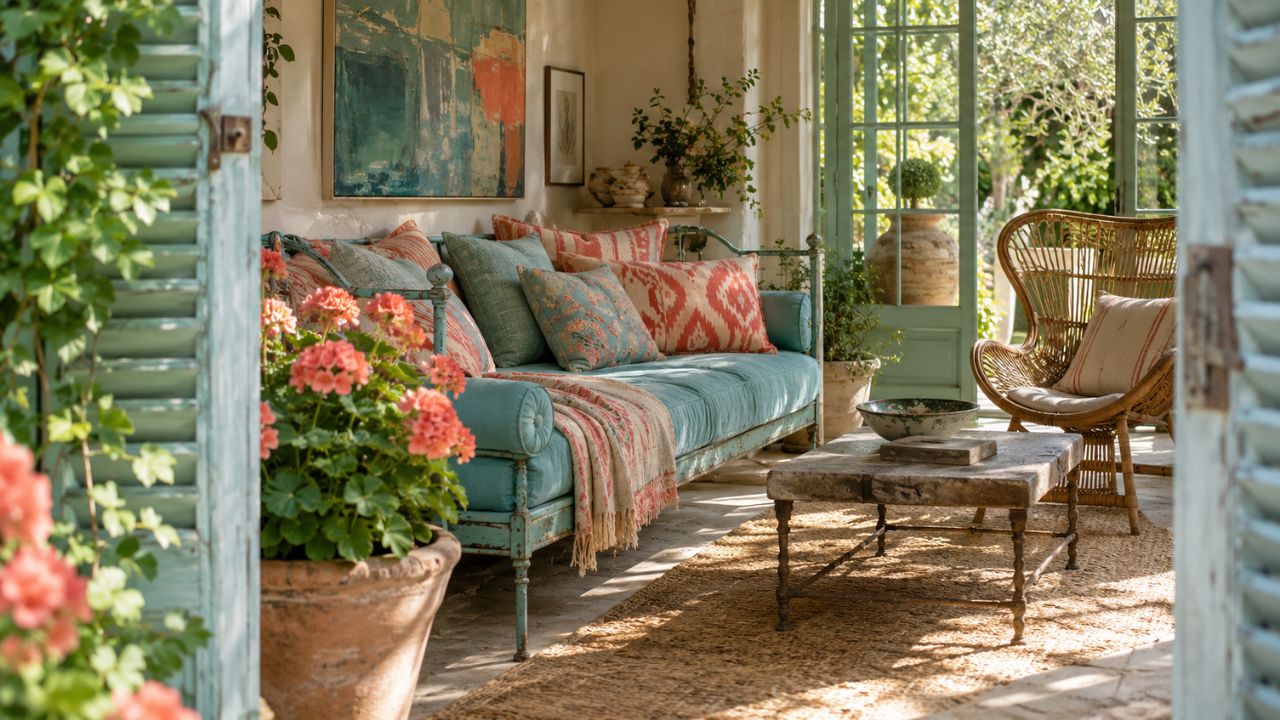
A room can begin with a painting that refuses to disappear into the background. Perhaps it contains a deep green, a streak of lavender or a faded pink that seems unexpectedly beautiful beside an old wooden chest. Gradually, those colours find their way into the home: a cushion, a cupboard, a length of patterned fabric.
This is a useful starting point for cottage style homes with French charm. Art introduces expression, textiles bring softness and rhythm, and aged materials lend depth. Together, they create interiors that feel comfortable, imaginative and shaped by everyday life.
French cottage style allows these elements to develop at different speeds. A table might have been used for decades, while the painting above it is a recent discovery. Curtains can carry an intricate floral, while a nearby chair has a simple modern outline. The room becomes coherent through colour, scale, texture and thoughtful placement.
The aim is to understand those relationships well enough to make choices for your own home.
1. Begin French Cottage Style Homes with a Colour Connection
Choosing colours becomes more manageable when you have a tangible starting point. Artwork is especially useful because a single picture can contain a complete range of colours, from light backgrounds to darker accents.
Study a landscape, floral painting or abstract you enjoy. Choose one quieter colour for a substantial surface and one stronger shade for a smaller accent.
A painting with blue-grey, cream and terracotta could suggest a blue-grey cupboard, warm curtains and a rust-coloured cushion. The room does not need to reproduce the entire palette.
Repeat colours in different proportions
A colour feels different when it covers a large cupboard than when it appears in a narrow stripe. Use that difference deliberately.
If lavender already covers the walls, a small lavender detail in a cushion may be enough to connect the textiles. If the walls are neutral, a larger painted piece can introduce that colour more confidently.
Allow variations in shade and depth. Exact matching can make a room feel overly coordinated, while related tones leave space for the character of each material.
2. Combine Different Kinds of Art
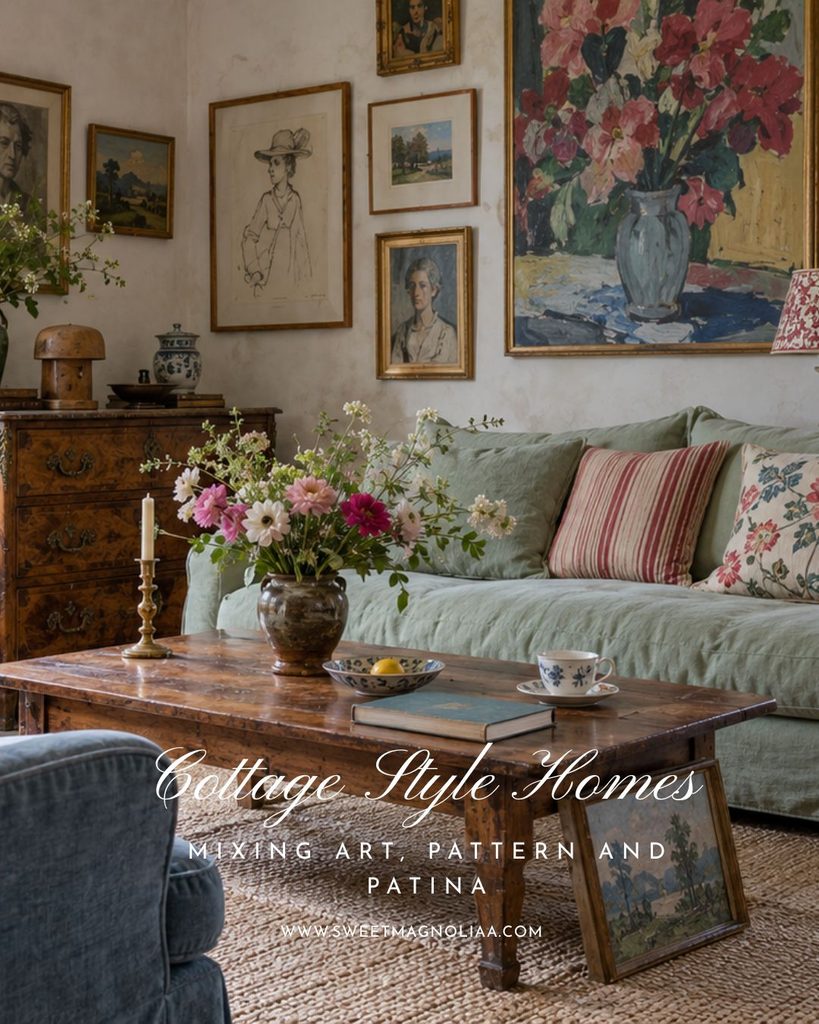
French cottage interiors can bring together portraits, landscapes, still lifes, botanical drawings and abstracts. A varied collection offers different ways of looking: a detailed drawing invites close attention, while a large canvas can establish the mood from across the room.
Start with the work that has the greatest visual presence. This may be the largest picture, but it could also be a smaller painting with particularly strong colour or contrast.
Place supporting pieces in relation to it and the furniture beneath.
Give an arrangement a clear centre
Above a chest or sofa, one substantial work can provide a centre around which smaller pieces gather. Their frames can vary, provided the arrangement has enough visual connection to hold together.
Try arranging the works on the floor before hanging them. This makes it easier to compare spacing and notice whether one frame feels disconnected.
Art also belongs outside the main sitting room. A modest landscape beside a breakfast table or a botanical drawing near a bedroom window brings interest to places used throughout the day.
3. Mix Florals, Gingham and Stripes by Scale
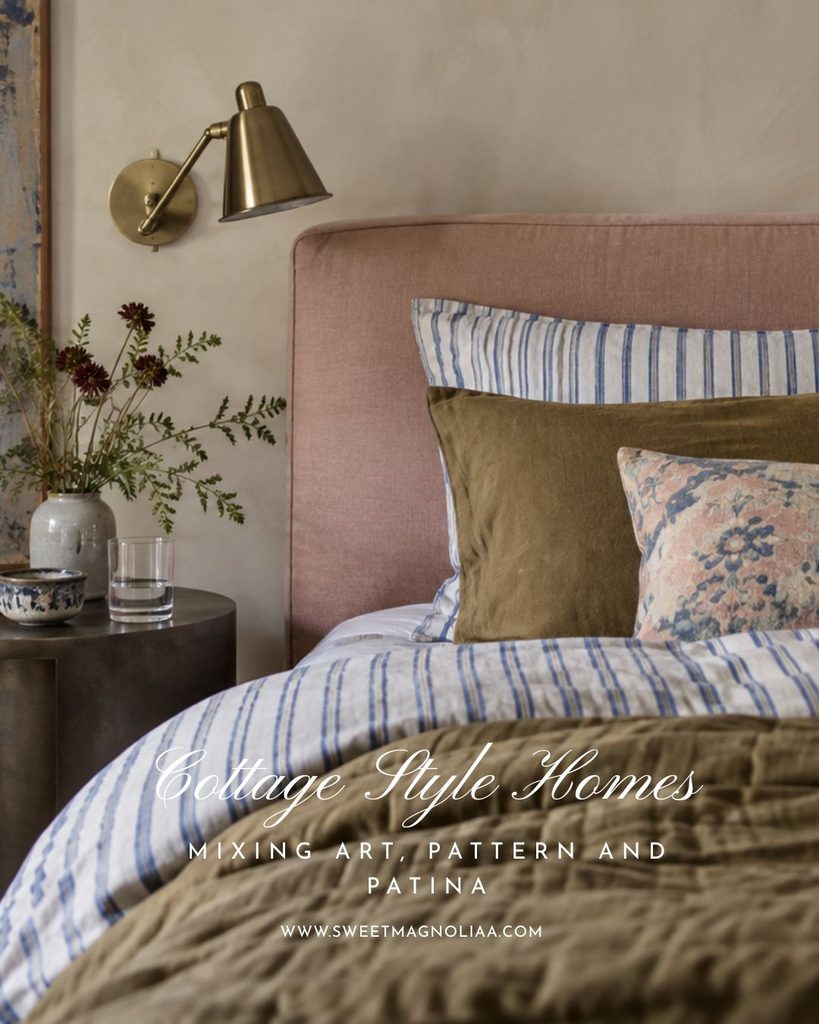
Pattern mixing works best when you can distinguish what each fabric contributes.
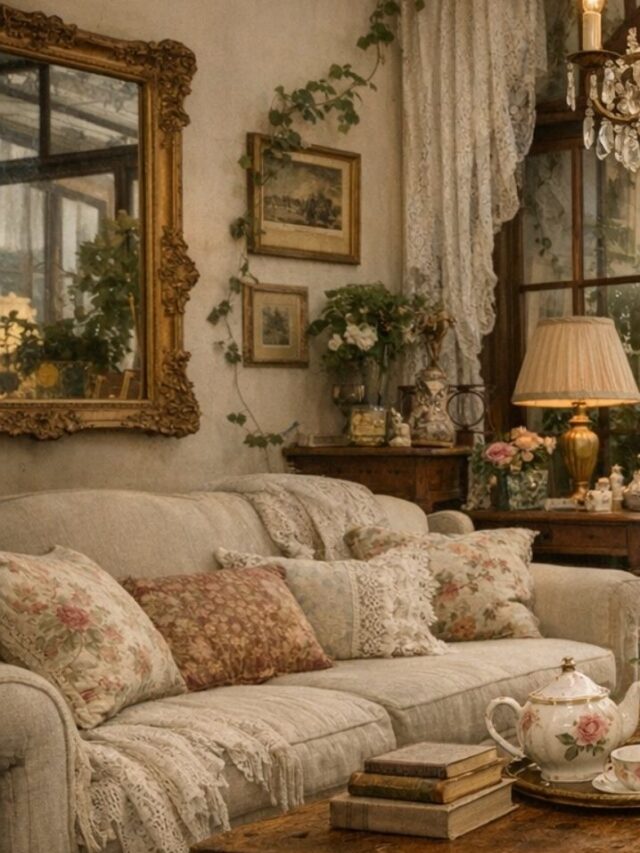
Florals bring curved lines and movement. Checks create a regular grid. Stripes introduce direction. These differences allow the patterns to complement one another.
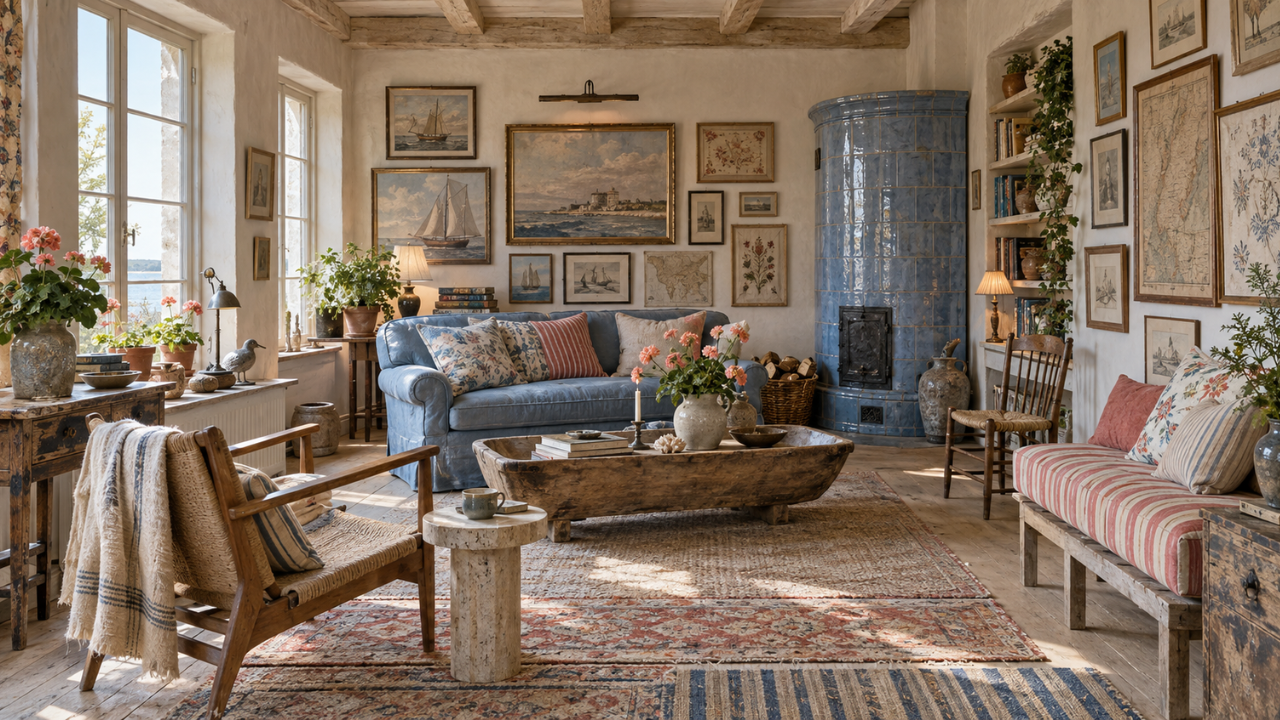
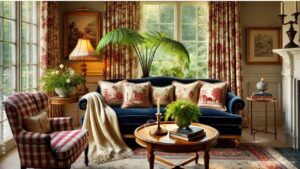
For a bedroom, consider a large floral quilt, small gingham trim and narrow striped pillowcases. For a living room, floral curtains might sit beside plain upholstery, a checked cushion and a striped footstool.
Use one shared colour as a starting point
A repeated colour helps connect fabrics with different motifs. Burgundy might appear in a floral curtain and a gingham cushion, while cream provides a common background.
Also consider the strength of the print. A pale, faded floral has less visual weight than a sharply contrasting check, even when the floral motif is larger.
Place fabric samples together in the room’s own light. Look at them from across the room as well as close up. Both views matter.
4. Introduce Toile with Simpler Companions
Toile-style fabrics bring illustrated detail into French country decor. Their scenic motifs can create a strong decorative presence, especially across curtains or bedding.
Give that detail room to be understood. Narrow stripes, small checks and plain linen make useful companions because their simpler repeats offer a different kind of pattern.
Blue-and-white toile can work with warm yellow, burgundy or muted green accents. The choice depends on the surrounding room, including the colour of the wood and the artwork.
You do not need toile on every textile to establish the mood. A curtain, cushion or upholstered piece can carry enough detail on its own.
5. Extend Pattern into Useful Details
A cottage style homes offers opportunities to use fabric in small, practical places.
A curtain beneath a kitchen sink can soften painted cabinetry. A patterned lampshade brings detail higher into a room. A folding screen adds a decorative surface while making a bedroom corner feel more enclosed.
These elements work especially well when the surrounding materials are comparatively quiet.
Hang art against patterned walls thoughtfully
Pictures can sit beautifully over striped wallpaper. A mount or a substantial frame provides a visual boundary between the image and the wall.
Consider the contrast of the stripe. Soft rose and cream create a gentler setting than two sharply contrasting colours.
If the wall already has a strong pattern, begin with a limited arrangement of pictures. Add gradually so that both the artwork and the background remain readable.
6. Let Aged Materials Support Expressive Decorating
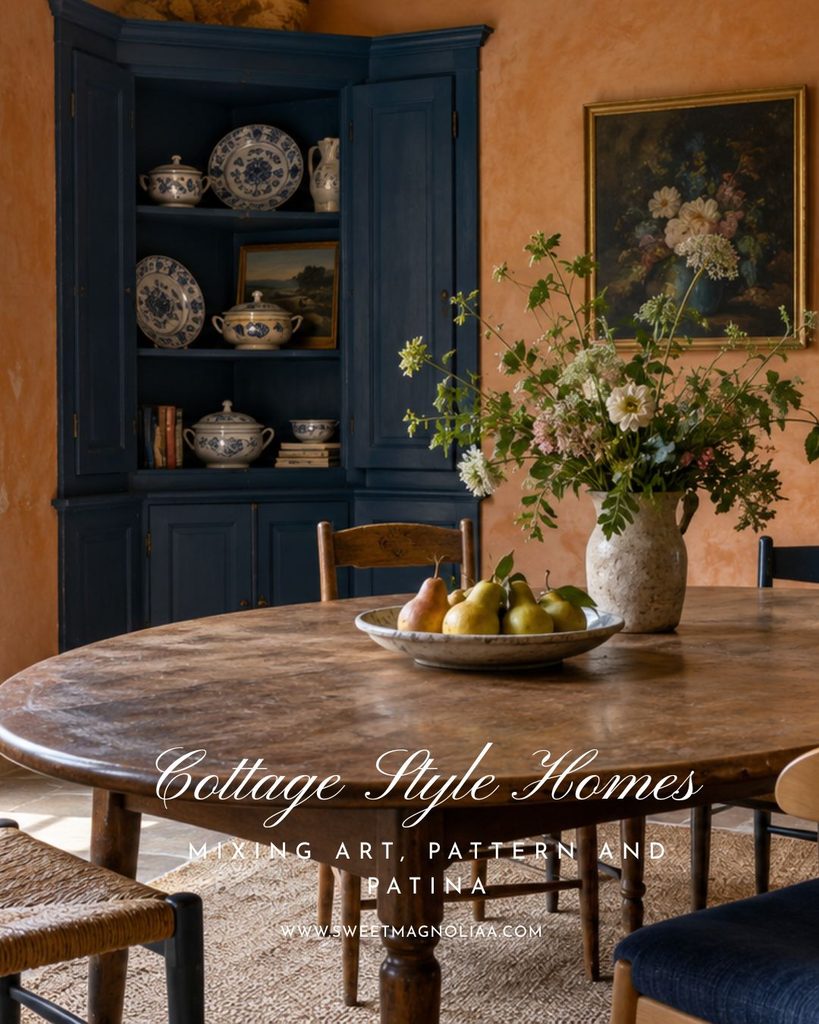
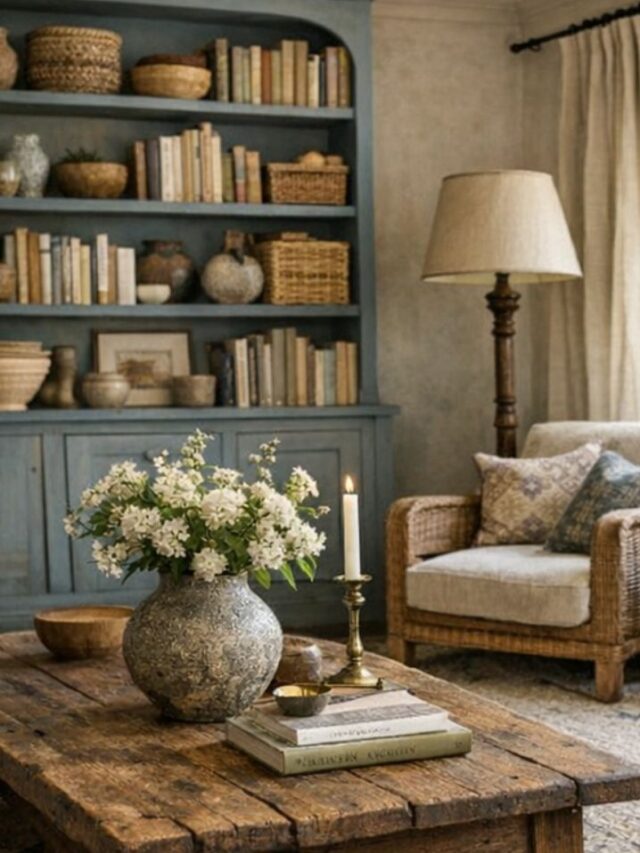
Patina is the variation that develops on surfaces through age and use. In cottage interiors, it can appear in polished areas of timber, worn paint, mellow metal and softened textiles.
These surfaces contribute more than a sense of age. Their subtle changes in colour and texture help connect stronger decorative elements.
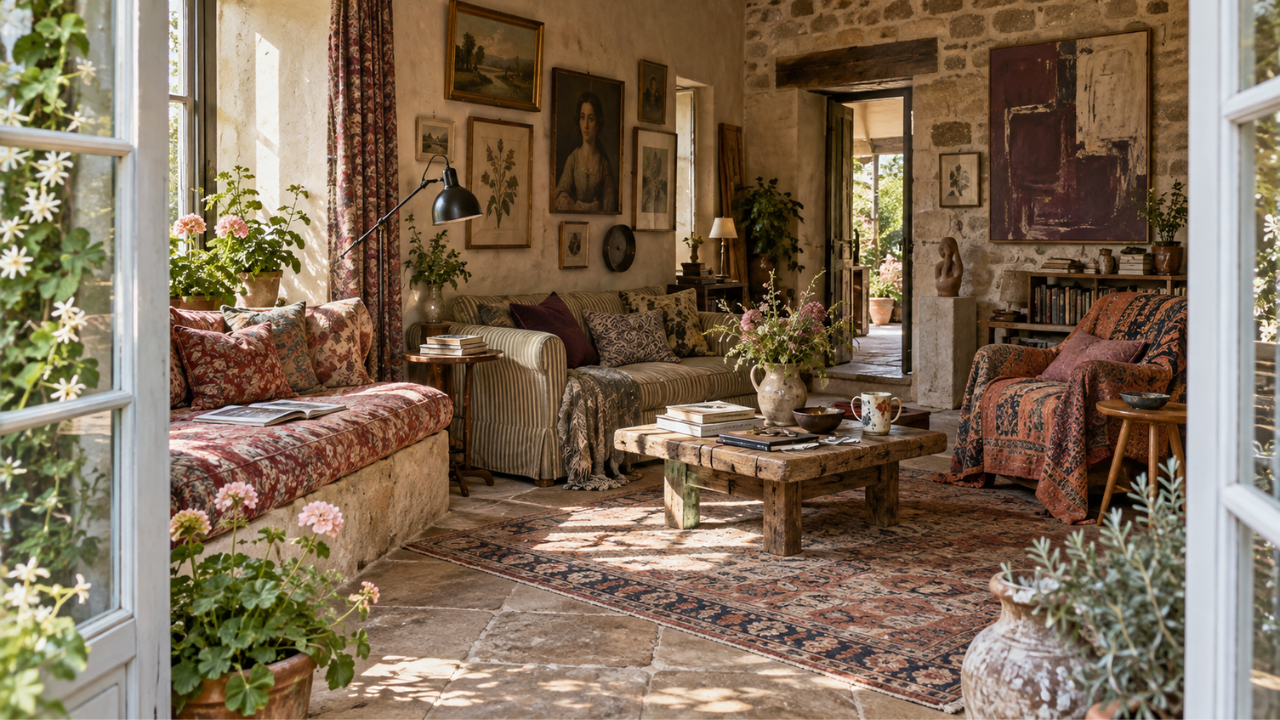
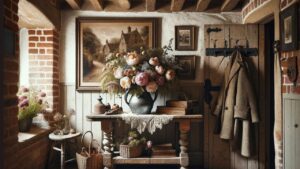
An abstract painting above a worn wooden chest gains a substantial, familiar base. A floral chair beside textured plaster has a quieter surrounding surface. A patterned rug can settle against stone flooring because both contain variation.
Avoid making every finish equally distressed
Different materials should retain their own character. A smooth tabletop can accompany a painted cupboard with worn edges. New upholstery can bring comfort to an older chair.
Artificially ageing every object often makes the room feel less convincing. Preserve useful, appealing surfaces and let contrast provide interest.
Patina is a supporting element, not a requirement that every object look old.
7. Use Painted Furniture to Carry Colour
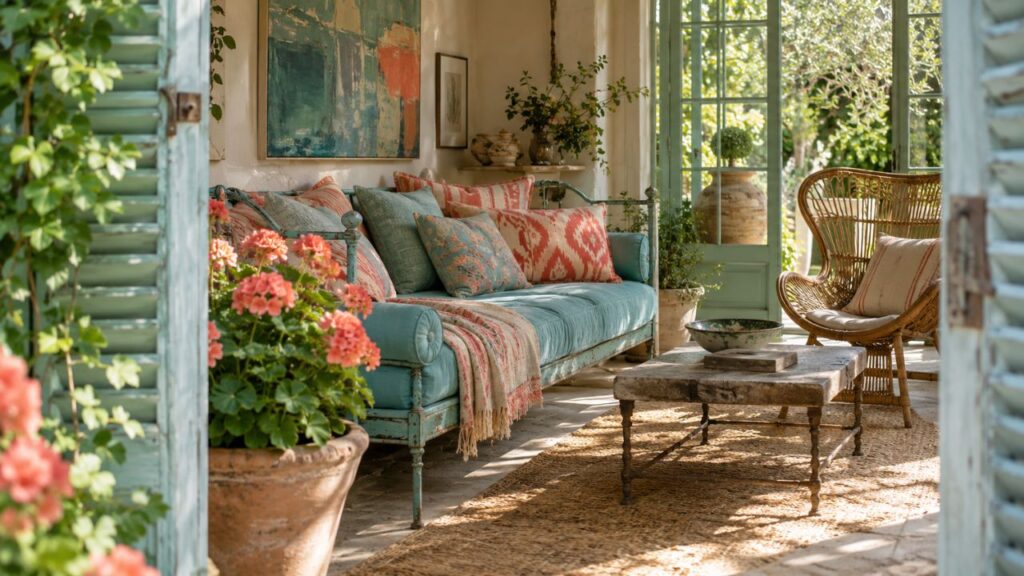
Painted furniture offers a practical way to introduce colour without changing an entire room.
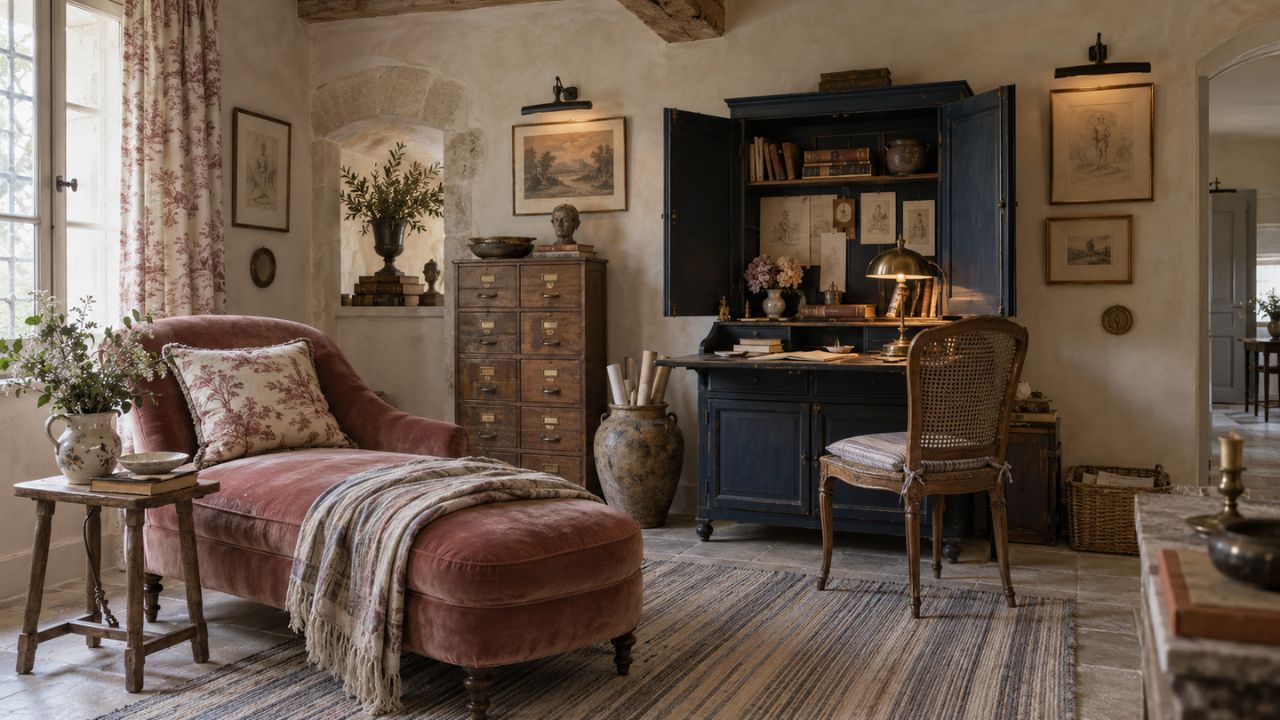
A lavender cupboard can connect with a painting above it. A terracotta sideboard brings warmth beside blue upholstery. A dark blue cabinet provides a strong setting for pale ceramics.
Choose the size of the colour statement carefully. A tall armoire affects much more of the room than a small stool.
Balance painted pieces with visible wood
Warm timber gives coloured furniture a complementary surface. A wooden dining table can anchor a room containing painted chairs or cupboards.
Consider these combinations as starting points:
- Dusty blue with burgundy and warm brown wood.
- Terracotta pink with olive green and cream.
- Mustard with ink blue and pale stone.
- Lavender with walnut and faded rose.
Adapt the proportions to the room. A deep shade might appear only in a cushion or small cabinet, while a quieter colour covers a larger area.
8. Connect Floral Paintings with Botanical Textiles
Art and pattern can share a subject without repeating the same design.
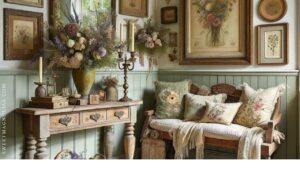
A large floral canvas might accompany a cushion with tiny trailing leaves. Rose-patterned curtains can sit near a botanical drawing. Fresh branches can introduce a looser silhouette beside both.
Variation in scale prevents the repeated theme from becoming monotonous.
Look beyond the flowers themselves. The dark background of a painting may connect with a chair, while the pale colour of its petals returns in plain linen.
Solid fabrics are useful here. They create intervals between detailed surfaces and help each pattern remain visible.
9. Make Space for Simple Modern Shapes
French cottage decorating can accommodate contemporary furniture and lighting alongside older pieces.
A plain rounded table, a slim lamp or a simple pendant introduces a clear outline among carved timber, patterned upholstery and decorative frames.
Choose pieces that connect through material, colour or proportion. A warm stone table may sit comfortably beside a traditional chair because it echoes the room’s pale walls and flooring.
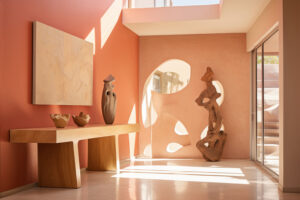
This also gives expressive artwork more freedom. A large abstract canvas can share earthy colours with an antique rug while offering a different style of mark and composition.
Begin with a small number of these contrasts and judge them within the whole room.
10 Adjust the Layers to Everyday Life
A book-filled sitting room and a restful bedroom do not need the same decorative density.
Let the use of each space guide the amount of art, fabric and furniture it holds. Reading areas need useful light and somewhere to place a cup. Dining spaces need room for chairs to move. Bedside surfaces should remain usable.
Group decorative objects around these needs.
A collection of pictures can bring interest above a kitchen table. Books and pottery can share a cupboard while leaving the worktop clear. A patterned cushion can make a window seat inviting without requiring several additional ornaments.
Comfort gives the decorating a purpose. It also helps the room feel personal, because the arrangement reflects the way someone actually lives.
More on Cottage Style Homes
Maximalism in Cottage Style Homes: 15 Beautiful Ideas
7 French Cottage Color Palette Ideas Beyond Sage Green
The Best Colors to Pair with Sage Green in French Cottage Interiors
English Cottage Style in a Romantic London Townhouse
10 Common Mistakes to Avoid When Mixing Art, Pattern and Patina in Cottage Style Homes
1. Matching Every Fabric to a Painting Exactly
Use artwork as a source of related colours. Allow variations so that fabrics and furniture retain their own character.
2. Choosing Patterns with Identical Scale
Several equally dense, similarly sized prints can compete. Combine a larger floral with a finer check or stripe.
3. Treating All Artwork as One Decorative Set
A varied collection can include different subjects and frames. Connect the arrangement through colour, spacing or a clear central work.
4. Distressing Every Piece of Furniture
Uniform artificial wear can make the room feel staged. Let wood, paint and metal display different surfaces.
5. Using Toile Across Every Textile
Give detailed scenic prints quieter companions. Plain linen, ticking stripes or a small check can provide useful variation.
6. Hanging Delicate Pictures over Overpowering Wallpaper
Consider the contrast and scale of the background. Frames and mounts help separate artwork from patterned walls.
7. Repeating Florals Without Changing Their Character
Vary motif size, background colour and style. A loose floral painting and a fine botanical print offer more variety than several nearly identical roses.
8. Painting All the Furniture the Same Colour
A room can benefit from both painted and natural wood finishes. Repeat selected colours rather than making every piece match.
9. Adding Modern Pieces Without Considering the Room
A simple new piece still needs a relationship with nearby colours, materials or proportions. Assess it beside the existing furniture.
10. Allowing Decorative Layers to Obstruct Use
Keep seating comfortable, tables useful and routes through the room clear. Abundance should support daily life.
Conclusion
The appeal of French cottage style homes grows through connections between things: a painting and a cupboard, a floral and a stripe, a worn table and a simple new lamp.
You can begin with one object you already value. Study its colours, shape and surface, then choose the next element in response to it.
Over time, this approach makes room for discoveries and changing tastes. Art brings expression, pattern offers warmth, and patina gives the home a sense of continuity. Together, they create rooms that invite both attention and everyday use.
10 FAQs About French Cottage Style Homes
1. What is French cottage style?
French cottage style is an approach to interiors that combines relaxed country character with elements such as painted furniture, aged wood, patterned fabrics, artwork and comfortable everyday furnishings. Its expression can range from quiet rooms to richly layered spaces.
2. How do I mix art in a French cottage living room?
Begin with one prominent work, then select supporting pieces that connect through colour, mood or subject. Varying the size and frames can make the collection feel more personal.
3. Can abstract art work with antique furniture?
Yes. Shared colours and suitable proportions can connect an abstract painting with an older chest, table or chair. The different shapes and surfaces can make each piece more noticeable.
4. Which patterns work well in French cottage interiors?
Florals, botanical prints, toile, gingham and stripes can all work. Combine different scales and repeat a limited number of colours to help them sit together.
5. How can I mix toile and floral fabric?
Give the two prints different scales or levels of contrast. Add a plain fabric or simple stripe between them, and look for a shared background colour.
6. What colours suit French country decor beyond sage green?
Dusty blue, lavender, butter yellow, terracotta, faded rose, burgundy and deep plum offer possibilities. Choose colours in relation to your artwork, flooring, furniture and natural light.
7. What does patina mean in decorating?
Patina describes surface changes associated with age and use, such as mellowed timber, worn paint or tarnished metal. It adds variation and a sense of history.
8. Can a modern house have French cottage style?
Yes. Furniture, textiles, artwork and lighting can introduce the atmosphere without adding imitation beams or stonework. Work with the architecture you have and focus on comfortable, coherent choices.
9. How can I create this look on a smaller budget?
Start with existing art or fabric, rearrange furniture and introduce a few carefully chosen textiles. Secondhand wooden pieces and framed prints can contribute character without requiring a complete room makeover.
10. How do I keep a layered cottage room from feeling cluttered?
Vary decorative density, group smaller items and retain quieter surfaces. Leave tables usable and maintain clear routes through the room so that the decoration supports comfort.